
DOI:
https://doi.org/10.14483/22487638.24200Publicado:
30-06-2026Número:
Vol. 30 Núm. 88 (2026): Abril - JunioSección:
InvestigaciónPetri Net Modeling of a Teleoperated Laboratory for Mechanical Ventilation Training
Modelado con Redes de Petri de un Laboratorio Teleoperado para entrenamiento en Ventilación Mecánica
Palabras clave:
Mechanical Ventilation, Virtual Learning Environments, Teleoperated Equipment, Cyber-Physical Systems, Colored Petri Nets, Simulation and Modeling, Remote Laboratories, Healthcare Professional Training (en).Palabras clave:
Ventilación Mecánica, Entornos Virtuales de Aprendizaje, Equipos Teleoperados, Sistemas Ciberfísicos, Redes de Petri Coloreadas, Simulación y Modelado, Laboratorios Remotos, Formación de Profesionales de la salud (es).Descargas
Resumen (en)
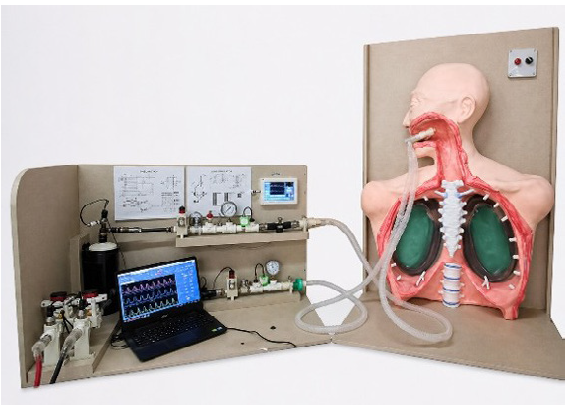
Objective: To present the design of a digital learning ecosystem that integrates cyber-physical systems, remote platforms, and pedagogical strategies for mechanical ventilation training, using Colored Petri Nets as an emulation formalism.
Methodology: A model is proposed that articulates electromechanical components and computational applications with accessible virtual laboratories, employing Colored Petri Nets to formally represent the system's dynamic processes.
Results: The model provides an integrated architecture enabling remote training in mechanical ventilator operation, addressing the existing gap in healthcare professional education through virtual laboratories.
Conclusions: The developed ecosystem constitutes an innovative approach for mechanical respiratory assistance training, leveraging remote platforms and formal modeling to represent complex processes.
Resumen (es)
Objetivo: Presentar el diseño de un ecosistema de aprendizaje digital que integra sistemas ciberfísicos, plataformas remotas y estrategias pedagógicas para la formación en ventilación mecánica, utilizando Redes de Petri Coloreadas como formalismo de emulación.
Metodología: Se propone un modelo que articula componentes electromecánicos y aplicaciones computacionales con laboratorios virtuales accesibles, empleando Redes de Petri Coloreadas para representar formalmente los procesos dinámicos del sistema.
Resultados: El modelo ofrece una arquitectura integrada que permite la formación remota en el manejo de ventiladores mecánicos, abordando la brecha existente en la capacitación de profesionales médicos mediante laboratorios virtuales.
Conclusiones: El ecosistema desarrollado constituye una aproximación innovadora para la formación en asistencia respiratoria mecánica, aprovechando plataformas remotas y modelización formal para representar procesos complejos.
Referencias
[1] J. D. Allen, "Human physiology - the basis of medicine," Ulster Med. J., vol. 77, no. 3, p. 216, Sep. 2008. [Online]. Available: https://www.ncbi.nlm.nih.gov/pmc/articles/PMC2604485/
[2] Forum of International Respiratory Societies and European Respiratory Society, The Global Impact of Respiratory Disease. Sheffield, UK: European Respiratory Society, 2017, ISBN: 978-1-84984-087-3.
[3] Global Asthma Network, The Global Asthma Report 2014. Auckland, New Zealand: Global Asthma Network, 2014, ISBN: 978-0-473-29125-9.
[4] P. G. J. Burney, J. Patel, R. Newson et al., "Global and regional trends in COPD mortality, 1990–2010," Eur. Respir. J., vol. 45, no. 5, pp. 1239–1247, May 2015. https://doi.org/10.1183/09031936.00142414
[5] N. Petrosillo, G. Viceconte, O. Ergonul et al., "COVID-19, SARS and MERS: Are they closely related?" Clin. Microbiol. Infect., vol. 26, no. 6, pp. 729–734, Jun. 2020. https://doi.org/10.1016/j.cmi.2020.03.026
[6] N. Karamolegkos et al., "Patient emulator: A tool for testing mechanical ventilation therapies," in Proc. 38th Annu. Int. Conf. IEEE Eng. Med. Biol. Soc. (EMBC), IEEE, 2016. https://doi.org/10.1109/EMBC.2016.7591683
[7] G. Avendaño, F. Toncio, and P. Fuentes, "Design and construction of a real simulator for calibrating lung servo-ventilators," in Proc. Annu. Int. Conf. IEEE Eng. Med. Biol. (EMBS), IEEE, 2010. https://doi.org/10.1109/IEMBS.2010.5626175
[8] AQAI, "TestChest lung simulator," AQAI GmbH. [Online]. Available: https://www.aqai.eu/en/products-service/development/testchest.php
[9] Michigan Instruments, "Lung simulators," Michigan Instruments. [Online]. Available: https://www.michiganinstruments.com/lung-simulators/
[10] R. Pasteka et al., "Electro-mechanical lung simulator using polymer and organic human lung equivalents for realistic breathing simulation," Sci. Rep., vol. 9, no. 1, art. 19778, pp. 1–12, 2019. https://doi.org/10.1038/s41598-019-56176-6
[11] S. Heili-Frades, G. Peces-Barba, and M. J. Rodríguez-Nieto, "Design of a lung simulator for teaching lung mechanics in mechanical ventilation," Arch. Bronconeumol. (Engl. Ed.), vol. 43, no. 12, pp. 674–679, 2007. https://doi.org/10.1016/S1579-2129(07)60154-2
[12] MA Horvath et al. , “Un simulador respiratorio robótico blando organosintético”, APL Bioengineering , vol. 4, n.º 2, pág. 026108, junio de 2020, https://doi.org/10.1063/1.5140760
[13] Laerdal Medical, "ASL 5000 lung solution," Laerdal Medical. [Online]. Available: https://laerdal.com/de/information/shortcuts-and-redirects/ASL5000-LungSolution/
[14] R. Paštěka and M. Forjan, "Actively breathing mechanical lung simulator development and preliminary measurements," in EMBEC & NBC 2017, Singapore: Springer, 2017, pp. 751–754. https://doi.org/10.1007/978-981-10-5122-7_188
[15] F. Bautsch, G. Männel, and P. Rostalski, "Development of a novel low-cost lung function simulator," Curr. Dir. Biomed. Eng., vol. 5, no. 1, pp. 557–560, 2019. https://doi.org/10.1515/cdbme-2019-0140
[16] S. Heili-Frades, G. Peces-Barba, and M. J. Rodríguez-Nieto, "Diseño de un simulador de pulmón para el aprendizaje de la mecánica pulmonar en ventilación mecánica," Arch. Bronconeumol., vol. 43, no. 12, pp. 674–679, 2007. https://doi.org/10.1157/13112966
[17] H. S. Johar and K. Yadav, "DRDO's portable low-cost ventilator: 'DEVEN'," Trans. Indian Natl. Acad. Eng., vol. 5, no. 2, pp. 365–371, 2020. https://doi.org/10.1007/s41403-020-00143-5
[18] J. Saiful et al., "Design and implementation of ventilator for breathing apparatus," IOP Conf. Ser. Mater. Sci. Eng., vol. 990, no. 1, art. 012007, 2020. https://doi.org/10.1088/1757-899X/990/1/012007
[19] B. El Majid et al., "Preliminary design of an innovative, simple, and easy-to-build portable ventilator for COVID-19 patients," Euro-Mediterr. J. Environ. Integr., vol. 5, art. 57, pp. 1–4, 2020. https://doi.org/10.1007/s41207-020-00163-1
[20] J. M. Knorr et al., "Design and performance testing of a novel emergency ventilator for in-hospital use," Can. J. Respir. Ther., vol. 56, art. 42, 2020. https://doi.org/10.29390/cjrt-2020-023
[21] A. Darwood et al., "The design and evaluation of a novel low-cost portable ventilator," Anaesthesia, vol. 74, no. 11, pp. 1406–1415, 2019. https://doi.org/10.1111/anae.14726
[22] A. Vasan et al., "MADVent: A low-cost ventilator for patients with COVID-19," Med. Devices Sens., vol. 3, no. 4, art. e10106, 2020. https://doi.org/10.1002/mds3.10106
[23] F. J. Vivas Fernández et al., "ResUHUrge: A low cost and fully functional ventilator indicated for application in COVID-19 patients," Sensors, vol. 20, no. 23, art. 6774, 2020. https://doi.org/10.3390/s20236774
[24] J. Tharion et al., "Rapid manufacturable ventilator for respiratory emergencies of COVID-19 disease," Trans. Indian Natl. Acad. Eng., vol. 5, pp. 373–378, 2020. https://doi.org/10.1007/s41403-020-00118-6
[25] A. Petsiuk et al., "Partially RepRapable automated open source bag valve mask-based ventilator," HardwareX, vol. 8, art. e00131, 2020. https://doi.org/10.1016/j.ohx.2020.e00131.
[26] S. H. Sojar et al., "Titration of parameters in shared ventilation with a portable ventilator," Respir. Care, vol. 66, no. 5, pp. 758–768, 2021. https://doi.org/10.4187/respcare.08446
[27] C. Galbiati et al., "Mechanical Ventilator Milano (MVM): A novel mechanical ventilator designed for mass scale production in response to the COVID-19 pandemics," medRxiv, preprint, 2020. https://doi.org/10.1101/2020.03.24.20042234
[28] J. Živčák et al., "A portable BVM-based emergency mechanical ventilator," in Proc. 19th IEEE World Symp. Appl. Mach. Intell. Informatics (SAMI), IEEE, 2021. https://doi.org/10.1109/SAMI50585.2021.9378620
[29] S. M. Mirvakili, D. Sim, and R. Langer, "Inverse pneumatic artificial muscles for application in low-cost ventilators," Adv. Intell. Syst., vol. 3, no. 1, art. 2000200, 2021. https://doi.org/10.1002/aisy.202000200
[30] S. Mora, F. Duarte, and C. Ratti, "Can open source hardware mechanical ventilator (OSH-MVs) initiatives help cope with the COVID-19 health crisis? Taxonomy and state of the art," HardwareX, vol. 8, art. e00150, 2020. https://doi.org/10.1016/j.ohx.2020.e00150
[31] R. M. Kacmarek, "The mechanical ventilator: Past, present, and future," Respir. Care, vol. 56, no. 8, pp. 1170–1180, 2011. https://doi.org/10.4187/respcare.01420
[32] J. Chang et al., "Masi: A mechanical ventilator based on a manual resuscitator with telemedicine capabilities for patients with ARDS during the COVID-19 crisis," HardwareX, vol. 9, art. e00187, 2021. https://doi.org/10.1016/j.ohx.2021.e00187
[33] A. Takeuchi et al., "Interactive simulation system for artificial ventilation on the internet: Virtual ventilator," J. Clin. Monit. Comput., vol. 18, no. 5, pp. 353–363, 2004. https://doi.org/10.1007/s10877-005-6268-0
[34] N. Ambrosino et al., "Tele-monitoring of ventilator-dependent patients: A European Respiratory Society Statement," Eur. Respir. J., vol. 48, no. 3, pp. 648–663, 2016. https://doi.org/10.1183/13993003.01721-2015
[35] Y. Li et al., "A Petri net based model for a cloud healthcare system," in Proc. Chinese Control and Decision Conf. (CCDC), IEEE, 2018. https://doi.org/10.1109/CCDC.2018.8407805
[36] S. Mtibaa and M. Tagina, "An automated Petri-net based approach for change management in distributed telemedicine environment," arXiv preprint arXiv:1210.6076, 2012. [Online]. Available: https://arxiv.org/abs/1210.6076
[37] I. Ruiz, J. Contreras, and J. Garcia, "Towards a physical rehabilitation system using a telemedicine approach," Comput. Methods Biomech. Biomed. Eng.: Imaging Vis., vol. 9, no. 4, pp. 354–363, 2020. https://doi.org/10.1080/21681163.2020.1795929
[38] F. J. Mejia, J. I. Garcia, and C. E. Hurtado, "Model-based design of body motion sensing technology using systems modeling language and coloured Petri nets," in Proc. IEEE Int. Conf. E-health Netw. Appl. Serv. (HealthCom), IEEE, 2019. https://doi.org/10.1109/HealthCom46333.2019.9009430
[39] K. Collante, "Guía completa para crear tu diagrama de infraestructura," Hackmetrix Blog, Aug. 19, 2021. Accessed: Nov. 19, 2021. [Online]. Available: https://blog.hackmetrix.com/como-hacer-un-diagrama-de-infraestructura/
[40] J. M. Rosen et al., "Telehealth's new horizon: Providing smart hospital-level care in the home," Telemed. e-Health, vol. 27, no. 11, pp. 1215–1224, 2021. https://doi.org/10.1089/tmj.2020.0448
[41] A. M. Valencia, I. Ruiz, J. I. García, and A. Galvis, "Design of a patient simulator for clinicians training in mechanical ventilation: SimVep," J. Med. Eng. Technol., vol. 49, no. 3, pp. 79–92, 2025. https://doi.org/10.1080/03091902.2025.2484672
Cómo citar
APA
ACM
ACS
ABNT
Chicago
Harvard
IEEE
MLA
Turabian
Vancouver
Descargar cita
Licencia
Derechos de autor 2026 Andrés Mauricio Valencia Restrepo

Esta obra está bajo una licencia internacional Creative Commons Atribución-CompartirIgual 4.0.
Esta licencia permite a otros remezclar, adaptar y desarrollar su trabajo incluso con fines comerciales, siempre que le den crédito y concedan licencias para sus nuevas creaciones bajo los mismos términos. Esta licencia a menudo se compara con las licencias de software libre y de código abierto “copyleft”. Todos los trabajos nuevos basados en el tuyo tendrán la misma licencia, por lo que cualquier derivado también permitirá el uso comercial. Esta es la licencia utilizada por Wikipedia y se recomienda para materiales que se beneficiarían al incorporar contenido de Wikipedia y proyectos con licencias similares.