
DOI:
https://doi.org/10.14483/25009311.21833Publicado:
2024-03-27Número:
Vol. 10 Núm. 16 (2024): Enero-Junio 2024Sección:
ArtículosUnveiling the Creation of AI-Generated Artworks: Broadening Worringerian Abstraction and Empathy Beyond Contemplation
Revelando a Criação de Obras de Arte Geradas por IA: Expandindo a Abstração e a Empatia Worringeriana Além da Contemplação
Palabras clave:
abstracción, empatía, arte, creación, inteligencia artificial, Worringer (es).Palabras clave:
Abstraction, empathie, art, creation, artificial intelligence, Worringer (en).Palabras clave:
abstração, empatia, arte, criação, inteligência artificial, Worringer (pt).Descargas
Referencias
Arriagada, L. (2021). Artistas mecánicos: Una mirada a la capacidad estética de máquinas y algoritmos desde la música pop y el pop art [Mechanical Artists: A Look at The Aesthetic Capability of Machines and Algorithms from Pop Music and Pop Art]. Calle 14 revista de investigación en el campo del arte, 16(29), 54–66. https://doi.org/10.14483/21450706.17401
Arriagada, L. (2023). CG-art: An aesthetic discussion of the relationship between artistic creativity and computation [University of Groningen]. https://doi.org/10.33612/diss.693764937
Bruno, G. (2014). Surface: Matters of Aesthetics. The University of Chicago Press.
Cacioppo, J. T., Petty, R. E., Losch, M. E., & Kim, H. S. (1986). Electromyographic activity over facial muscle regions can differentiate the valence and intensity of affective reactions. Journal of Personality and Social Psychology, 50(2), 260–268. https://doi.org/10.1037/0022-3514.50.2.260
Chamberlain, R., Mullin, C., Scheerlinck, B., & Wagemans, J. (2018). Putting the art in artificial: Aesthetic responses to computer-generated art. Psychology of Aesthetics, Creativity, and the Arts, 12(2), 177–192.
https://doi.org/10.1037/aca0000136 de Vries, K. (2020). You never fake alone. Creative AI in action. Information, Communication & Society, 23(14), 2110–2127. https://doi.org/10.1080/1369118X.2020.1754877
Dickie, G. (1969). Defining Art. American Philosophical Quarterly, 6(3), 253–256. JSTOR. Doherty, R. W. (1997). The Emotional Contagion Scale: A Measure of Individual Differences. Journal of Nonverbal Behavior, 21(2), 131–154. https://doi.org/10.1023/A:1024956003661
Dubal, S., Lerebours, A.-E., Taffou, M., Pelletier, J., Escande, Y., & Knoblauch, K. (2014). A Psychophysical Exploration of the Perception of Emotion from Abstract Art. Empirical Studies of the Arts, 32(1), 27–41. https://doi.org/10.2190/EM.32.1.EOV.4
Eisner, L. H. (1952). L’écran démoniaque: Influence de Max Reinhardt et de l’expressionnisme [The Haunted Screen Expressionism in the German Cinema and the Influence of Max Reinhardt]. Bonne.
Eisner, L. H. (2009). The haunted screen: Expressionism in the German cinema and the influence of Max Reinhardt (2. paperback ed., [Repr.]). Univ. of California Press. Elgammal, A., Liu, B., Elhoseiny, M., & Mazzone, M. (2017). CAN: Creative Adversarial Networks, Generating “Art” by Learning About Styles and Deviating from Style Norms. arXiv:1706.07068 [Cs]. http://arxiv.org/abs/1706.07068
Esrock, E. J. (2018). Einfühlung as the breath of art: Six modes of embodiment. Cognitive Processing, 19(2), 187–199. https://doi.org/10.1007/s10339-017-0835-4
Folgieri, R., Lucchiari, C., Granato, M., & Grechi, D. (2014). Brain, Technology and Creativity. Unveiling the Creation of AI-Generated Artworks: Broadening Worringerian Abstraction and Empathy / Leonardo Arriagada 157 BrainArt: A BCI-Based Entertainment Tool to Enact Creativity and Create Drawing from Cerebral Rhythms. In N. Lee (Ed.), Digital Da Vinci (pp. 65–97). Springer New York. http://link.springer. com/10.1007/978-1-4939-0965-0_4
Freedberg, D., & Gallese, V. (2007). Motion, emotion and empathy in esthetic experience. Trends in Cognitive Sciences, 11(5), 197–203. https://doi.org/10.1016/j.tics.2007.02.003
Gallese, V. (2001). The “Shared Manifold” Hypothesis: From Mirror Neurons to Empathy. Journal of Consciousness Studies, 8(5–7), 33–50. Ganczarek, J., Hünefeldt, T., & Olivetti Belardinelli, M. (2018). From “Einfühlung” to empathy: Exploring the relationship between aesthetic and interpersonal experience. Cognitive Processing, 19(2), 141–145. https://doi.org/10.1007/s10339-018-0861-x
Gangadharbatla, H. (2022). The Role of AI Attribution Knowledge in the Evaluation of Artwork. Empirical Studies of the Arts, 40(2), 125–142. https://doi.org/10.1177/0276237421994697
Gao, H. -l, & Zheng, B. -z. (2019). Human-Machine Integration: A Philosophical Analysis Based on McLuhan Media Theory and Traditional Chinese Culture. 21st Century Ethics Research, 36–49. https://doi.org/10.24546/81011206
Gelernter, D. (2009, February). The Gothic Vision. American Enterprise Institute - AEI. https://www.aei.org/articles/the-gothic-vision/
German, K., Limm, M., Wölfel, M., & Helmerdig, S. (2019). Towards Artificial Intelligence Serving as an Inspiring Co-Creation Partner. EAI Endorsed Transactions on Creative Technologies, 6(19), 1–11. https://doi.org/10.4108/eai.2642019.162609
Gernot, G., Pelowski, M., & Leder, H. (2018). Empathy, Einfühlung, and aesthetic experience: The effect of emotion contagion on appreciation of representational and abstract art using fEMG and SCR. Cognitive Processing, 19(2), 147–165. https://doi.org/10.1007/s10339-017-0800-2
Hill, L. (2022). Jung’s Reception of Picasso and Abstract Art (1st ed.). Routledge. https://www.taylorfrancis.com/books/9781003222729
Lang, P. J., Greenwald, M. K., Bradley, M. M., & Hamm, A. O. (1993). Looking at pictures: Affective, facial, visceral, and behavioral reactions. Psychophysiology, 30(3), 261–273. https://doi.org/10.1111/j.1469-8986.1993.tb03352.x
Lanzoni, S. (2009). Practicing psychology in the art gallery: Vernon Lee’s aesthetics of empathy. Journal of the History of the Behavioral Sciences, 45(4), 330–354. https://doi.org/10.1002/jhbs.20395
Lanzoni, S. (2012). Empathy in Translation: Movement and Image in the Psychological Laboratory. Science in Context, 25(3), 301–327. https://doi.org/10.1017/S0269889712000154
Lipps, T. (1903). Ästhetik: Psychologie des Schönen und der Kunst [Aesthetics: Psychology of Beauty and Art]. Voss. Mäki-Reinikka, K. (2018, May 1). Cave Paintings for the AI: Art in the Age of Singularity. Politics of the Machines - Art and After. https://doi.org/10.14236/ ewic/EVAC18.13
McLuhan, M. (1994). Understanding media: The extensions of man (1st MIT Press ed). MIT Press. Mikalonytė, E. S., & Kneer, M. (2021). Can Artificial Intelligence Make Art? (SSRN Scholarly Paper ID 3827314). Social Science Research Network. https:// papers.ssrn.com/abstract=3827314
Mordvintsev, A., Olah, C., & Tyka, M. (2015, June 17). Inceptionism: Going Deeper into Neural Networks. Google AI Blog. http://ai.googleblog.com/2015/06/ inceptionism-going-deeper-into-neural.html
Öhlschläger, C. (2015). Introdución [Introduction]. In Abstracción y naturaleza: Una contribución a la psicología del estilo [Abstraction and empathy: A contribution to the psychology of style] (Kindle ed.). Fondo de Cultura Económica. Persson, I., & Savulescu, J. (2018). The Moral Importance of Reflective Empathy. Neuroethics, 158 Estudios Artísticos: revista de investigación creadora 11(2), 183–193. https://doi.org/10.1007/s12152-017-9350-7
Rabazas, A. (2002). Pequena elucidación sobre o proxectar [A Short Elucidation on Projecting]. Eduga: revista galega do ensino, 36, 113–139.
Read, H. (1948). Art now: An introduction to the theory of modern painting and sculpture (Revised and enlarged ed.-i.e. 3rd ed.). Faber and Faber.
Rekimoto, J. (2019). Homo Cyberneticus: The Era of Human-AI Integration. arXiv:1911.02637 [Cs]. http:// arxiv.org/abs/1911.02637 Titchener, E. B. (1909). Lectures on the experimental psychology of the thought-processes. The Macmillan. Vilchez, J. L., & Michay Valarezo, W. L. (2020). Quantifying the extraction of art meaning: No laterality effect. Neuropsychiatria i Neuropsychologia, 15(3–4), 101–107. https://doi.org/10.5114/nan.2020.101292
Vischer, R., Mallgrave, H. F., & Ikonomou, E. (1994). Empathy, form, and space: Problems in German aesthetics, 1873-1893. Worringer, W. (1907). Abstraktion und Einfühlung: Ein Beitrag zur Stilpsychologie [Abstraction and empathy: A contribution to the psychology of style].
Worringer, W. (1997). Abstraction and empathy: A contribution to the psychology of style (1st Elephant pbk. ed). Ivan R. Dee. Zepke, S. (2005). Art as abstract machine: Ontology and aesthetics in Deleuze and Guattari. Routledge
Cómo citar
APA
ACM
ACS
ABNT
Chicago
Harvard
IEEE
MLA
Turabian
Vancouver
Descargar cita
Recibido: 5 de enero de 2024; Aceptado: 29 de enero de 2024
Abstract
In his groundbreaking work, Abstraction and Empathy, Wilhelm Worringer delved into the intricacies of various abstract and figurative artworks, contending that they evoke distinct impulses in the human audience—specifically, the urges towards abstraction and empathy. This article asserts the presence of empirical evidence supporting the extension of Worringer’s concepts beyond the realm of art appreciation to the domain of art-making. Consequently, it posits that abstraction and empathy serve as foundational principles guiding the production of both abstract and figurative art. This holds particular significance in the 21st century, where artificial intelligence (AI) assumes a creative role that was absent during Worringer’s initial formulation of his theory. Thus, this paper postulates that AI inherently harbors a predisposition for the generation of abstract art, owing to its non-living and inorganic origins and functioning.
Unveiling the Creation of AI-Generated Artworks: Broadening Worringerian Abstraction and Empathy Beyond Contemplation
Research article [1]
1. Introduction
This article critically examines a pivotal distinction in the art-making process: the duality between the urge to empathy and the urge to abstraction. Art historian Wilhelm Worringer (1997) [2] first introduced these terms—urge to empathy and urge to abstraction—as frameworks for understanding the intricacies of art appreciation. However, recent empirical inquiries (e.g., Folgieri et al., 2014; Gernot et al., 2018; Vilchez & Michay Valarezo, 2020; Worringer, 1997) have cast doubt on Worringer’s application of these concepts. Notwithstanding these critiques, the subsequent sections of this paper will elucidate the enduring explanatory potency of these terms, particularly in the examination of the art-making process rather than the phenomena of art appreciation. This bears significance for the current research, aiming to assert that artificial intelligence (AI) inherently exhibits a predilection for the production of abstract art—a trait attributed to its non-living and inorganic origins and functioning. To this end, the definition of AI-generated artwork shall be used, characterized by (1) the autonomous AI creation of a novel and surprising concept or artifact, (2) successfully meeting an internal evaluation mechanism integrated within the AI itself, and (3) being deemed appreciable by a human audience (Arriagada, 2023). As will become evident, this definition constitutes a subset of the broader concept of artwork as defined by philosopher of art George Dickie (1969).
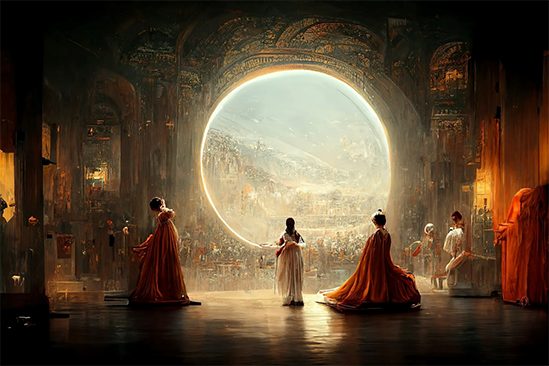
Image 1: Théâtre D'opéra Spatial (Midjourney, 2022). State Fair, Colorado.
2. The Urge to Empathy and the Urge to Abstraction, According to Worringer
Worringer intended to analyze the aesthetics of the work of art by focusing on how the human audience behaved when appreciating figurative and abstract artworks. His inquiry led him to distinguish between the urge to empathy and the urge to abstraction, which give rise to different aesthetic experiences in the viewer of a given piece. Those ideas have survived till the present era. Indeed, Worringer’s theory is still quoted concerning several different topics in the field of Aesthetics—from drawing technique (Rabazas, 2002) to gothic style (Gelernter, 2009; Zepke, 2005) and materiality (Bruno, 2014), to mention some. Moreover, the notions of abstraction and empathy have surpassed the art theory field. For example, historian of science Susan Lanzoni (2009) argues that empathy is a constitutive process in aesthetic experiences. In the same vein, historian of art David Freedberg and neuroscientist Vittorio Gallese (2007) have hypothesized that our brains are programmed with automatic empathetic responses to artworks. Even more astonishing is that Worringer’s ideas, elaborated in a predominantly theoretical way, can now be empirically tested thanks to the development of technology in Neuroaesthetics—the research field whose goal it is to “find the neural basis of mental processes precisely related to art” (Folgieri et al., 2014, p. 70). Accordingly, progress in brain imaging techniques has meant a strong push toward observing brain behavior when a human is confronted with abstract or figurative art (Folgieri et al., 2014; Gernot et al., 2018; Vilchez & Michay Valarezo, 2020).
Considering the transcendence of Worringer’s theory in the study of Aesthetics, the first part of this article briefly outlines the concepts of empathy and abstraction in the way Worringer did. That is to say, from the point of view of art appreciation—more precisely, the human audience’s behavior in the presence of figurative and abstract art. This short review will show why the transfer of the concept of “urge to” is an excellent analytical instrument in AI art-making—although Worringer’s original version (assessing art appreciation) of it is not supported by empirical evidence. That is why the development of Worringer’s terms will be done with the limited purpose of supporting the proposed field transfer. That is, from art appreciation to art-making.
It is worth confirming that in this thesis, figurative art shall be understood as art that imitates nature, while abstract art shall be understood as art that does not represent recognizable scenes or objects (Read, 1948; Vilchez & Michay Valarezo, 2020). This taxonomy is compatible with Carl Jung’s representational and non-representational art ideas. Indeed, “according to Jung, these different artforms corresponded to the related artistic attitudes of ‘abstraction’ and ‘empathy’” (Hill, 2022, p. 51). [3] Nevertheless, as philosopher Claudia Öhlschläger (2015) has pointed out, further overcomplications on these concepts—abstraction and empathy—should not be imposed over Worringer’s primary goal, which is “the final break with mimetic art” [4] (p. 18). [5] Consequently, figurative art will be synonymous with representational and classical unless otherwise stated in this article. Similarly, abstract art will be synonymous with non-representational and non-classical.
Thus, having clarified the terminology of the previous paragraph, the urge to empathy in art appreciation will be briefly described stressing its limitations. This will be followed by the description of the urge to abstraction, highlighting how it overcomes the limitations of empathy.
2.1. The Urge to Empathy in Art Appreciation
The concept of Einfühlung or emotional projection belongs to the German language, and its English translation [6] is generally understood as “empathy”. However, its meaning is broader, [7] making it essential to clarify it, as Worringer used the German term to construct his theory. [8] Empathy allows us to put ourselves in someone else’s thoughts and feelings (Esrock, 2018). For example, we can feel the suffering of a father watching his son go to war or the joy of someone overcoming cancer. For its part, Einfühlung is “a particular form of projection . . . a ‘feeling inside’ that is empathy not only with people but with spaces and things” (Bruno, 2014, p. 9). For instance, we can feel the effort of a car engine climbing a steep slope or the loneliness of a child’s favorite toy being replaced by a new one. However, it is significant to emphasize that this emotional projection is precisely that—a projection. Strictly speaking, a car engine does not tire in the same way as a human. Instead, the loose use of language builds such animism by treating objects or spaces as if they were human. The film critic Lotte Eisner (2009) [9] highlighted this exacerbated anthropomorphism acquired by things in the German language. In particular, referring to Worringer, she points out that:
In the normal syntax of the German language objects have a complete active life: they are spoken of with the same adjectives and verbs used to speak of human beings, they are endowed with the same qualities as people, they act and react in the same way. (p. 23)
The mentioned active life of the objects is due to the emotional projection of humans’ feelings on them. That is the Einfühlung of which Worringer speaks. For simplicity’s sake, we will call it empathy, respecting the widely used English translation with the German meaning. Let us now see how this emotional projection works in the specific case of art appreciation.

Image 2: Statue of Liberty (Eiffel, 1886). Statue of Liberty National Monument, New York.
Worringer claims that modern aesthetics [10] is an aesthetics of contemplation. Consequently, its object of study is the contemplating subject—and not the creator of the artwork nor the artwork itself. In practical terms, when a human audience observes a given artwork, modern aesthetics is concerned with understanding the observer’s behavior. As Worringer points out, this doctrine is called the theory of empathy. That is because the urge to empathy leads to an aesthetic experience in which the human observers project their feelings onto a particular artwork when facing it. What is crucial is that, in Abstraction and Empathy, modern aesthetics often means figurative—representational, classical—art forms, which, broadly speaking, mimic reality. As we (humans) live in that reality, it is easier to empathize with it. For example, we can project ourselves into the exquisite sense of liberation when seeing the Statue of Liberty. However, empathizing with the Cloud Gate does not come so naturally. In fact, Worringer emphasizes that in modern aesthetics:
‘Aesthetic enjoyment is objectified self-enjoyment.’ For this implies that the process of empathy represents a self-affirmation, an affirmation of the general will to activity that is in us. ‘We always have a need for self-activation. Indeed, this is the basic need of our nature.’ In empathizing this will to activity into another object, however, we are in the other object. We are delivered from our individual being as long as we are absorbed into an external object, an external form, with our inner urge to experience. (p. 24)
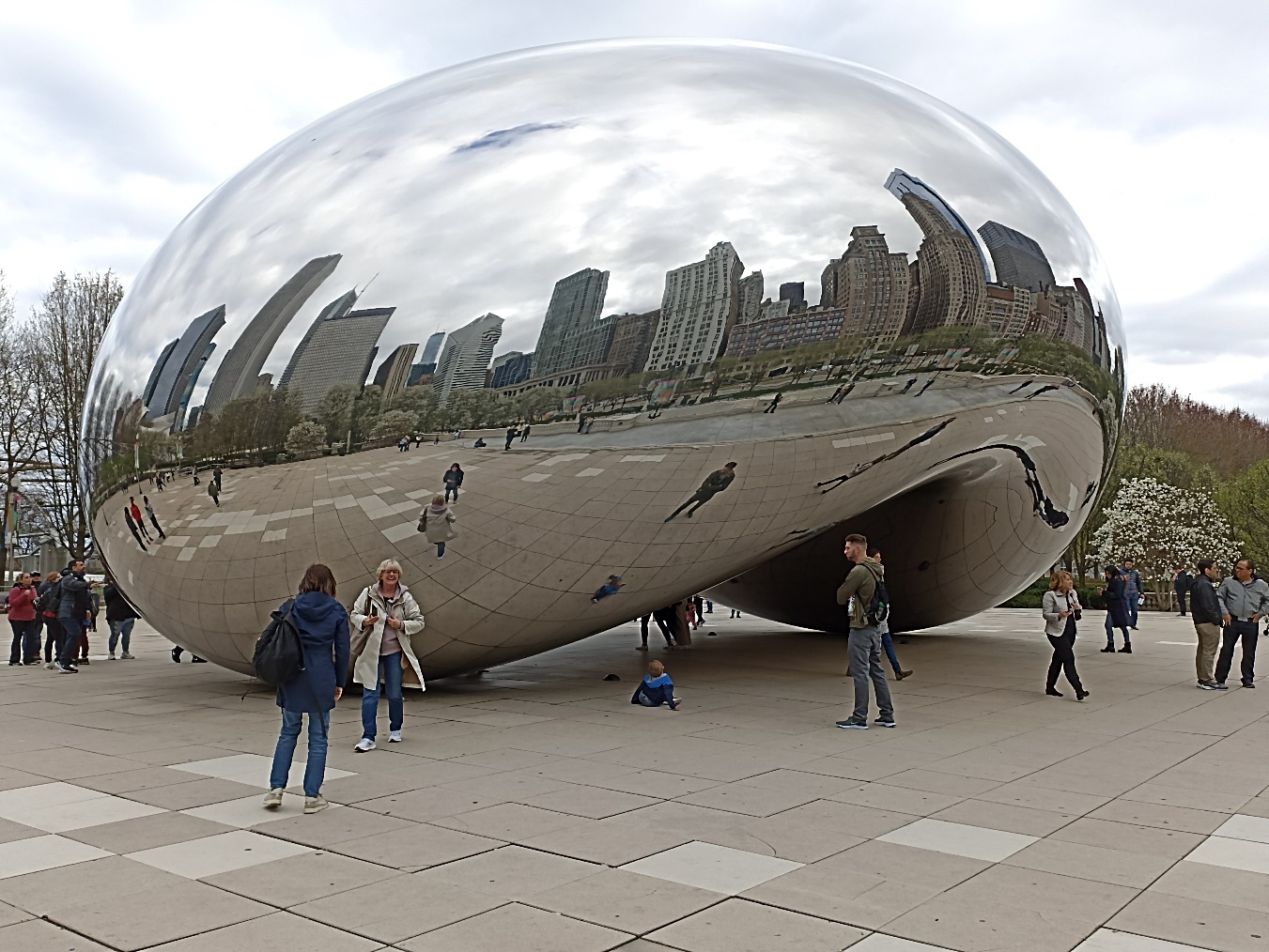
Image 3: Cloud Gate (Kapoor, 2004). Millennium Park, Chicago.
An example will make this clear. Suppose a group of people in the Museum of Modern Art (MoMA) looks at The Starry Night by Vincent van Gogh. Following what has just been pointed out, attention should be paid to the viewers’ behavior. According to Worringer, the aesthetic experience they have is an objectified self-enjoyment. That is to say, while observing The Starry Night, the audience perceives it as an imitation of nature. In particular, they see an idealized night, still similar to many of the nights they have experienced. The familiarity of The Starry Night and its viewers’ life experiences self-activates the urge to empathy. This causes each person to project emotionally onto the artwork, empathizing with it. The main drawback of this situation is that the viewers are not experiencing The Starry Night as artwork. Instead, they are experiencing themselves.
It is important to note that the “precondition for the urge to empathy is a happy pantheistic relationship of confidence between man and the phenomena of the external world” (Worringer, 1997, p. 15). This means that different worldviews that do not share the same cultural background will have problems empathizing with artworks from other cultures. Using the example of the previous paragraph, a person who has been confined all his life in an illuminated room, without the possibility of appreciating a single starry night, would not be able to empathize with van Gogh’s masterpiece. In this case, the viewer does not experience the self-satisfaction [11] that the rest of us humans have. For that person, The Starry Night does not mimic his reality.
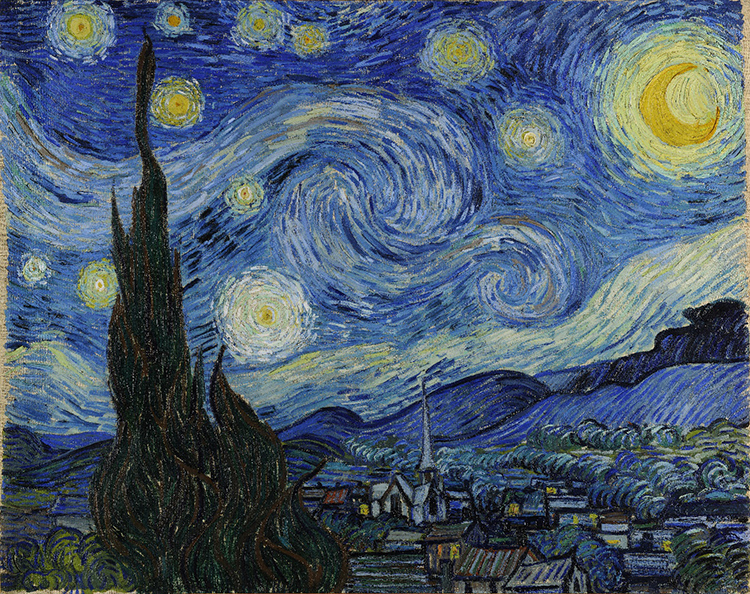
Image 4: The Starry Night (van Gogh, 1889). Museum of Modern Art, New York.
Schematizing the above example, an audience’s aesthetic experience following the urge to empathy has a clear direction: It starts from the viewer towards the artwork and finally returns to the initial viewer. The artwork is not appreciated—in itself—but acts as a mirror for the human audience. Worringer sees this phenomenon as a limited self-satisfaction experience. The urge to empathy is a way of experiencing oneself rather than a genuine appreciation of the work of art. Thus, Worringer looks for an opposite urge, different from empathy, to overcome that closed reflection. As shown next, Worringer’s aspiration is for an aesthetic experience derived from the urge to abstraction.
2.2. The Urge to Abstraction in Art Appreciation
The main aim of Abstraction and Empathy is to show that aesthetic experiences do not only come from the urge to empathy. In this sense, Worringer (1997) points out that:
Just as the urge to empathy as a pre-assumption of aesthetic experience finds its gratification in the beauty of the organic, so the urge to abstraction finds its beauty in the life-denying inorganic, in the crystalline or, in general terms, in all abstract law and necessity. (p. 4)
Worringer holds that, in art contemplation, the human being can also follow the urge to abstraction—antonymous to the urge to empathy. It can be noted that Worringer sees his work as a departure from modern aesthetics—rooted in figurative shapes which imitate nature, life, or in the words of Worringer, the organic. However, while discussing the urge to abstraction, he still has in mind the viewer’s behavior in front of a given artwork. That is to say, the urges to abstraction and to empathy are both part of the aforementioned aesthetics of contemplation. The crucial difference is that the latter leads to an aesthetic experience in which the human viewers cannot project their feelings when facing a given artwork. Consequently, the characterization of the abstract artworks—proposed by Worringer as the negation of life, the inorganic, and the abstract law—is severely limited to shape assessment. Let us illustrate this idea in the following paragraph:
Worringer uses the geometric style of the Egyptian pyramids as an example of abstract art, particularly abstract architecture. Such a case can explain how the urge to abstraction works. Suppose a group of people looks at the pyramids of Egypt. Following Worringer, these viewers do not experience the self-activation of the urge to empathy. Because the shape of the pyramids does not occur naturally in everyday life—no hill or mountain has such a neat, sharp pyramidal shape—people cannot empathize with the geometrically styled architecture. Thus, for Worringer, the aesthetic experience of those viewers is not self-enjoyment. According to him, the lack of familiarity with such architecture’s geometric form prevents the viewers’ emotional projection. Instead, in these cases, the urge to abstraction reflects the emotional emptiness experienced by the viewer.

Image 5: All Gizah Pyramids (Liberato, 2006). Giza pyramid complex, Egipt.
Schematizing the above example, an audience’s aesthetic experience following the urge to abstraction has a clear direction: It starts from the viewer towards the artwork and does not return to the initial viewer. Instead of mirroring the audiences’ feelings, the urge to abstraction produces zero emotional projection. In this case, the artwork is appreciated in itself by the human audience. Worringer sees this phenomenon as an escape from the limited self-satisfaction derived from empathy-driven aesthetic experiences. The urge to abstraction is a way to experience a genuine appreciation of the work of art.
Consequently, it is understandable that, in Abstraction and Empathy, the viewers’ abstraction-driven aesthetic experiences are consistently presented as more direct than empathy-driven ones. The viewer’s emotional projection contaminates the artwork’s purity in the latter. In this respect, referring to Worringer, researcher Antonio Rabazas (2002) considers that: “Abstract forms devoid of the accessory and finite are the only ones that allow the human being to transcend and overcome the confusion of an unstable world” (p. 133). Indeed, Worringer specifically points out that the urge to abstraction has a spiritual dimension that figurative (representational, classical) art does not possess. In particular, he affirms that:
the urge to abstraction is the outcome of a great inner unrest inspired in man by the phenomena of the outside world; in a religious respect it corresponds to a strongly transcendental tinge to all notions. We might describe this state as an immense spiritual dread of space. (p. 15)
Worringer stresses that this transcendentality of abstract art does not derive from a primitive development of rationality. In particular, he recognizes that the abstract art of primitive cultures precedes figurative art. Thus, chronologically, one might think that the more rational the cultural development is, the more figurative the art is. Nevertheless, Worringer points out that the most developed cultures go beyond the figurative stage and return to abstract forms. For him, primitive instinct and ultimate cognition lead to abstract art.
In Worringer’s theory, both the urge to empathy and to abstraction are constrained within the appreciation process of a given artwork—as opposed to the art-making process. While Worringer attempts to move away from the extreme self-enjoyment of modern aesthetics by strongly linking abstract art with the abstract art form, he still has the viewer as his object of study. Thus, measuring the effects of the urges to empathy and abstraction on art audiences is necessary. This is precisely what the next section of this article addresses.
2.3. Empirical Evidence of the Urges to Empathy and to Abstraction in Art Appreciation
In 1907, Worringer developed his ideas in a theoretical way. At that time, scientific and technological developments could not link his postulates with empirical evidence. That is to say, although figurative and abstract art forms may be appreciated by anyone (the second part of Abstraction and Empathy, entitled “Practical Section”, is mainly based on such shape appreciations), the viewers’ behaviors could not be empirically assesed., Timely, both Neuroaesthetics and technological developments have made it possible to conduct experiments guided precisely by the division between the empathy and abstraction urges proposed by Worringer. For the purposes of this article, the following study is of particular interest because it demonstrates empirically that the urges to empathy and to abstraction do not function in the way Worringer postulated. This provides the basis for the subsequent transfer of these terms proposed in this article—from art appreciation to art-making.
In the article “Empathy, Einfühlung, and aesthetic experience: the effect of emotion contagion on appreciation of representational and abstract art using fEMG and SCR” (2018), researchers Gerger Gernot, Matthew Pelowski and Helmut Leder show how empathy affects the human-bodily responses of viewers of figurative and abstract art. In particular, empathy was measured using a standardized emotional contagion survey [12] (Doherty, 1997), while facial electromyography (fEMG) [ 13 ] and skin conductance responses (SCR) recorded the bodily psychophysiological responses. For the present section, the following two hypotheses expected by Gernot et al. are relevant:
Firstly, the researchers hoped to link high empathy levels with high human bodily responses when appreciating art. This tests Worringer’s theory directly because, according to him, the urge to empathy guides the aesthetic experiences of the human audience when appreciating figurative art. Secondly, Gernot et al. (2018) expected that relationship to be most substantial when appreciating figurative art and weaker when appreciating abstract art. Again, following Worringer’s thesis, the aesthetic experiences guided by the urge to abstraction should not have a direct connection with the viewers’ empathy.
The results showed convincing evidence for the first hypothesis. Indeed, high empathy scores largely mirrored the experimental participants’ high psychophysiological measures of fEMG and SCR when looking at the artworks. This is congruent with Worringer’s urge to empathy role in aesthetic appreciation. Furthermore, Gernot et al. (2018) point out that this is also consistent with Robert Visscher’s (1994) and Theodor Lipps’ (1903) ideas. Indeed, Vischer and Lipps claimed that the better the capacity to empathize with an object, “the deeper, the more sincere, or the more pleasurable one’s experience, and thus, the better one could appreciate and enjoy a work of art” (Gernot et al., 2018, p. 148). However, regarding the second hypothesis, the study had unexpected results. In particular, Gernot et al. showed that high empathy scores in human audiences correlate directly with high psychophysiological measures when appreciating—both—figurative and abstract art. In other words, the experiment displays no substantive differences to sustain that empathy plays a more critical role in the aesthetic appreciation of figurative art over abstract art. Indeed, for the researchers, this “clearly refutes early arguments (e.g., Worringer, 1907) that feeling into and thus emotion-congruent bodily changes and subjective ratings, might not be found within abstract art” (Gernot et al., 2018, p. 170). Now, focusing specifically on the implications of these results regarding human audiences, the following two points should be noted:On the one hand, these findings show that human audiences always use the urge to empathy when appreciating art, only they seem to use it negligibly less in the face of abstract art. This follows mirror neurons theories, such as Gallese (2001), because they claim that humans are hard-wired to empathize with artworks (see also Ganczarek et al., 2018). Hence, if the human brain could be reverse-engineered, the role of empathy in art appreciation could be encoded. Furthermore, with such coding, AI could be produced to emulate empathy and thus be able to appreciate art, even though it is not human.
However, conversely, the report by Gernot et al. (2018) implies that an audience without human empathy, such as non-human entities, may lack the capacity to appreciate art. This aligns with the notion that, while art can be crafted by humans, animals, machines, or the like, its reception remains exclusively within the realm of human audiences (Arriagada, 2023). As illustrated earlier, the exclusivity of humans as the audience for art hinges upon the accurate encoding of empathy within the human brain.
Now, returning to the goal of this article, this section aimed at presenting Worringer’s ideas about the urge to empathy and the urge to abstraction. Given the above evidence, it can be concluded that Worringer’s theoretical hypotheses about the role of these urges in the aesthetic experience of contemplating an artwork do not find a transparent empirical verification. It should be noted that, in keeping with Worringer’s original decision to focus on the audience viewing an artwork, the object of study in this section has been the appreciation of artworks. However, as indicated in the first section of this article, this is not necessarily the only object of study in aesthetics. Indeed, it follows from Dickie’s (1969) widely used definition of artwork—“(1) an artifact (2) upon which some society or some sub-group of a society has conferred the status of candidate for appreciation” (p. 254)—that aesthetics can study at least the appreciation and the creation of artworks. Since we have already dealt with the first of these topics, we will now turn to the second. This way, we will justify the complementary character that this article intends to make to Worringer’s theory. The following section seeks to transfer the urge to empathy and the urge to abstraction from art appreciation to art-making.
3. The Urge to Empathy and the Urge to Abstraction, in Art-Making
Worringer’s 1907 contribution to the study of the aesthetics of the work of art, distinguishing between the urges of abstraction and empathy, was made considering the contemplative attitude of a human audience confronted with a given artwork. However, a complete view of the study of the aesthetics of art must include not only the observation of its products but also their creation. In this regard, Raffaella Folgieri, Claudio Lucchiari, Marco Granato, and Daniele Grechi (2014) pointed out that one of the main tasks of artistic research is precisely this:
Studying art both from the point of view of the creative act, and from the point of view of observers of masterpieces, allows comprehensive investigation of the processes which underlie the interaction between Brain and environment, exploring the connections among the cognitive, creative, interpretive and expressive processes. (p. 68)
In the same vein as Folgieri et al. (2014), since the previous passage of this article focused on art viewers and their interpretive processes, the present section strives to expand the empathy and abstraction urges from art appreciation to art-making. This becomes more necessary when considering that the experimental evidence does not entirely support Worringer’s ideas—in particular, following Gernot et al. (2018), it seems to be that human audiences appreciate art through the urge of empathy, regardless of whether this art is abstract or figurative. As will be demonstrated, this enables the incorporation of a new form of non-human creative agent, namely AI. Let us first see how this non-human creative agent can be inserted into the theory of empathy.
3.1. The Four Scenarios of the Urge to Empathy and the Urge to Abstraction in Aesthetics: Non-human Artworks as a Synonym of AI-Generated Artworks.
Vincent van Gogh’s works, Mozart’s compositions and Michelangelo’s sculptures are considered aesthetically valuable masterpieces by the art world and the general public. These artists are perfect illustrations of the many great masters throughout history. Nevertheless, the Grand Canyon’s immensity, the unique brilliance of diamonds and the colors of aurora borealis are also, almost unanimously, associated with valuable aesthetic experiences (Arriagada, 2023). None of these last three examples was created by a talented human artist. Still, for us, both are pleasant to see, The Starry Night and the Northern Lights. Indeed, human beings can appreciate the aesthetics of human and non-human creations. However, Worringer begins Abstraction and Empathy by explicitly declaring that his theory is not intended to account for these naturally occurring phenomena of beauty but rather for the work of art, understood as generated by the human artist.
However, as we reach the first quarter of the 21st century, it becomes imperative to include non-human creative agents—and, as will be seen, not precisely the forces of nature but, above all, AI—in any aesthetic theory. [14] Worringer’s omission of non-human products seems reasonable considering that he wrote Abstraction and Empathy more than a hundred years before that, for example, Google’s Deep Dream delighted us with its psychedelic imagery. [15] Consequently, let us look at the four plausible scenarios that combine artistic creation of human and non-human origins. Since we follow Worringer’s decision to set aside the products of the forces of nature, it will be helpful to consider non-human artworks as synonymous with AI-generated artworks.
To this end, the following point made by Joanna Ganczarek, Thomas Hünefeldt, and Marta Olivetti Belardinelli (2018) will be handy with the significant succeeding observations indicated below. The mentioned researchers stress that artworks call for the human audience’s urge to empathy for two main reasons:
(1) all works of art are human artefacts, i.e., they have been produced by other human beings living in other historical, cultural, and personal environments, and (2) works of figurative art represent bodies or environments, and in particular often human beings or human environments. (Ganczarek et al., 2018, p. 142)
Firstly, under (1), it is stated that the first reason artworks call for human empathy is because a fellow human artist has created them. It is stressed that even artworks produced by another human from a not comparable experiential framework (different time, culture or environment) should call for the urge to empathy on the audience. Indeed, experiments have been conducted in which observers of Western culture empathize with Chinese calligraphy (Dubal et al., 2014), despite the cultural difference between the Chinese writer and audience. However, AI-generated artworks would not necessarily trigger the urge to empathy in the same way as human-made artworks. According to (1), non-human-made artworks, by origin, should activate the urge to empathy to a lesser extent in humans. This is an aspect that future research could test, but it is beyond the scope of this article.
Secondly, under (2), we have the presupposition of Worringer again, that is, figurative art activates the urge to empathy in the human audience. However, as seen in section two of this article, empirical results showed that human viewers had similar psychophysiological responses to both figurative and abstract art (Gernot et al., 2018). Therefore, looking for another explanation for the division between abstract and figurative art is necessary. This should not be based on the activation or non-activation of empathy in human audiences since (as we have seen in the development of this article) human audiences always appreciate art with empathy. Fortunately, empirical evidence shows different reactions to abstract and figurative art. In particular, in the article “Putting the Art in Artificial: Aesthetic Responses to Computer-Generated Art” (2018), researchers Rebecca Chamberlain, Caitlin Mullin, Bram Scheerlinck, and Johan Wagemans found that in blind tests, human audiences tend to believe that representational art is human-made, even though it is actually computer-generated art (CG-art). Similarly, human audiences tend to believe that abstract art is CG-art, even though it is actually human-made.
Having made such observations, I argue that Ganczarek et al.’s (2018) description of the role of the empathic urge allows us to think of at least four scenarios. These combine the origin of the art (human-made vs. non-human-made) and the form of the artwork (figurative-shaped vs. abstract-shaped). Please remember that non-human-made here essentially means AI-generated:
(i) Ganczarek et al. (1) and (2) fulfilled:
This scenario stands for (1) human-made (2) figurative-shaped artworks.
(ii) Ganczarek et al. only (1) fulfilled:
This scenario stands for (1) human-made abstract-shaped artworks.
(iii) Ganczarek et al. only (2) fulfilled:
This scenario stands for non-human-made artworks (2) figurative-shaped.
(iv) Ganczarek et al. neither (1) nor (2) fulfilled:
This scenario stands for non-human-made abstract-shaped artworks.
Corollary 1: figurative art can have a human or non-human origin.
Corollary 2: abstract art can have a human or non-human origin.
The following remarks are in order: First, since this article aims to characterize the aesthetics of AI-generated artworks, it is understood that scenarios (iii) and (iv) will be thought of as synonymous with those computer outputs. Second, the evidence shows that, contrary to Worringer’s proposal, human audiences always appreciate art through empathy—whether it is abstract or figurative shaped. Therefore, this has been omitted from all four scenarios because it is a common denominator.
Now, returning to the objective of this section (to expand empathy and abstraction urges from art appreciation to art-making), we observe that the scenarios posed shifted from the contemplative aesthetic of Worringer—concerned with the observer of art—to a creative aesthetic—concerned with the creation of art. Additionally, scenarios (iii) and (iv) pave the way for analyzing the aesthetic of AI-generated artworks. This is because they include non-human creative agents—omitted in Worringer’s theory—such as AI. Thus, let us now see how the empathy and abstraction urges, thought for art appreciation, are transferred to art-making.
3.2. The Urge to Empathy Explored through Organic Aesthetics and the Urge to Abstraction Explored through Inorganic Aesthetics
Although Worringer’s (1997) ideas about the urge to empathy and the urge to abstraction seem to be wrong in the light of empirical evidence (e.g., Gernot et al., 2018), it is important not to dismiss them altogether. Indeed, from the perspective of appreciating figurative and abstract art forms, the stylistic differences pointed out by Worringer do exist. In addition, as already mentioned, he focused on only one aspect of the aesthetic experience, namely the appreciation of art. Consequently, his ambitious work was restricted to shape assesment. That was far from his real goal: the break with mimetic art that replicates reality or nature. However, as stated earlier in this article, this disruption with the aesthetics of contemplation necessitates seeking the urge to empathy and abstraction in artistic creation. That is why—from Dickie’s (1969) definition of artwork to the most current research between art and cognitive science by Folgieri et al. (2014)—it becomes clear that the object of study of aesthetics is not restricted to the behavior of the art viewer, but, at least, must also account for the creation of art. Thus, in this section, the latter will be considered.
As shown previously, Worringer was concerned that modern aesthetics was a mimesis of reality (a copy of nature, life, and organicity). In particular, starting from the shape of figurative art, Worringer warned that the aesthetic experiences of his time were fundamentally self-satisfaction, self-enjoyment, and not an appreciation for the artwork itself. In short, Abstraction and Empathy claimed that figurative art called for the urge to empathy in the human audience. As Worringer highlighted, this process is automatic, every art viewer being subject to it.
Now, scenarios (i) and (ii), outlined in sub-section 3.1, situate us in the place of the creation of abstract and figurative art. As can be seen, despite being so different in shape, they share the exact human-made origin. Since every human artist belongs to a certain culture, society, or the like—no matter how much a human artist tries to create a pure abstract artwork—there will always be a component of the emotional projection of the human artist in his work. Though this idea is put forward theoretically, it has empirical support. Indeed, as seen in section 2, the human audience uses empathy to appreciate abstract and figurative art. This could be explained by the fact that art, however abstract in form, is still human-made. Thus, it becomes inevitable that the automatic process of emotional projection pointed out by Worringer is activated in the face of all human artistic creation, be it in abstract or figurative form. Considering the above, in the following subsection, I suggest transferring Worringer’s idea of the urge to empathy to the organic aesthetic one.
3.2.1. Organic Aesthetic Definition
The concept of organic aesthetics results from consolidating the previous sections’ conclusions. In particular, I suggest that organic aesthetics (1) involves the creation of an artwork— (2) figurative or abstract shaped—by (3) following the urge to empathy. That is to say, by the subjectified emotional projection of the artist in the artwork.
The first part of the definition clarifies that we are looking at the art-making process. The second part of the definition clarifies that art forms are independent of their creator. Finally, the third part rescues the idea of emotional projection proposed by Worringer but places it in the artwork that its creator imbues. Thus, organic aesthetics accounts for scenarios (i) and (ii) presented in subsection 3.1. That is, it refers to human-made art. Accordingly, from now on, creating art following the urge to empathy will be understood as creating art with an organic aesthetic.
3.2.2. Inorganic Aesthetic Definition
The concept of inorganic aesthetics also consolidates the previous sections’ findings. In particular, I suggest that inorganic aesthetics (1) involves the creation of an artwork— (2) figurative or abstract shaped—by (3) following the abstraction urge. That is to say, by the objectified non-emotional projection of the artist in the artwork.
Similarly, regarding the previous subsection, the first part of the definition clarifies that we are looking at the art-making process. The second part of the definition clarifies that art shapes are independent of their creator. Finally, the third part maintains the original idea of non-emotional projection proposed by Worringer but places it in the artwork that its creator imbues. Thus, inorganic aesthetics accounts for scenarios (iii) and (iv) presented in 3.1. That is, it refers to non-human-made artworks. In particular, it is helpful for this article to consider non-human as a synonym for AI-generated. Accordingly, from now on, creating art following the urge to abstraction will be understood as creating art with an inorganic aesthetic.
To sum up, this section strived to transfer the urge to empathy and the urge of abstraction from art appreciation to art-making. This transfer considers the process of creating artworks and artists’ freedom to use abstract and figurative forms in their works. It also highlights that empathy and abstraction are related to the origin of art. That is, being human-originated in the case of empathy and non-human-originated in the case of abstraction. Thus, the definitions of organic and inorganic aesthetics were proposed to account for the above. The latter will be used in the following section since it seeks to show why the AI is more prone to create art following the abstraction urge—or, as proposed, why AI-generated artworks have an inorganic aesthetic.
4. Creation of AI-Generated Artworks and the Urge to Abstraction
Machines and algorithms have quickly gone from mere tools to be increasingly involved in creating artworks. It is as if “with further technological developments . . . there is a gradual transfer of competence from human beings to technical devices” (German et al., 2019, p. 1). It can be noted that the passive, hybrid and active aesthetic mechanical capabilities [16] fit within this notion of a handover of competencies as a transfer of agency. [ 17] Beyond those controversies, algorithms are here to stay. Thus, it is essential to understand how AI is modifying the concepts of art and artist. In this sense, this section aims to show why AI is more prone to create art following the urge to abstraction—while human artists are more prone to create art following the urge to empathy. Alternatively, as proposed in the previous section, this goal can be interpreted as showing why AI-generated artworks have an inorganic aesthetic—while human artworks have an organic aesthetic.
As noted above, this difference between human and AI artists is essentially given by the current state of technological development. In particular, there is no encoding of human empathy in the first quarter of the 21st century and, therefore, no emulation of it by AI. As can be anticipated, if such a milestone—AI capable of emulating human empathy—be reached, the development of this article would need to be updated.
Setting aside that point, both human and AI artists have the capacity to make artworks in both figurative and abstract forms. However, I argue that two key factors—external evaluation and difference of origin—support the contention that AI is more apt for creating abstract art with an inorganic aesthetic. In contrast, human artists naturally gravitate towards creating figurative art with an organic aesthetic. These assertions are amenable to empirical testing. Drawing on Dickie’s definition of artwork, which has proven valuable in evaluating the artistic creativity of robots (Mikalonytė & Kneer, 2021) and AI-generated outputs (Mäki-Reinikka, 2018), and the definition of AI-generated artwork, we find that aesthetic value is contingent on the observer. In other words, the audience determines their preferences among artworks. As noted earlier, this audience is always human so:
(1) Suppose the audience finds more aesthetically valuable abstract art AI-generated than human-generated. In that case, the claim that AI is more appropriate for creating abstract art with an inorganic aesthetic will be strengthened.
(2) Suppose the audience finds more aesthetically valuable figurative art human-generated than AI-generated. In that case, the claim that human artists come more naturally to create figurative art with an organic aesthetic will be strengthened.
4.1. The External Evaluation Argument
The external evaluation argument is based on the very definition of an AI-generated artwork. As defined in CG-art: an aesthetic discussion of the relationship between artistic creativity and computation (Arriagada, 2023), an AI-generated artwork involves the conjunction of three elements: (1) an autonomous AI-production of a new and surprising idea or artefact, (2) which passes an internal evaluation mechanism embedded in the very same AI, and (3) is considered a candidate of appreciation by a human audience. In particular, part 3 accounts for the subject-dependent character of art. Therefore, AI-generated products are subject to external evaluation by the human audience. However, given that this definition is constructed—among others—using George Dickie’s (1969) artwork concept—and because that concept was made to account for the creations of human artists, we can note that this external evaluation also affects human-made artworks. That said, the external evaluation argument refers to the fact that human audiences prefer AI-generated abstract artworks over human-made abstract artworks; and human-made figurative artworks over AI-generated figurative artworks. In other words, evidence shows that human audiences find AI creations more abstract and human creations more empathetic. That is, creative performance is tested by measuring the acceptance of the human audience.
Supporting the above, reference can be made to the aforementioned article “CAN: Creative Adversarial Networks Generating ‘Art’ by Learning About Styles and Deviating from Style Norms” (Elgammal et al., 2017). The researchers found that, regarding abstract art, in blind tests, the human audience preferred AI-generated artworks over human-made artworks [18] . Similarly, more recent research was documented in the article “The Role of AI Attribution Knowledge in the Evaluation of Artwork” [19] (Gangadharbatla, 2022). In this study, the participants were confronted with AI-generated and human-made paintings without knowing the origin of the artworks. The paintings were figurative and abstract. Then, individuals had to identify whether the artworks were AI-generated or human-generated. The results showed that the correctly identified AI-generated paintings were abstract. Similarly, the correctly identified human-made paintings were figurative.
To consolidate these results, further experiments of this type should be conducted. However, the work of Elgammal et al. (2017) and Gangadharbatla (2022) is so far congruent with the external evaluation argument proposed here.
4.2. The Difference of Origin Argument
The difference of origin argument is based on the assumption that algorithmic creations can reach a higher level of abstraction because they are not subjects in the same way that human artists are. In this regard, as seen in section 3, one of the main reasons why the artworks activated the urge to empathy was because “all works of art are human artefacts, i.e., they have been produced by other human beings living in other historical, cultural, and personal environments” (Ganczarek et al., 2018, p. 142).
Based on the previous sections, I suggest that the necessary belonging to society affects human artists, preventing them from creating artworks with an inorganic aesthetic. Being alive condemns them to produce artworks that follow the urge to empathy in one way or another. However, this limitation does not affect AI-generated artworks. Since humans do not create them, the urge to empathy plays no role in their production. Thus, the aesthetics of AI-generated artworks is effectively inorganic.
Now, returning to the goal of this article, this section strived to show why the AI is more prone to create art following the abstraction urge. In this sense, two arguments were outlined that future research could empirically test and possibly reinforce.
5. Conclusion
This article endeavored to transfer Worringer’s concepts of empathy and abstraction from art appreciation to art-making. In particular, it sought to transfer his approach based on the aesthetics of contemplation to the aesthetics of creation. In this sense, it was proposed that transferring the urge to empathy into art-making should be understood as organic aesthetics. Similarly, transferring the urge to abstraction into art-making should be understood as inorganic aesthetics. The latter concept was used to show that non-human creative agents—omitted by Worringer—are better suited to produce abstract art than human artists. In particular, according to the analysis developed in this article, AI-generated artworks would have an inorganic aesthetic.
References
Licencia
Derechos de autor 2023 Estudios Artísticos

Esta obra está bajo una licencia internacional Creative Commons Atribución-NoComercial-CompartirIgual 4.0.
Para los contenidos publicados antes de 2023, la revista utilizó la licencia Creative Commons Atribución (CC BY).A partir del año 2023 en adelante, la revista adoptó la licencia Creative Commons Atribución-NoComercial-CompartirIgual 4.0 Internacional (CC BY-NC-SA 4.0).
POLÍTICA DE PLAGIO
La Revista ESTUDIOS ARTÍSTICOS expone las directrices sobre buenas prácticas en la publicación científica, como marco para el desarrollo y la implementación de sus propias políticas y sistema de ética en la publicación. Los Editores de la Revista ESTUDIOS ARTÍSTICOS , seleccionan los revisores bajo unas directrices de imparcialidad y profesionalidad, a fin de que se puedan asegurar evaluaciones justas, los Editores garantizan a los autores que se seleccionan a los revisores apropiados para las revisiones de sus trabajos, y los lectores puedan confiar en el proceso de revisión por pares.
Los Editores de ESTUDIOS ARTÍSTICOS son conscientes del trabajo necesario para la toma de decisiones firmes y la creación de procesos editoriales sólidos, diseñados para gestionar sus intereses y fomentar un sistema de publicación eficiente y sostenible, que beneficiará a las instituciones académicas, a los editores de revistas, a los autores, a quienes financian la investigación y a los lectores. Las buenas prácticas en la publicación científica, no se desarrollan espontáneamente sino que se establecen conscientemente y se promueven activamente.
Responsabilidades de los autores de los trabajos
Todos los autores que se reflejan en el trabajo deben haber contribuido activamente en el mismo.
ESTUDIOS ARTÍSTICOS proporciona a los autores unas instrucciones claras donde se explican los conceptos de autoría académica, especificando que las contribuciones deben quedar claras. Los editores de ESTUDIOS ARTÍSTICOS piden la declaración a los autores de que cumplen con los criterios de la revista en relación a la autoría. En caso de darse un conflicto en la autoría de un trabajo publicado, los Editores de ESTUDIOS ARTÍSTICOS se pondrán en contacto con el autor que reclama su autoría para establecer la veracidad del caso. Si los Editores lo estiman oportuno, se cerrará el acceso temporalmente al artículo en cuestión, hasta que se tome una decisión final.
Los documentos a publicar, no deben haber sido publicados antes
ESTUDIOS ARTÍSTICOS considerará sólo aquellos trabajos que no hayan sido publicados antes en otra Editorial y en cualquier formato. En este sentido, se considera que la literatura científica puede ser sesgada por una publicación redundante, con consecuencias importantes. ESTUDIOS ARTÍSTICOS pide a los autores que una declaración de que la obra presentada, sobre todo en su comunicación esencial, no ha sido publicada antes, y no está siendo considerada para su publicación en otros envíos
Los Editores de ESTUDIOS ARTÍSTICOS tienen derecho a exigir un trabajo original y cuestionar los autores acerca de si los artículos de opinión (por ejemplo, editoriales, cartas, revisiones no sistemáticas) han sido publicados antes.
Promover la integridad de la investigación
La mala conducta de Investigación
Si los Editores de ESTUDIOS ARTÍSTICOS sospechan de una mala conducta en la investigación llevada a cabo en un trabajo (por ejemplo, la generación de datos, falsificación o plagio), consultarán a los autores del trabajo sobre el procedimiento desarrollado para la investigación y estos deberán proporcionar cuanta información se les solicite.
La revisión por pares a veces puede detectar indicios de mala conducta en la investigación, en estos casos, los revisores plantearán sus dudas y de ser confirmadas, se considerarán como una falta grave (por ejemplo, la fabricación de datos, la falsificación, la manipulación de imágenes inapropiadas o plagio). No obstante, en todo caso los autores tienen derecho a responder a esas denuncias y demostrar que las investigaciones se han llevado a cabo con diligencia y con la velocidad adecuada.
La protección de los derechos de los participantes / sujetos de investigación
Los Editores de ESTUDIOS ARTÍSTICOS trabajan para crear políticas de publicación que promuevan prácticas éticas y responsables de investigación. Se buscarán garantías de que los estudios han sido aprobados por los organismos pertinentes. Si en la investigación se ha trabajado con datos de personas, los trabajos resultantes, deben ir acompañados de una declaración de consentimiento por parte de las mismas. Los Editores se reservan el derecho a rechazar el trabajo si hay dudas acerca de si se han seguido los procedimientos adecuados.
El respeto de las culturas y el patrimonio
Los Editores de ESTUDIOS ARTÍSTICOS expresan su sensibilidad a la hora de publicar imágenes de objetos que podrían tener un significado cultural o ser causa de delito.
Informar a los lectores acerca de la investigación y la publicación de la mala conducta
Los Editores advertirán a los lectores si se han producido violaciones éticas. En estos casos, ESTUDIOS ARTÍSTICOS publicará las oportunas correcciones cuando estos errores puedan afectar a la interpretación de los datos y a la información, cualquiera que sea la causa del error. Del mismo modo, ESTUDIOS ARTÍSTICOS publicará un escrito de rectificación si se ha demostrado que el trabajo puede ser fraudulento, o si los Editores tienen sospechas fundadas de que se ha desarrollado la investigación bajo una mala conducta. En este caso, la revista publicará una corrección como fe de erratas o la rectificación que incluirá las palabras "Fe de erratas" o "Corrección", se publicará en una página numerada y aparecerá en el índice de contenidos de la revista. Esta rectificación permitirá al lector identificar y entender la corrección en el contexto de los errores cometidos, o explicará por qué se corrigió del artículo, o recogerá las preocupaciones del Editor sobre el contenido del artículo. Estará vinculado electrónicamente con la publicación electrónica original.