DOI:
https://doi.org/10.14483/23448393.22887Published:
2025-12-24Issue:
Vol. 30 No. 3 (2025): September-DecemberSection:
Electrical, Electronic and Telecommunications EngineeringIntegration of Systemic and Participatory Approaches in Decision-Making for the Achievement of SDG 7 in Rural Areas
Integración de enfoques sistémicos y participativos en la toma de decisiones para el logro del ODS 7 en zonas rurales
Keywords:
Rural electrification, Sustainable development, SDG, decision making, community participation (en).Keywords:
Electrificación rural, Desarrollo sostenible, ODS, toma de decisiones, participación comunitaria (es).Downloads
References
[1] United Nations, “Consensus reached on new sustainable development agenda to be adopted by world leaders in september - united nations sustainable development,” 2015. [Online]. Available: https://www.un.org/sustainabledevelopment/blog/2015/08/transforming-our-world-document-adoption/
[2] CEPAL, “La Agenda 2030 y los Objetivos de Desarrollo Sostenible: una oportunidad para América Latina y el Caribe. Objetivos, metas e indicadores mundiales,” 2019. https://www.cepal.org/es/publicaciones/40155-la-agenda-2030-objetivos-desarrollo-sostenible-oportunidad-america-latina-caribe
[3] I. Alloisio, A. Zucca, and S. Carrara, “SDG 7 as the enabling factor for sustainable development: The role of technology innovation in the electricity sector,” 2015. [Online]. Available: https://icsd.wpengine.com/wp-content/uploads/2017/01/AlloisioUpdate.pdf
[4] IRENA, “Tracking SDG7: The energy progress report,” 2018. [Online]. Available: https://www.irena.org/publications/2018/May/Tracking-SDG7-The-Energy-Progress-Report/
[5] S. Oparaocha and H. O. Ibrekk, “Accelerating SDG7 achievement policy briefs in support of the first SDG7 review at the UN high-level political forum 2018,” United Nations, 2018. [Online]. Available: https://sustainabledevelopment.un.org/content/documents/25571804578ESDG7_Policy_Briefs_REV_3.pdf%0Ahttps://sustainabledevelopment.un.org/content/documents/18041SDG7_Policy_Brief.pdf
[6] F. Fuso Nerini et al., “Mapping synergies and trade-offs between energy and the Sustainable Development Goals,” Nat. Energy, vol. 3, no. 1, pp. 10–15, 2018. https://doi.org/10.1038/s41560-017-0036-5
[7] D. McCollum, L. G. Echeverri, S. Pachauri, J. Rogelj, and P. Kabat, “Connecting the Sustainable Development Goals by their energy,” 2017. [Online]. Available: https://pure.iiasa.ac.at/id/eprint/14567/1/WP-17-006.pdf
[8] Sustainabel Development Solutions Network, “SDG Index and Dashboards 2018,” 2018. [Online]. Available: https://www.unsdsn.org/resources/sdg-index-and-dashboards-2018/?gad_source=1&gad_campaignid=13253704546&gbraid=0AAAAABdu6wyzM5zX0Or6ekp9Idhbm14BV&gclid=Cj0KCQiAxonKBhC1ARIsAIHq_ltBCM2UGEtrYeD4Px9cqMvYmPGobF2jeQw64Euevb7BJvcW1DngpnMaAkStEALw_wcB
[9] M. Planelles and Cristina Delgado, “El 13% de la población mundial aún no tiene acceso a la electricidad,” El País, 2018. [Online]. Available: https://elpais.com/economia/2018/05/02/actualidad/1525257286_099135.html
[10] IEA, “Access to electricity – SDG7: Data and projections – Analysis,” 2024. [Online}. Available: https://www.iea.org/reports/sdg7-data-and-projections/access-to-electricity
[11] G. Andersen, “Guide to appropiate electrification for rural areas of developing countries,” 1997. [Online]. Available: https://www.appropedia.org/Appropriate_technology_graduate_thesis_literature_review
[12] C. M. Fileccia, N. Caravaggio, and E. Conte, “Buen Vivir : Sumak Kawsay and reality,” 2013. [Online]. Available: https://www.researchgate.net/publication/337155232_Buen_Vivir_betwee_Sumak_Kawsay_and_reality
[13] S. M. Ajila, “Sumak Kawsay: ¿estrategia política o filosofía de vida?” 2017. [Online]. Available: https://dspace.ups.edu.ec/handle/123456789/14860
[14] M. J. Castro-Sitiriche, E. Park, and E. Colombo, “Native power and local empowerment,” Ansole News, no. 3, pP. 9-11. https://ansole.org/download/ANSOLE_News_3.pdf
[15] M. J. Castro-Sitiriche, and M. Ndoye, “On the links between sustainable wellbeing and electric energy consumption,” African J. Sci. Tech. Innov. Dev., vol. 5, no. 4, pp. 327–335, 2013. https://doi.org/10.1080/20421338.2013.809279
[16] ENERGIA, “Poor people’s energy outlook 2016,” 2016. [Online]. Available: https://energia.org/document/poor-peoples-energy-outlook-2016/
[17] F. O. Omole, O. K. Olajiga, and T. M. Olatunde, “Challenges and successes in rural electrification: A review of global policies and case studies,” Eng. Sci. Tech. J., vol. 5, no. 3, pp. 1031–1046, Mar. 2024. https://doi.org/10.51594/ESTJ.V5I3.956
[18] J. Lata-García, L. Flores-Bastidas, P. P. Rosero, and F. Jurado, “Social, environmental and techno-economic impact of rural electrification isolated with photovoltaic systems,” Rev. Gestão Soc. Ambient., vol. 18, no. 2, art. e5368, 2024. https://doi.org/10.24857/RGSA.V18N2-124
[19] J. Domínguez, C. Bellini, L. Arribas, J. Amador, M. T. Pérez, and A. M. M. Ávila, “IntiGIS-local: A geospatial approach to assessing rural electrification alternatives for sustainable socio-economic development in isolated communities – A case study of Guasasa, Cuba,” Preprints.org, Jun. 2024. [Online]. Available: https://doi.org/10.20944/PREPRINTS202406.0532.V1
[20] A. N. Barsei, E. Pamungkasih, J. Sabtohadi, B. T. Asmoro, Y. Anindyasari, and A. Saputra, “Community-based centralized solar mini-grid management for rural electrification: Evidence from remote villages,” E3S Web Conf., vol. 506, art. 03001, Mar. 2024. https://doi.org/10.1051/E3SCONF/202450603001
[21] F. C. Fonseca, H. F. Azcona, C. G. Prado, R. R. Pérez, and J. M. C. Aceves, “Impacto socioemocional de la electrificación sostenible en la Región Mixteca, Oaxaca: Un análisis multidimensional basado en datos cuantitativos y cualitativos,” LATAM Rev. Latinoamericana Cien. Soc. Human., vol. 6, no. 2, pp. 3113–3137, Apr. 2025. https://doi.org/10.56712/LATAM.V6I2.3817
[22] D. G. Díaz, R. A. R. Roby, and E. M. Herrera, “Empoderamiento comunitario y desarrollo sostenible en territorios rurales,” REA Rev. Cien. Espec. Educ. Ambient., vol. 4, no. 1, pp. 162–181, May 2025. https://doi.org/10.48204/REA.V4N1.7336
[23] T. Yangailo, “El impacto de las energías renovables y el acceso a la tecnología en el desempeño económico de Zambia,” Tiempo Econ., vol. 12, no. 1, pp. 1–36, Jan. 2025. https://doi.org/10.21789/24222704.2149
[24] Á. A. Cisneros, C. R. T. Oré, R. A. Cisneros, C. A. Palomino, and F. L. Nina, “Mujeres en la planificación territorial rural en los Andes de Ayacucho (Perú),” Prometeica Rev. Filos. Cien., vol. 32, pp. 1–11, Mar. 2025. https://doi.org/10.34024/PROMETEICA.2025.32.18653
[25] M. V. Venegas, M. S. Arroyo-Zeledón, A. Á. Artavia, A. Aguilar-Ellis, F. Sáenz-Ségura, and C. G. Benavides, “Contexto regional y planificación del desarrollo en la región Chorotega, Costa Rica,” Vinculación Univ. Soc., vol. 1, no. 2, pp. 15–38, Feb. 2025. https://doi.org/10.48204/3072-9629.6955
[26] G. Gallopin, “Sostenibilidad y desarrollo Sostenible: un enfoque sistémico,” 2003. [Online]. Available: https://cmapspublic.ihmc.us/rid=1L16P93FL-F37B29-1JZ/lcl1864p.pdf
[27] Naciones Unidas, “Objetivo 7: garantizar el acceso a una energía asequible, segura, sostenible y moderna.” [Online]. Available: https://www.un.org/sustainabledevelopment/es/energy/
[28] International Energy Agency, “Access to electricity.” [Online]. Available: https://www.iea.org/sdg/electricity/
[29] M. Nilsson, D. Griggs, M. Visbeck, and C. Ringler, “A draft framework for understanding SDG interactions,” Chem. Int., vol. 38, no. 6, pp. 29–29, 2016. https://doi.org/10.1515/ci-2016-0632
[30] R. Davies, “The sustainable development goals as a network of targets. Monitoring and Evaluation NEWS,” Dep. Econ. Soc. Aff., vol. 1, no. 141, pp. 1–17, 2015. http://www.un.org/esa/desa/papers/2015/wp141_2015.pdf
[31] I. Alloisio and A. Zucca, “SDG 7 as the enabling factor for sustainable development: the role of technology innovation in the electricity sector,” 2015, [Online]. Available: http://ic-sd.org/wp-content/uploads/sites/4/2017/01/AlloisioUpdate.pdf
[32] B. K. Journal and B. K. Sovacool, “Success and failure in the political economy of solar electrification: Lessons from World Bank Solar Home System (SHS) projects in Sri Lanka and Indonesia,” Energy Policy, vol. 123, pp. 482–493, 2018. https://doi.org/10.1016/j.enpol.2018.09.024
[33] D. Nieusma and D. Riley, “Engineering Studies Designs on development: engineering, globalization, and social justice Designs on development: engineering, globalization, and social justice,” Eng. Stud., vol. 1, no. 1, pp. 29-59, 2010. https://doi.org/10.1080/19378621003604748
[34] S. Hostettler, E. Hazboun, and A. Gadgil, Eds., Sustainable access to energy in the Global South: Essential technologies and implementation approaches. London, UK: Springer, 2015. https://doi.org/10.1007/978-3-319-20209-9
[35] E. Gudynas and A. Acosta, “A renovación de la cr tica al desarrollo y el buen vivir como alternativa,” Utop. Prax. Latinoamericana, vol. 16, no. 53, pp. 71–83, 2011.
[36] F. G. T. Zerpa and O. E. G. Ñáñez, “Naturaleza, cuerpo y tarén en la sociedad originaria pemón,” Rev. Derecho Reforma Agrar., vol. 0, no. 38, pp. 137–160, 2012. http://erevistas.saber.ula.ve/index.php/revistaagraria/article/view/6553
[37] “4 principios que el pueblo arhuaco le transmite a los colombianos para cuidar la naturaleza,” Colombia Visible. [Onine]. Available: https://colombiavisible.com/4-principios-que-el-pueblo-arhuaco-le-transmite-a-los-colombianos-para-cuidar-la-naturaleza/
[38] British Council Colombia, “Acerca de los Misak.” [Online]. Available: https://www.britishcouncil.co/artes/cultura-desafios-globales/proyectos-pasados/sembrando-nuestros-saberes/misak/acerca
[39] S. Barletti and J. Pablo, “La comunidad en los tiempos de la Comunidad: bienestar en las Comunidades Nativas asháninkas,” Bull. Inst. Français Étud. Andines, vol. 45, no. 1, pp. 157–172, Apr. 2016. https://doi.org/10.4000/BIFEA.7904
[40] “Allin Kawsay (El Buen Vivir).” [Online]. Available: https://allinkawsay.org.pe/
[41] S. HOLLY, “Economic theory, freedom and human rights: The work of Amartya Sen,” Econ. Outlook, vol. 10, no. 1, pp. 28–35, 2001.
[42] “UNDP | United Nations Development Programme.” [Online]. Available: https://www.undp.org/
[43] L. J.-R. Castro-Sitiriche, and J. Marcel, “‘Responsible wellbeing and energy threshold,’” ETHOS Gub. Rev. Cent. Desarr. Pensam. Ét, Of. Ét. Gub., vol. VII, pp. 64–126, 2014. https://ecourses.uprm.edu/mod/page/view.php?id=60710
[44] R. Chambers, “Editorial: Responsible well-being – A personal agenda for development,” World Dev., vol. 25, no. 11, pp. 1743–1754, 1997. https://doi.org/10.1016/S0305-750X(97)10001-8
[45] M. Max-Neef, "From the outside looking in: Experiences in barefoot economics,” 1992. [Online]. Available: https://www.daghammarskjold.se/wp-content/uploads/2014/08/From_the_outside_looking_in.pdf.
[46] X. Wu, “Men purchase, women use: Coping with domestic electrical appliances in rural China,” East Asian Sci. Tech. Soc. Int. J., vol. 2, no. 2, pp. 211–234, 2008. https://doi.org/10.1215/s12280-008-9048-3
[47] S. Ortiz, M. Ndoye, and M. Castro-Sitiriche, “Satisfaction-based energy allocation with energy constraint applying cooperative game theory,” Energies, vol. 14, no. 5, art. 1485, 2021. https://doi.org/10.3390/en14051485
[48] PNUD, “La próxima frontera: desarrollo humano y el Antropoceno,” 2020. [Online]. Available: https://mexico.un.org/sites/default/files/2021-12/Desarrollo%2520humano%2520y%2520el%2520Antropoceno %281%29.pdf
[49] D. Akinyele, R. Rayudu, and R. Blanchard, “Sustainable microgrids for energy-poor communities: A spotlight on the planning dimensions,” IEEE Smart Grid Mag., vol. 7, pp. 1–8, 2016. https://smartgrid.ieee.org/bulletins/july-2016/sustainable-microgrids-for-energy-poor-communities-a-spotlight-on-the-planning-dimensions
[50] B. Domenech, M. Ranaboldo, L. Ferrer-Martí, R. Pastor, and D. Flynn, “Local and regional microgrid models to optimise the design of isolated electrification projects,” Renew. Energy, vol. 119, pp. 795–808, 2018. https://doi.org/10.1016/j.renene.2017.10.060
[51] Y. Malakar, “Studying household decision-making context and cooking fuel transition in rural India,” Energy Sustain. Dev., vol. 43, pp. 68–74, 2018. https://doi.org/10.1016/j.esd.2017.12.006
[52] V. Rai, D. C. Reeves, and R. Margolis, “Overcoming barriers and uncertainties in the adoption of residential solar PV,” Renew. Energy, vol. 89, no. November, pp. 498–505, 2016. https://doi.org/10.1016/j.renene.2015.11.080
[53] M. Stickdorn, M. Hormess, A. Lawrence, and J. (Economist) Schneider, “This is service design doing: Applying service design thinking in the real world: A practitioner’s handbook,” 2017, [Online]. Available: https://vufind.lboro.ac.uk/Record/522558
[54] A. Combelles, C. Ebert, and P. Lucena, “Design thinking,” IEEE Softw., vol. 37, no. 2, pp. 21–24, Mar. 2020. https://doi.org/10.1109/MS.2019.2959328
[55] L. Waidelich, A. Richter, B. Kolmel, and R. Bulander, “Design thinking process model review,” in 2018 IEEE Int. Conf. Eng. Tech. Innov., Aug. 2018. https://doi.org/10.1109/ICE.2018.8436281
[56] R. Wolniak, “Systemy wspomagania w inżynierii produkcji inżynieria systemów technicznych,” Syst. Wspomagania W Inżynierii Prod., vol. 6, no. 6, pp. 247–255, 2017. https://www.scirp.org/reference/referencespapers?referenceid=3581222
[57] E. Blomkamp, “Systemic design practice for participatory policymaking,” Policy Des. Pract., vol. 5, no. 1, pp. 12–31, 2022. https://doi.org/10.1080/25741292.2021.1887576
[58] M. Guillen-Royo, “Applying the fundamental human needs approach to sustainable consumption corridors: participatory workshops involving information and communication technologies,” Sust. Sci. Pract. Pol., vol. 16, no. 1, pp. 114–127, Dec. 2020. https://doi.org/10.1080/15487733.2020.1787311
[59] OPSI, “Follow the rabbit: A field guide to systemic design.” [Online]. Available: https://oecd-opsi.org/toolkits/follow-the-rabbit-a-field-guide-to-systemic-design/
[60] J. Radtke, L. Holstenkamp, J. Barnes, and O. Renn, “Concepts, Formats, and Methods of Participation: Theory and Practice,” in Handbuch Energiewende und Partizipation, L. Holstenkamp and J. Radtke, Eds. Wiesbaden, Germany: Springer Fachmedien, 2018. pp. 21–42. https://doi.org/10.1007/978-3-658-09416-4_2
[61] P. Schweizer-Ries, Socio-environmental research on energy sustainable communities: Participation experiences of two decades, in Renewable Energy and the Public, P. Devine-Wright, Ed. London, UK: Routledge, 2011, cg. 13. https://www.taylorfrancis.com/chapters/edit/10.4324/9781849776707-19/socio-environmental-research-energy-sustainable-communities-participation-experiences-two-decades-petra-schweizer-ries
[62] A. Revez, N. Dunphy, C. Harris, G. Mullally, B. Lennon, and C. Gaffney, “Beyond forecasting: Using a modified Delphi method to build upon participatory action research in developing principles for a just and inclusive energy transition,” Int. J. Qual. Methods, vol. 19, pp. 1–12, 2020. https://doi.org/10.1177/1609406920903218
[63] H. Bradbury, “Action Research – Participative self in transformative action. A precis,” Participatory Methods, 2022. [Online]. Available: https://www.participatorymethods.org/resource/action-research-participative-self-in-transformative-action-a-precis/
[64] P. Schweizer-Ries, “Energy sustainable communities: Environmental psychological investigations,” Energy Policy, vol. 36, no. 11, pp. 4126–4135, 2008. https://doi.org/10.1016/j.enpol.2008.06.021
[65] W. Kenton, “What Is PEST Analysis? Its applications and uses in business,” Investopedia, 2025. [Online]. Available: https://www.investopedia.com/terms/p/pest-analysis.asp
[66] B. Igliński, A. Iglińska, M. Cichosz, W. Kujawski, and R. Buczkowski, “Renewable energy production in the Łódzkie Voivodeship. the PEST analysis of the RES in the voivodeship and in Poland,” Renew. Sustain. Energy Rev., vol. 58, pp. 737–750, 2016. https://doi.org/10.1016/j.rser.2015.12.341
[67] F. Hussain, “Impact of PESTLE Factors on Power Generation Projects of Bangladesh,” 2013. [Online]. Available: https://dspace.bracu.ac.bd/xmlui/handle/10361/3737
[68] C. Zalengera, R. E. Blanchard, P. C. Eames, A. M. Juma, M. L. Chitawo, and K. T. Gondwe, “Overview of the Malawi energy situation and A PESTLE analysis for sustainable development of renewable energy,” Renew. Sustain. Energy Rev., vol. 38, pp. 335–347, 2014. https://doi.org/10.1016/j.rser.2014.05.050
How to Cite
APA
ACM
ACS
ABNT
Chicago
Harvard
IEEE
MLA
Turabian
Vancouver
Download Citation
Recibido: 13 de noviembre de 2024; Aceptado: 5 de agosto de 2025
Abstract
Context:
This article examines access to electrification in rural areas within the framework of Sustainable Development Goal 7 (SDG7), which seeks to ensure access to modern, affordable, and sustainable energy for all. It identifies common barriers to energy access in rural communities and highlights the limitations of conventional approaches, emphasizing the need for integrative and participatory decision-making processes in rural electrification projects.
Method:
This study proposes an integrative decision-making model based on design thinking, the systemic approach, participatory action research (PAR), and the principles of behavioral economics. This model prioritizes community participation and the cultural and contextual appropriateness of electrification solutions, supported by participatory tools such as empathy maps and digital surveys to identify both explicit and latent energy needs and preferences.
Results:
The results show that integrating participatory and behavioral approaches strengthens community governance, improves the acceptance of electrification systems, and optimizes the use of technical and financial resources. Active community engagement increases trust in energy solutions, while behavioral design strategies promote more efficient energy use without compromising user comfort. Additionally, participatory tools reveal non-obvious energy demands and social barriers often overlooked by purely technical assessments.
Conclusions:
The findings demonstrate that a successful rural electrification depends not only on technological solutions, but also on inclusive, context-aware decision-making processes. The proposed integrative model contributes to sustainable human development by enhancing the acceptance and long-term sustainability of electrification projects in rural areas.
Keywords:
rural electrification, sustainable development, SDG, decision making, community participation.Resumen
Contexto:
Este artículo examina el acceso a la electrificación en zonas rurales en el marco del Objetivo de Desarrollo Sostenible 7 (ODS7), que busca garantizar el acceso a energía moderna, asequible y sostenible para todos. Se identifican las barreras comunes en el acceso energético en comunidades rurales y se destacan las limitaciones de los enfoques convencionales, resaltando la necesidad de procesos de toma de decisiones integradores y participativos en los proyectos de electrificación rural.
Método:
Este estudio propone un modelo integrador de toma de decisiones basado en el design thinking, el enfoque sistémico, la investigación-acción participativa (IAP) y los principios de la economía del comportamiento. Este modelo prioriza la participación comunitaria y la adecuación cultural y contextual de las soluciones de electrificación, apoyándose en herramientas participativas como los mapas de empatía y las encuestas digitales para identificar necesidades y preferencias energéticas tanto explícitas como latentes.
Results:
Los resultados muestran que la integración de enfoques participativos y conductuales fortalece la gobernanza comunitaria, mejora la aceptación de los sistemas de electrificación y optimiza el uso de los recursos técnicos y financieros. La participación activa de las comunidades incrementa la confianza en las soluciones energéticas, mientras que las estrategias de diseño conductual promueven un uso más eficiente de la energía sin comprometer la comodidad del usuario. Asimismo, las herramientas participativas permiten identificar demandas energéticas no evidentes y barreras sociales que suelen ser ignoradas por evaluaciones exclusivamente técnicas.
Conclusiones:
Los hallazgos evidencian que el éxito de la electrificación rural no depende únicamente de soluciones tecnológicas, sino también de procesos de toma de decisiones inclusivos y sensibles al contexto. El modelo integrador propuesto contribuye al desarrollo humano sostenible al mejorar la aceptación y la sostenibilidad a largo plazo de los proyectos de electrificación en zonas rurales.
Palabras clave:
electrificación rural, desarrollo sostenible, ODS, toma de decisiones, participación comunitaria.Introduction
In 2015, the United Nations issued the 2030 Agenda for Sustainable Development and formulated the Sustainable Development Goals (SDGs). This agenda comprises 17 goals to transform the world, creating a route that allows for global sustainable development by 2030, under the vision of ‘leaving no one behind’ 1. One of these goals, SDG7, focuses on universal access to modern, reliable, sustainable, and affordable energy 2. Herein lies the fundamental challenge of policy formulation and the energy trilemma 3)-(7.
However, an assessment of the global monitoring framework shows that indicators in rural areas are lower than the proposed targets 4), (8), (9. Global access to electricity in rural areas has increased significantly in recent decades, but this number is still too low for achieving the 2030 target 10. 14% of the world's population, about 800 million people, live in areas with no access to modern energy systems. About 84% of these people live in rural areas, and more than 95% of people without electricity live in countries in Africa, sub-Saharan Africa, and developing Asia. In addition, many of those who have access to electricity receive a poor-quality service and are therefore unable to reap the socioeconomic benefits and well-being levels that electricity service can provide 10, 11.
Users in rural areas are heterogeneous, and, in some cases, may act contrary to the community's expectations and concerns regarding their electrification system. In order to improve their well-being, electrification projects should consider innovation processes for energy solutions that involve collective participation and respect for the environment, which are two characteristic elements of the Sumak Kawsay vision (or ‘Good living’) 12, 13. Furthermore, the role of technology in development, local empowerment (key to well-being) 14, responsible welfare (where the personal, social, and environmental converge under a new prism) 15, and people's realities must be taken into account in order to meet their needs 16.
This study is motivated by the critical need to transition from traditional technocratic approaches to holistic and contextual frameworks in the field of rural electrification. Conventional models often fragment planning and implementation processes, failing to account for the complexities and interdependencies inherent in rural contexts, particularly in developing regions such as Latin America. This integrative work proposes a collaborative methodology that combines several approaches into a cohesive operational framework, aiming to facilitate a more adaptive rural energy planning strategy. In the literature, 17 highlight the need for comprehensive rural electrification policies that address energy supply while incorporating social, economic, and environmental considerations. They argue that fragmented strategies result in inadequate implementation and overlook vital local needs. Thus, integrating diverse perspectives through a holistic framework is paramount.
The work of 18 illustrates the impact of photovoltaic (PV) systems on isolated communities, demonstrating that a contextual understanding of energy solutions leads to more successful rural electrification practices. Their findings emphasize the importance of tailoring energy solutions to the unique socioeconomic contexts of communities and support the argument for a framework that can be adapted across various settings. This idea resonates with the studies conducted by 19, who advocate for the use of geographic information systems (GIS) as a method to locally assess rural electrification alternatives. This approach allows decision-makers to consider community-specific factors, such as geographic constraints and infrastructure availability, when planning energy interventions. By accounting for these local factors, a more integrated and sustainable energy approach can be established.
Furthermore, the need for context-aware methodologies is emphasized by the community-based solar mini-grid management frameworks discussed by 20, who highlight the importance of effective management and community engagement, which are crucial for the sustainability of rural electrification projects. This example highlights the importance of stakeholder involvement and the necessity of community-centric strategies in energy planning.
A key point in discussions about holistic planning is the need to consider the socio-emotional impact of electrification on communities. 21 argue that sustainable electrification can transform the social and economic well-being of regions, such as Mixteca in Oaxaca, Mexico, by promoting inclusive development through multidimensional analyses incorporating both quantitative and qualitative data. This type of analysis is essential for identifying the genuine needs of communities and developing targeted and effective interventions. Furthermore, the inclusion of participatory methodologies in planning is crucial. 22 propose the use of participatory rural appraisal (PRA), which allows community members to identify and prioritize their problems through a collaborative approach. This approach empowers citizens and ensures that the solutions adopted align with true local priorities, thereby improving the sustainability of electrification projects.
The study by 23 emphasizes the importance of considering rural electrification within a wider context, where investments in renewable energy should be coupled with improvements in access to technology and infrastructure development. This interconnected approach suggests that electrification policies should be holistic and coordinated with other development initiatives in order to maximize their economic and social benefits.
The active participation of women in planning is another crucial element in achieving sustainable rural development and electrification. Studies such as 24 highlight how gender barriers limit women's inclusion, although there have been improvements in their participation in community assemblies. Increasing female representation in planning decisions is not only a matter of equity; it also promotes a more comprehensive and diverse vision, which can lead to more sustainable solutions.
In addition, it is essential to create specific planning instruments that consider local realities. The work of 25 in the Chorotega region of Costa Rica emphasizes the importance of designing territorial rural development plans (TRDPs) that cater to the unique characteristics and needs of each territory, thereby facilitating a tailored approach that enables a more targeted development, focused on people's well-being.
Synthesizing these insights, the proposed framework encompasses methods that combine participatory practices, contextual analysis, and integrative planning strategies, ensuring that the voices of rural populations inform the energy solutions they adopt. This multi-faceted approach aims to bridge the existing gap in rural electrification strategies, providing a replicable model that is adaptable to various cultural and geographical contexts, thus promoting long-term sustainability and resilience in energy access.
This article proposes the integration of systemic and participatory approaches into decision-making in order to facilitate access to electrification in rural areas. It is organized as follows. Section 2 discusses how the effective implementation of SDG7 in these areas can improve social, economic, and environmental conditions. Section 3 presents the key principles for rural electrification projects, i.e., cultural respect, community participation, and the integration of social and environmental factors to ensure sustainable implementation. Sections 4 and 5 introduce the proposed decision-making methodology for rural electrification, integrating systemic analysis, PAR, design thinking, and behavioral economics to address technical and socio-contextual complexities within a coherent operational framework. Section 6 describes the preliminary validation of the proposed model through participatory exercises and simulated scenarios, highlighting the social, technical, and behavioral findings that demonstrate its applicability and explanatory value. Finally, the conclusions of this work are presented in Section 7.
Sustainable development, the 2030 Agenda, and SDG7
The literature on the subject of sustainable development (SD) is both abundant and discordant 26. The most commonly cited definition is that proposed by the United Nations Commission on Environment and Development, also known as the Bruntland Commission, in 1987 10: “sustainable development is development that meets the needs of the present without compromising the ability of future generations to meet their own needs.”
The concept of SD has acquired a deeper meaning with the adoption of the 2030 Agenda. Beyond the traditional focus on social inclusion, economic growth, and environmental protection, two essential components have been added: collective participation and peace 2), (27. Moreover, the notion of integrated and holistic thinking is visibly entering the global policy discourse 7).
The 2030 Agenda gives rise to the 17 SDGs, providing concrete form to the challenge of moving from an approach based on economic growth and income to a comprehensive approach that includes the multiple dimensions that influence people's progress 28), (29. These goals represent humanity's consensus on the type of development that people want to reach, establishing a minimum of opportunities and well-being levels to which every human being is entitled and defining humanity's obligations to the planet and its future generations 30. SDG7 plays an essential role in achieving all other SDGs; 125 of the 169 proposed targets are related to energy use 5.
Thus, the SDGs are not just items on a list; they represent a holistic approach to creating long-term solutions to structural gaps 2 and addressing key systemic barriers to sustainable development, such as inequality, unsustainable production and consumption patterns, inadequate infrastructure, and the lack of adequate jobs 5), (27), (31).
Principles to be considered in rural electrification projects
There are diverse opinions on the different development models and the setbacks they have caused—in some cases, failures associated with technical assistance—, perceptible in the loss of identity and cultural values and the reduction of spaces for participation and democratic exercise 32), (33. SD should take place within the framework of the search for sustainable societies, with freedom, participation, justice, and opportunities for human development, especially for the less privileged sectors of society 34.
An integral vision of SD should test new models of interaction for the development and management of resources (e.g., electricity), combining technical expertise and the collaboration of academia while enriching and expanding social, cultural, and physical aspects, relying on the cultural richness of people, local citizen organization and participation, and decision-makers. Some of these assumptions are listed below.
Good living, or Sumak Kawsay
This is a paradigm of well-being, alternative to the Western paradigm, derived from the modern cosmovision known as development, which offers the possibility of building a society based on the harmonious coexistence of human beings and their diversity, in harmony with nature and based on the recognition of the diversity of cultural values that exist in each country and around the world 12), (13), (35.
It is worth mentioning that the concept and vision of good living is found in different indigenous peoples of Latin America (Table I), but it is not limited to them. Similar approaches can be found in other multicultural contexts with a critique of the classical development model 12), (35.
Table I: Good living of indigenous peoples of Latin America 36)-(40
Name
Indigenous group
Country
General translation
Sumak Kawsay
Quechua
Ecuador
Living well, good living
Shiir Wara
Achuar
Ecuador
Well-being, good living
Penker Pujustin
Shuar
Ecuador
Well-being, good living
Suma Qamaña
Aymara
Bolivia
Living well, good living
Teko Kavi, Ñandereko
Guaraní
Paraguay
Harmonious life
Lekil Kuxlejal
(Maya) Tsotsil and Tseltal
México
Dignified and just life
Yeknemillis
Nahua
México
Good life
Küme Mongen
Mapuche
Chile
Harmonious life
Utz K’aslemal
(Maya) K´Iche and Kaqchikel
Guatemala
Good life
Allin Kawsay
Quechua
Peru
Life in balance
Kametsa Asaiki
Asháninka
Peru
Autonomous life
Bunkwanarrua
Misak
Colombia
Harmony with the territory and the community
Ley de Origen
Koguis, wiwas, arhuacos y kankuamos
Colombia
Vital balance
Ñañu
Pemón
Venezuela
Good life
One of the key aspects of Sumak Kawsay is the role of participation. The community is the place where reciprocity, complementarity, solidarity, spirituality, and self-righteousness are developed 12). Sumak Kawsay is taken as an example of the kind of concept that should be used as a goal for local terms to define community-based efforts. This vision draws on the thinking of Amartya Sen, who advocates for a development that focuses on human freedoms rather than economic growth 41. Sumak Kawsay goes straight to the heart of what humanity wants and what should be the primary goal of governments: a good quality of life.
Responsible well-being
The human development approach proposed by the United Nations emerges as an alternative to economic approaches that are overly concerned with the growth of the gross national product and the national income. It considers that the well-being of a society depends on the use of income and not on the level of income itself, that the expansion of production and wealth should be only a means, while the end of development should be human well-being 42.
The concept of responsible well-being is related to Sumak Kawsay, which should be a guide for analyzing the energy needs of households and communities 43) (44 proposed responsible well-being as a way to combine concepts of welfare and personal responsibility. This approach gives a prominent role to personal well-being and does not require an altruistic citizen behavior.
43 delved deeper into the issue by examining responsible well-being in terms of energy consumption, employing Max-Neef’s energy threshold hypothesis in terms of economic growth and quality of life, where any consumption beyond a threshold is not responsible and does not improve individual well-being.
Three regions are identified in the curve in Fig. 1. Region 1 shows low levels of consumption, bounded by a minimum necessary consumption point. This level of consumption is a necessary but not sufficient condition for achieving welfare in the context of the 21st century. There is a strong increase in well-being in the poverty region related to the increase in consumption, an increase between 1 and 2 is 100%, but an increase from 0 to 1 is ∞ 45. Region 2, or the responsible well-being region, contains levels of energy consumption that allow achieving individual welfare, but it does not extend to an excessive consumption that is likely to limit the ability of others to access a good quality of life, ultimately reducing individual well-being 43). Finally, in region 3, which is characterized by the transgression of Manfred Max-Neef's threshold hypothesis, formulated from the perspective of ecological economics 45, further increases would not improve quality of life; they might even reduce it.
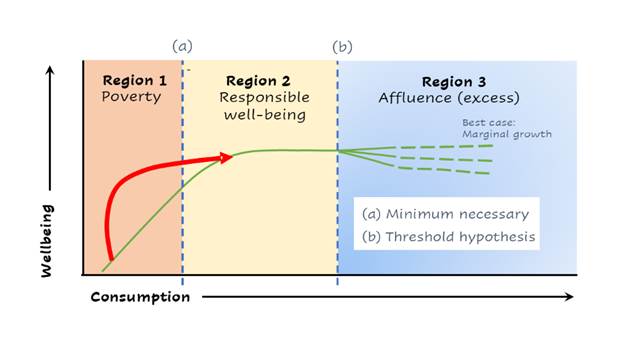
Figure 1: Responsible well-being and threshold limit 43
Furthermore, actions, choices, and decisions are beyond individual actions. Personal well-being is linked to the well-being of others and to the ecosystem that supports it, so, in practice, the concept of responsible well-being contributes effectively to a comprehensive human development project 43.
Consumption habits and satisfaction
A connection has long been established between technology and everyday life, not only in relation to devices, but also including the human behaviors towards them, especially with electrical energy and household appliances 46. Needs and habits are strong enough for the adoption of the new useful technologies or products that users incorporate into their way of life 34, wherein comfort and satisfaction are intrinsically linked to the use of electrical energy 47).
Daily activities related to household energy are influenced by the way in which these activities are performed. Satisfaction is based on occupants' perceptions and how their expectations can be met 47. The concept of sustainability, based on the satisfaction of human development needs, invites a broadening of our perspective beyond merely meeting needs, aiming at increasing capabilities and focusing on people's empowerment, their freedoms, and their ability to be agents of change 48.
Decision-making in rural electrification projects
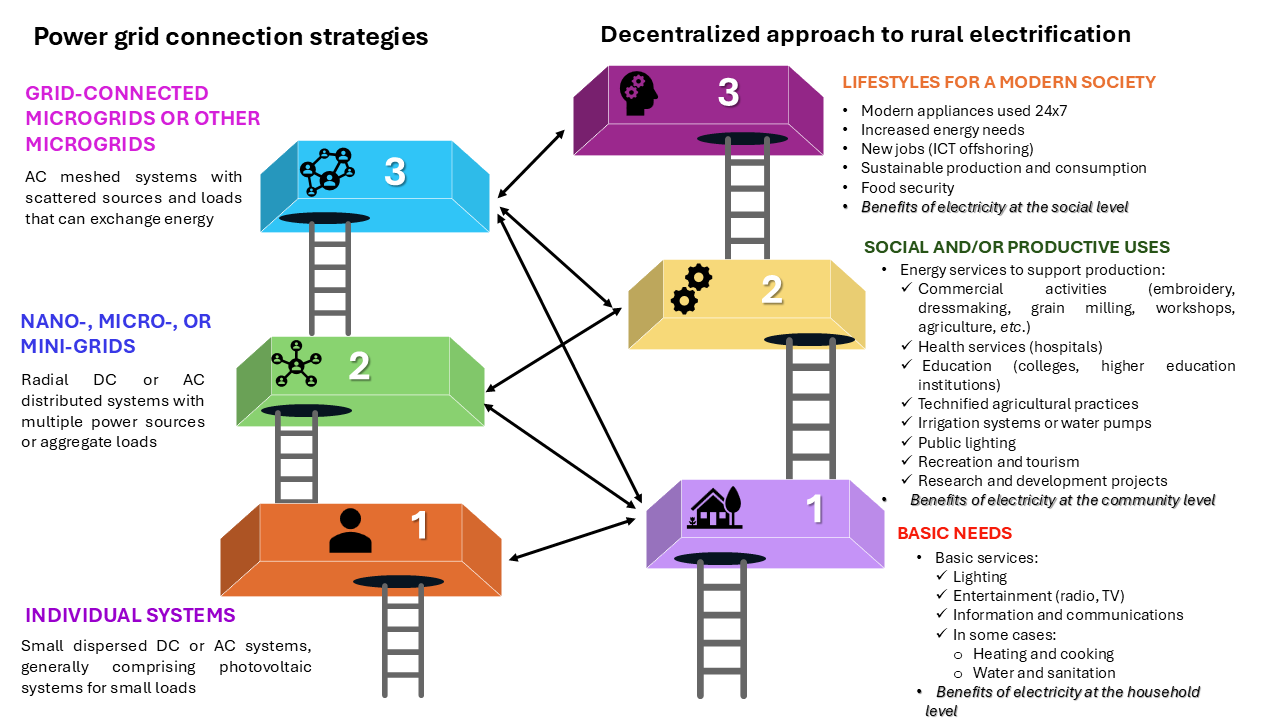
The ability of technology to meet rural energy needs has already been demonstrated, especially for those based on renewable energy sources, such as solar PV systems, small wind power generators, micro- and mini-hydropower plants, and biomass and diesel generators 49), (50. However, the strategies used to implement these solutions determine their viability and impact on the quality of life and the promotion of socioeconomic development in rural communities. In this sense, we propose organizing these strategies into three main levels of generation and distribution systems, ranging from individual systems to microgrids connected to the grid or to other microgrids, which can provide different benefits or services depending on what is required. This is shown in Fig. 2.
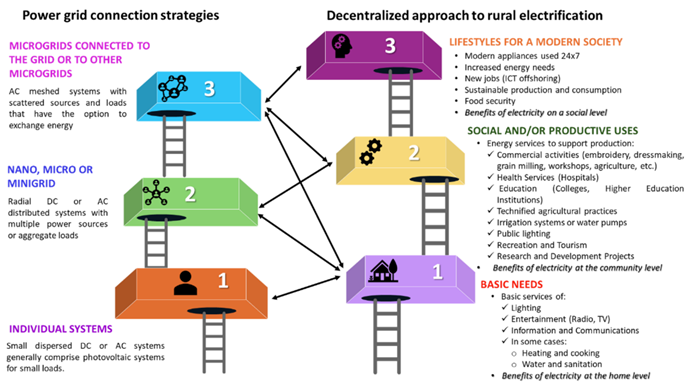
Figure 2: Proposal for the organization of generation and distribution strategies in rural áreas
Individual systems (level 1). This is the most basic level, generally consisting of small DC or AC systems (e.g., PVs) serving small and dispersed loads typical of isolated rural dwellings. The main advantage of these systems is their simplicity and low initial cost, which makes them an immediate solution for areas with very low population density. However, their limited capacity means that they cover only the lowest level of energy access, limiting their impact on community productivity and economic development.
Nano-, micro-, or mini-grids (level 2). These provide distributed, radial systems that can operate on DC or AC power, aggregating multiple energy sources and loads. These grids offer a more robust power supply than individual systems and allow for both social and productive uses. At the community level, these solutions enable significant improvements in social and economic well-being, provide sufficient energy for critical infrastructure, and promote sustainable development in rural areas.
Microgrids connected to the grid or to other microgrids (level 3). At the most advanced level, connected microgrids offer AC meshed systems that enable energy exchange with other microgrids or with the main power grid. These grids are designed to operate flexibly, adapting to both distributed energy resources and distributed loads. Not only does this type of grid meet the energy needs of the community; it also supports modern lifestyles by allowing the use of technology applications 24 hours a day, promoting food security and sustainable production.
However, introducing technologies without considering cultural contexts and preferences often leads to low technology adoption or the inefficient operation of electricity services 51), (52. Predominantly technocratic approaches are more like technological wishlists than representations of the real needs and capabilities of a community, or of the well-being that comes from using electrical or electronic devices in households, especially for the poorest.
In the discourse around the SDGs, electrification facilitates the satisfaction of basic needs and improves people's standard of living (as proposed by human capital theories), which is, therefore, where the emphasis should be placed.
In this context, we propose a strategy for decision-making in rural electrification projects that combines design thinking, the systemic approach, PAR, and the principles of behavioral economics.
Design thinking
Design thinking is a creative and collaborative methodology that places users at the center of the design process and promotes innovation through a nonlinear, iterative, and collaborative approach 53)-(56. In the context of rural electrification projects, it is possible to identify the following qualities of design thinking 53)-(56:
-
Focus on human needs. By placing people at the center of the design process, electrification solutions can be better tailored to the real needs of the community.
-
Innovation and creativity. In the phases pertaining to design and solutions (many of them innovative and creative), the interaction between different key stakeholders is fundamental.
-
Rapid prototyping. One of the strengths of this methodology is the creation of pilots and prototypes, as well as the rapid testing of solutions within the community. Testing energy systems—or emulating them in a reduced environment—allows learning from mistakes, adapting to local conditions, and improving the solution before full implementation.
-
Continuous iteration. Through the continuous cycle of feedback and improvement, solutions can be adapted based on direct community interaction. This ensures that the final system is efficient, functional, and accepted by end users.
Systemic approach
This is a methodology that considers the interaction between different elements and actors within a system in order to address complex problems 57)-(59. In rural electrification projects, a systemic approach is fundamental to understanding the interrelationships between technical, social, economic, political, and environmental factors. This approach has the following qualities for rural electrification projects 57)-(59:
-
Mapping of linkages: identifying how technical decisions affect social (equity of access), economic (cost of implementation), and environmental (use of natural resources) dimensions.
-
Informed decision-making: using multi-criteria analysis or simulation tools to assess how different electrification alternatives affect a system, ensuring a holistic approach to structured decision-making as well as the involvement of all stakeholders.
-
Managing complexity: facilitating a more flexible and adaptive decision-making process that is able to respond to changes in the local context or in the community’s needs, given that electrification projects in remote rural areas often face many dynamic and changing factors, such as those associated with energy policy, economic, or climatic conditions.
Participatory action research
PAR is a collaborative research methodology that involves community members throughout the process 60)-(64. It focuses on solving concrete problems that affect the community while generating practical and meaningful knowledge and ensuring that the proposed solutions are tailored to local needs and capacities. It consists of four main phases: planning, action, monitoring, and reflection. In the context of rural electrification projects, PAR includes the following 60)-(64:
-
Community empowerment: active involvement of the community in all stages of the project, from needs assessment to implementation and monitoring.
-
Shared diagnosis and local adaptability: enabling the design of solutions adapted to the community's specific context (climatic, economic, cultural), as the community itself participates in the diagnosis and planning process.
-
Capacity building: involving community members in the implementation and operation of the electricity system, thereby ensuring that they acquire technical skills for the maintenance and management of the infrastructure.
-
Trust building: active participation in decision-making, fostering a greater sense of ownership and commitment among the members of the community.
-
Sustainable solutions: addressing not only energy needs, but also cultural, social, and environmental issues by integrating local knowledge and community perspectives.
Behavioral economics
This approach regards humans as irrational and emotional beings influenced by cognitive biases, mental shortcuts (heuristics), emotional factors, and experience when making decisions (60)-(64). Behavioral economics combines principles from economics and psychology to explain why people, in practice, do not always make rational or optimal decisions.
In rural electrification projects, the use of nudges is essential for encouraging the adoption of sustainable energy technologies. Some strategic nudges adapted to the studied context include the following:
-
Making it visible and common. Examples of neighboring communities that already use renewable systems successfully can create a 'herd effect', motivating other households to follow the same trend.
-
Using standard options. Offering standardized alternatives makes decision-making easier.
-
Emphasizing immediate benefits. Visible improvements should be highlighted, such as reduced costs or the ability to extend study time with night lighting.
-
Deferring losses. Allowing for deferred payments or instalment financing reduces the sense of initial financial loss.
-
Making it automatic and hassle-free. Automatic payment plans with instalments adapted to families' ability to pay could be established.
-
Establishing new habits. Training project staff to guide communities in sustainable energy practices encourages the creation of new habits.
-
Tied or bundled enrolment. Integrating energy technology into the adoption of social or community programs facilitates access to systems.
-
Reducing cognitive overload. Adoption processes could be simplified by providing clear and structured information.
-
Encouraging self-monitoring. Energy savings targets could be set using meters that allow for real-time consumption monitoring.
-
Encouraging positive behavior. Publicly recognizing communities that adopt sustainable practices creates a motivating effect.
Methodological proposal for decision-making in rural electrification projects
Integrating the four approaches described in the previous section makes it possible to address issues related to the adoption, sustainability, and appropriation of energy technologies in rural communities while maximizing the active participation of local actors in the planning and implementation process, overcoming the limitations of traditional approaches that often fail to capture the complexity of human behavior and isolated rural communities.
Considering the above, the proposed methodology addresses the main complexities associated with community participation in electrification projects while considering technical, economic, social, political, environmental, and regulatory aspects, whose influence may vary depending on the type of user, the region, or the time horizon considered.
The systemic approach allows incorporating some variables with intrinsic characteristics and therefore cannot be evaluated in a fragmented manner. An example of this interconnection is the behavior of user demand, which simultaneously influences and is influenced by economic, technological, social, and environmental factors. Behavioral economics allow for improved acceptance and adoption of new technologies, facilitating the transition to sustainable energy systems through strategies that reduce resistance to change. Meanwhile, PAR encourages active community participation, involving its members in all phases of the project and enabling culturally relevant and accepted solutions. This participation is also essential for ensuring long-term technical, social, and economic sustainability, as it allows the community to manage and operate the systems autonomously, strengthening its independence and commitment to the project.
Fig. 3 summarizes the phases of the comprehensive participatory rural electrification process proposed by the authors.
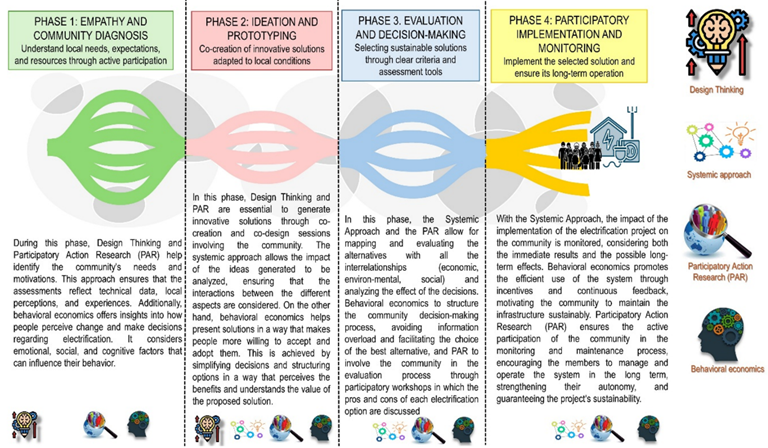
Figure 3: Phases of the comprehensive participatory rural electrification process framework
Some of the suggested tools for the implementation of this methodology are presented below.
-
Empathy map. This is a tool for design thinking processes and participatory projects that helps to understand the needs, thoughts, and behaviors of the members of a community. This representation allows visualizing different dimensions of the human experience, facilitating the creation of more people-centered solutions.
-
A day in the life of... This technique is based on experiencing the conditions of a user first-hand. It is useful in rural electrification projects, as it facilitates the identification of barriers and opportunities from the perspective of those who will benefit from the project.
-
Tell me about the last time you... This technique invites the participant to narrate a significant personal experience related to electrification or access to energy.
-
Construction of archetypes in a community. Here, archetypes are identified which help to understand social dynamics, as well as the way in which different actors influence the development and implementation of rural electrification initiatives.
-
Present and future scenario map. This map is divided into two-time axes (present and future) and into several categories. Common patterns or problems are identified, grouping similar ideas. Participants are asked to imagine different possible futures derived from the implementation of diverse energy solutions.
-
Multicriteria decision matrix. This technique allows comparing various electrification alternatives while considering technical, economic, environmental, and social criteria, facilitating an objective and balanced decision.
-
PESTLE. Political, economic, social, technological, legal, and environmental analysis is a key tool for identifying the external factors that can influence a rural electrification project.
-
Decision tree diagram. This tool allows visualizing the options and their consequences over time, considering risks, benefits and future decisions.
-
Effort-impact matrix. This technique evaluates alternatives while considering the effort required to implement them and the impact they will have on the community.
-
Participatory social audit. This approach allows the community to evaluate the transparency and efficiency of a project’s implementation, generating trust and strengthening participatory management.
It is not necessary to incorporate all the tools simultaneously when working with the community. However, to the extent that more tools can be included, the sustainability of the rural electrification process in a specific community will increase. An example of the PESTLE analysis for a rural community is shown in Fig. 4.
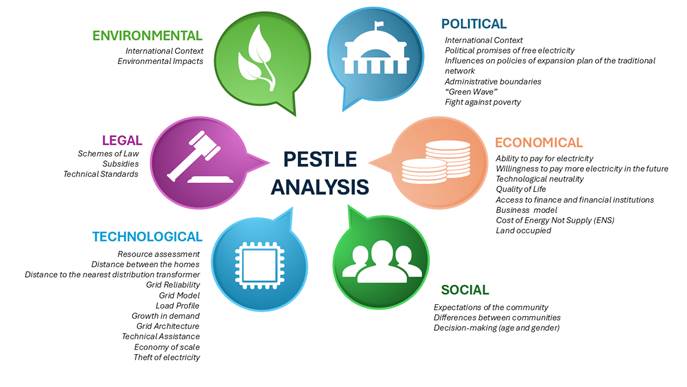
Figure 4: PESTLE Analysis. Adapted from 65)-(68).
Finally, as an input within the methodology, a survey using the Survey123 app is proposed as a tool for obtaining data, which enables direct interaction with an undetermined group of users, in order to identify the household appliances that they consider for their well-being at home, their consumption habits, their ranking of preferences, and the perception of user satisfaction regarding the use of appliances.
Fig. 5 presents the QR code to access the survey form.

Figure 5: QR code to Survey123
The survey questions are divided into sections according to the topic to be addressed:
-
Characteristics of the inhabitants and the house. Statistics are obtained on reference parameters regarding energy consumption, including the number of rooms in the house, the area, the number of people living in the house, and the family income (frequency and quantity).
-
Characteristics of the electricity service. Statistics are obtained on service provision, including the type of connection, the average energy consumption, and service reliability (i.e., the number of days that power was available, the hours of interruption, and the frequency of interruption).
-
Electrical devices. The new needs within society have led users to require a greater number of electrical devices to support their daily activities. This section explores essential appliances, the factors influencing decisions when acquiring devices for the household, the perceived sufficiency of equipment to meet daily needs, the frequency of use of different devices, and the types of technologies adopted, among other relevant aspects related to energy use and well-being.
-
Desirability. An evaluation model is proposed to compare users’ current conditions with their level of satisfaction when postponing an activity to a different time period, thereby capturing preferences, priorities, and perceived trade-offs in daily energy use.
-
The above-presented elements are key in situation diagnosis during the planning and design of rural electrification systems, providing multiple strategies with real options based on how people use technology in their daily lives, with the purpose of enhancing well-being.
To understand users and consider these aspects in designing technological solutions, active and direct participation is a valuable approach. Thus, information (including spatial data) can be collected and analyzed using web or mobile devices, grouping questions according to the answers. The survey has the possibility of sending data anonymously, which simplifies and speeds up the contribution while generating fewer concerns about data privacy.
Preliminary findings
A preliminary validation of the proposed approach was conducted by applying participatory tools in exploratory workshops and simulation exercises with academic stakeholders. 16 students from the Electrical Engineering program of Universidad Distrital Francisco José de Caldas participated in the activity. The students were selected based on their personal experience in rural areas, or if they had relatives who lived in such areas.
During the exercise, the students assumed different roles, e.g., community leaders, surveyors, technical experts, and community members (end users). They participated as potential beneficiaries of the proposed electrification systems.
Due to the low female participation in STEM disciplines, this trend was intentionally maintained in the exercise, in order to simulate the gender imbalance that is often present in real-world rural electrification contexts.
Three representative scenarios were developed to reflect the typical conditions of rural Colombian communities:
-
Minimal energy access
-
Restricted access with a gradually expanding grid
-
A system with technical issues and low community trust in the electricity provider
Each scenario was accompanied by the three descriptive narratives (Table II), which were used as discussion triggers.
The characteristics of the simulated surveys applied to the ‘users’ are presented in Tables III to V. These participatory experiences validated the applicability of the model in real-world contexts and revealed significant findings from both methodological and social perspectives.
Table II: Descriptive narratives of each scenario
Scenery 1
Scenery 2
Scenery 3
Don Álvaro, village leader" Every day, I get up at 5:30 a.m., before the sun rises over the mountains. We are six of us in my family: my wife, my children, and I. We have an old TV that only works when there's a signal, two cell phones that we all use together, and some rechargeable lamps just for the night. The electricity comes and goes. Some days, we cook with firewood. The rural network is unstable, and when it rains, it's out of the question: the electricity goes out for hours. Today, I walked to school to drop the children off. There, a teacher was trying to connect a tablet to the Internet with her data plan. It's not enough for everyone, but something is achieved. In the afternoon, I went to the neighboring village for a meeting with officials who promised improvements, but we already know that it will take years. Life here continues with the basics. Progress is slow, but we continue fighting so that our children have what we didn't have: real access to information.
Mrs. Miriam, president of the JAC Today started early with the sound of the refrigerator, which we were finally able to buy with the help of a small subsidy. We have six devices at home: two cell phones, a television, a small refrigerator, a light bulb, and a fan. The electrical grid has improved, and for the past few months, it has been operating longer. Now, almost everyone has at least one device connected. Internet access is provided through a small operator, and even when it goes down, it's useful for sending messages and checking community WhatsApp groups. During the day, I helped two neighbors make video calls with their children in the city. In the afternoon, I accompanied the electric company technician on his tour, showing him where there are poles in poor condition. Although connectivity is limited, the change is already noticeable. Many people have started taking online courses or selling products on social media. We are learning to trust, little by little. It's still lacking, but we are no longer so isolated.
Don Ernesto, community leader The morning began with an unexpected visit of technicians from a company that wants to install solar panels. They say that it's a clean and cheap solution, but people here don't trust them. A few years ago, other people promised us the same thing, and the equipment broke down shortly after, and no one responded to fix the problem. I have seven devices at home, including a small refrigerator we bought with great effort. The electricity grid works, though with ups and downs, and some people already have solar energy systems donated by an NGO. But half of the community still prefers the conventional grid. Today, I organized a meeting at the community center to listen to the company. They spoke kindly, but when we asked them about warranties and maintenance, they hesitated. People left with more questions than answers. At night, under the light of a barely illuminating solar lamp, I think about the future. We want to move forward, but with dignity and respect. We are not ignorant; we just want to be heard and respected.
Sandra, mother of three sons I get up before the rooster and heat water on the wood stove. At home, we only have a portable television that we use when there's a signal, and an old cell phone that I share with my husband. We charge it at my sister-in-law's house, who lives closer to the utility pole. The children do homework using notebooks and the books the school sent us months ago. The teacher sometimes sends them WhatsApp audio recordings, but we only hear them when we climb the hill where there's a signal. Today, I did laundry early, cooked rice with sardines, and then went to the village to get candles. In the afternoon, the children played outside because we don't have Internet or enough light to read. We dream of having a good refrigerator one day, but first, we need a good power grid.
Julián, day laborer My name is Julián, and I work as a day laborer on nearby farms. We are five people in my family, and we have several things we couldn't have imagined before: a small refrigerator, three cell phones, a fan, a television, and even a blender that my wife uses to make juices that she sells at school. Thanks to the improved electricity grid, there's almost always electricity now. At night, we watch the news, although sometimes the signal drops out. When I have data, I use my cell phone to watch agricultural videos on YouTube. Today, I went to work on a banana farm, and, when I got back, I checked my daughter’s homework she did online. We still don't understand everything, but she's teaching me. It's clear that life is changing, slowly, but surely.
Lucía, grandmother and caregiver I'm Lucía, 68 years old, and I take care of my two grandchildren. The house has electricity, a small refrigerator, a television, cellphones... all thanks to the electrical grid installed years ago. Recently, some men wearing hard hats came to say they'd install solar panels. I don't like it. A neighbor installed them, and three months later, they didn't work. Today, I turned on the television early and watched the news while my grandchildren got ready for school. Sometimes, I help them with homework they're doing on their cellphones. The neighbor tells me that the panels will make us pay less, but I prefer to pay a little more and be safe. It's not that we don't want progress; it's that we want things to work well.
Miguelito, 9-year-old boy My name is Miguelito, and I'm in third grade. I live with my mom, my grandmother, and my two sisters. We have a cellphone at home. Sometimes my mom lets me watch animal videos when we go to town and there's a signal. Today, I woke up to the roosters. My mom cooked the arepas over firewood because the electricity was out again. I walked to school with my sisters. The teacher told us the homework was on the phone, but we don't have Internet at home, so I had to write it in my notebook. In the afternoon, I went to the river to collect water. Then, I did my homework by the light of the sunset because the lamp wouldn’t turn on properly. Sometimes, I dream of having a computer like the ones that are used in the city.
Carolina, young entrepreneur I'm Carolina, 22 years old, and I sell arepas and yogurts on my sidewalk. Earlier, everything used to be communicated by word of mouth, but, since the Internet arrived (although slowly), I learned to use WhatsApp and Facebook to offer my products. Today, I got up at 4:30 to prepare the orders. I cooled the yogurts in my solar-powered cooler that an NGO installed. It's not very powerful, but it works. I took photos of my products and posted them. Then, I went to deliver them on my motorcycle. In the afternoon, I watched a video on how to improve my sales. I also helped a neighbor enroll her daughter at SENA (National Learning Service) using her cellphone. Sometimes, the electricity goes out, and, when the router is broken, no one comes quickly, but every day I feel like I can do more.
Don Tomás, a lifelong farmer I'm Don Tomás, 72 years old. I live with my wife on a small farm. I've grown corn and cassava all my life. Recently, a company has installed solar panels on some houses, but I didn't want them. I don't believe in them. Today, I worked in the pasture and helped my wife with the garden. We have conventional electricity, which sometimes goes out, but it's enough. We watch TV at night and only use our cellphones to call our children. The company came again to offer us the panels, and I said no. Here, everyone knows what they have. It's not that I'm against it, but I want to see it work well for others first. I've been promised many things in life that don't come true.
Table III: Scenario 1: very limited access
Household
People
Devices (TV/Cell/Light)
Energy Source
Works Well
Internet
Internet Use Frequency
Main Limitations
1
5
TV, cellphones
Solar panel
Sometimes
No
Rarely
Poor signal, power outages
2
4
Cellphones, lighting
Rural grid
Regular
No
Never
No coverage, high cost
3
6
TV, Cellphone, Lighting
Rural grid
Yes
Yes
Once a week
Limited data
4
3
Cellphone, TV, lighting
Diesel generator
Sometimes
No
Never
Expensive fuel, limited use time
5
7
Cellphones, lighting
Rural grid
Yes
Yes
Daily
Slow, unstable signal
6
2
TV, lighting
Solar panel
Sometimes
No
Never
Only works during the day
7
5
TV, cellphone, lighting
Rural grid
Yes
Yes
2-3 times/week
Low speed
8
4
Cellphone, lighting
Rural grid
Sometimes
No
Never
Inadequate devices
9
6
Cellphones
Solar panel
Yes
Yes
Daily
High mobile data costs
10
3
TV, lighting
Solar panel
Sometimes
No
Never
Weather-dependent energy
11
5
TV, cellphone, lighting
Rural grid
Regular
Yes
Weekends
Time constraints, weak signal
12
4
Cellphones, lighting
Rural grid
Yes
Yes
Daily
Time restrictions (e.g., school)
13
2
TV, cellphone
Solar panel
Sometimes
No
Never
No network, local use only
14
6
Cellphones
Rural grid
Yes
Yes
Daily
Shared device usage
15
3
TV, cellphone, lighting
Rural grid
Regular
No
Never
Obsolete equipment
Table IV: Scenario 2: limited access with expanding grid
Household
People
Devices
Energy Source
Works Well
Internet
Internet Use Frequency
Main Limitations
1
5
TV, cellphones, Lights, Fridge
Rural grid
Yes
Yes
Daily
Limited data
2
4
Cellphones, lights, radio, fridge
Rural grid
Yes
Yes
Several times a week
Low speed
3
6
TV, cellphones, lights, speaker
Rural grid
Regular
Yes
Daily
Occasional power outages
4
3
TV, lights, cellphones, Fan, fridge
Hybrid (solar + grid)
Sometimes
No
Rarely
Unstable power, poor coverage
5
7
TVs, cellphones, lights, fridge
Rural grid
Yes
Yes
Daily
Cost of mobile data
6
2
TV, cellphones, lights, mini-fridge
Solar panel
Regular
No
Never
Daytime-only use, no Internet
7
5
TV, cellphones, lights, radio, fridge
Rural grid
Yes
Yes
Weekends
Lack of shared devices
8
4
TV, lights, cellphones, basic fridge
Rural grid
Sometimes
Yes
Rarely
Expensive data, unstable connection
9
6
Cellphones, lights, speaker, fridge
Rural grid
Yes
Yes
Daily
Slow network, overcrowded use
10
3
TV, cellphones, lights, fridge
Rural grid
Regular
Yes
Weekly
Limited time or work availability
11
5
TV, cellphones, lights, radio, fridge
Rural grid
Yes
Yes
Daily
Data with limited speed
12
4
Cellphones, lights, TV, fridge
Rural grid
Yes
Yes
Daily
Old equipment, slow network
13
2
Cellphones, lights, portable fridge
Solar panel
Regular
No
Never
No coverage, limited energy
14
6
TV, cellphones, lights, fridge
Rural grid
Yes
Yes
Daily
Low capacity for streaming or online learning
15
3
TV, lights, cellphones, fridge
Rural grid
Regular
Yes
Weekly
Monthly cost, prioritized for other expenses
Table V: Scenario 3: institutional support with community distrust
Household
People
Devices
Energy Source
Works Well
Internet
Internet Use Frequency
Opinion on Renewables
Main Limitations
1
5
TV, cellphones, lights, fridge
Rural grid
Yes
Yes
Daily
Prefer existing grid, distrust
Fear of failure, lack of maintenance
2
4
Cellphones, lights, radio
Donated solar panel
Sometimes
No
Never
Accepted with doubts
Lack of system understanding
3
6
TV, lights, fridge, cellphones
Hybrid (grid + solar)
Regular
Yes
Weekly
Indifferent, mixed usage
Lack of technical guidance
4
3
TV, cellphones, lights
Rural grid
Yes
No
Never
Rejected due to past issues
Resistance to change
5
7
TV, cellphones, fridge, lights
Rural grid
Yes
Yes
Daily
Waiting to see results
Company distrust
6
2
TV, lights, cellphones
Institutional solar
Sometimes
No
Never
Accepted out of necessity
Partial functionality
7
5
TV, cell phones, lights
Rural grid
Yes
Yes
Weekends
Do not see the need to switch
Poor communication with company
8
4
TV, lights, fridge
Hybrid (grid + solar)
Regular
Yes
Rarely
Satisfied but still skeptical
Fear of misuse or lack of understanding
9
6
Cellphones, lights, fridge
Rural grid
Yes
Yes
Daily
Curious, want more information
Lack of community workshops
10
3
TV, cellphones, lights
SHS
Regular
Yes
Weekly
Use it for lower cost, there are still doubts
Lack of technical support
11
5
TV, cellphones, fridge, lights
Rural grid
Yes
Yes
Daily
Reject based on negative rumors
Unclear information
12
4
TV, cellphones, lights
Rural grid
Yes
Yes
Daily
Refuse to engage
Lack of institutional trust
13
2
TV, lights, portable fridge
Solar panel
Sometimes
No
Never
Use it but would not recommend
Low performance
14
6
TV, lights, fridge, cellphone
Rural grid
Yes
Yes
Daily
Uninterested in change
Prefer what they already know
15
3
TV, cellphone, lights, fridge
Hybrid
Regular
Yes
Weekly
Still evaluating the experience
Limited direct communication with community
During the workshops, hypothetical rural electrification scenarios were presented, considering different levels of access and community organization. Due to limited energy availability, individual solar systems were initially prioritized. However, after applying participatory tools, a collective need for community lighting systems emerged, aiming to enable shared nighttime activities.
In scenarios with limited but expanding access, even though some households had basic refrigerators, there was still a strong interest in having equipment for productive uses. This required a reevaluation and resizing of the initially proposed infrastructure.
Finally, in contexts with active institutional support, the community showed a significant interest in clean technologies, such as PV systems. However, they also expressed distrust in the long-term sustainability and maintenance of these systems, especially regarding ongoing technical support and transparent service delivery.
The following key findings were identified based on these exercises and the integration of the aforementioned approaches (design thinking, the systemic approach, PAR, and behavioral economics):
-
It was identified that electrical equipment fulfills its intended function, and that certain devices are also perceived as indicators of well-being.
-
An underrepresentation of collective needs was found in conventional diagnoses. The tools used revealed non-explicit energy demands, such as perimeter lighting for security or the possibility of simultaneously charging mobile devices in community areas.
-
Narrative and visual techniques helped to identify non-technical social barriers, such as institutional mistrust, a lack of knowledge about technology maintenance, and limited participation of women and youth in energy-related decision-making. These barriers, rendered invisible by purely technical approaches, can compromise the long-term sustainability of the implemented systems.
-
It is important to incorporate indicators of satisfaction and well-being into project evaluations, recognizing subjective dimensions such as autonomy, trust in technology, and community control as essential factors for technological adoption.
-
The application of the principles of behavioral economics, such as symbolic incentives, public visibility, and behavioral anchors, increased participants' willingness to adopt sustainable technologies and change their consumption habits.
These findings confirm that the proposed methodological model enables the integration of technical criteria with social, cultural, and emotional dimensions, ensuring that none of these dimensions override the others. Furthermore, the model facilitates the identification of emerging behaviors in contexts of incipient electrification, and it anticipates demand growth scenarios that traditional models do not consider. Furthermore, the use of digital tools (e.g., Survey123), adapted with a participatory approach, enables not only the characterization of consumption patterns, but also the collection of perceptions on family satisfaction, aspirations, and priorities, which are critical elements for guiding well-being-based decisions.
This methodological approach provides a flexible and scalable platform for improving decision-making processes in rural electrification from an integrative perspective. Overcoming the limitations of technocratic approaches, the model promotes context-sensitive, socially appropriate, and sustainable long-term decisions.
Conclusions
Success in rural electrification depends not only on technological implementation, but also on decision-making processes that actively incorporate the perspectives and priorities of the beneficiary communities. The proposed methodology emphasizes the importance of participatory and behavioral approaches that address the interrelationships between technical, social, economic, and environmental factors in order to ensure that energy solutions are sustainable and accepted by users. The adoption of a participatory and integrative (holistic) decision-making model ensures that rural communities not only have access to energy but are also involved in the management and long-term sustainability of projects, facilitating a positive impact on their well-being and development.
In this regard, government entities, system operators, academic institutions, and international cooperation agencies are encouraged to consider the following strategic guidelines:
-
Incorporate participatory and user-centered design tools from the initial stages of project identification and formulation.
-
Fund mechanisms that encompass energy infrastructure, capacity building, community strengthening, and social assessment processes.
-
Apply multidimensional impact indicators that include satisfaction levels, technological adoption, and community self-management capacity.
-
Promote social and technological innovation from the territories by recognizing and supporting local initiatives that promote equitable and sustainable access to energy.
This set of actions is consistent with the transition towards fair, resilient, and culturally relevant energy models, as proposed in the literature on energy justice and sustainable development 15. Thus, the main contribution of this research is not limited to formulating a theoretical model; it translates into a methodological proposal that seeks to strengthen community energy governance, ensure the sustainability of implemented solutions, and effectively contribute to achieving SDG7 in isolated rural regions.
References
License
Copyright (c) 2025 Diana Garcia Miranda, Francisco Santamaría Piedrahita, César Leonardo Trujillo Rodríguez, Marcel Castro Sitiriche

This work is licensed under a Creative Commons Attribution-NonCommercial-ShareAlike 4.0 International License.

From the edition of the V23N3 of year 2018 forward, the Creative Commons License "Attribution-Non-Commercial - No Derivative Works " is changed to the following:
Attribution - Non-Commercial - Share the same: this license allows others to distribute, remix, retouch, and create from your work in a non-commercial way, as long as they give you credit and license their new creations under the same conditions.

2.jpg)