DOI:
https://doi.org/10.14483/23448393.23566Published:
2025-03-31Issue:
Vol. 30 No. 1 (2025): January-AprilSection:
EditorialRIBIERSE-Cyted: Network for the Large-Scale Integration of Renewable Energies in Electrical Systems) – Results for 2024
RIBIERSE-Cyted: Red para la integración a gran escala de energías renovables en sistemas eléctricos: resultados para 2024
Keywords:
Renewable Energies, Electrical Systems, network (en).Downloads
References
.
How to Cite
APA
ACM
ACS
ABNT
Chicago
Harvard
IEEE
MLA
Turabian
Vancouver
Download Citation
1. Description of the Scientific-Technical Network
The RIBIERSE-CYTED network, i.e., the Network for the Large-Scale Integration of Renewable Energies in Electrical Systems (723RT0150; 2023-2026), is a hub for researchers and technologists attached to Ibero-American universities, companies, and local administrations. From a scientific and technical perspective, this network contributes to the decarbonization of the electricity sector by favoring the large-scale integration of renewable sources into electric power systems. It promotes and articulates a framework for joint university-business cooperation and scientific research with a shared Ibero-American vision, and it encourages knowledge of the renewable context from service providers to end users.
To this effect, the proposed lines of action, which are derived from the specific objectives (SOs) of this network, are grouped into three areas. The first line includes the assessment of energy planning models and tools, as well as the prediction, evaluation, control, and management of the renewable sources currently in use in Ibero-American countries. All this, with the aim of extending, developing, and systematizing their application. The second line deals with analyzing the effective application of methodologies in real cases. Finally, the third line is dedicated to the technical training of researchers and suppliers of sustainable systems, as well as to the electrical eco-literacy of end users.
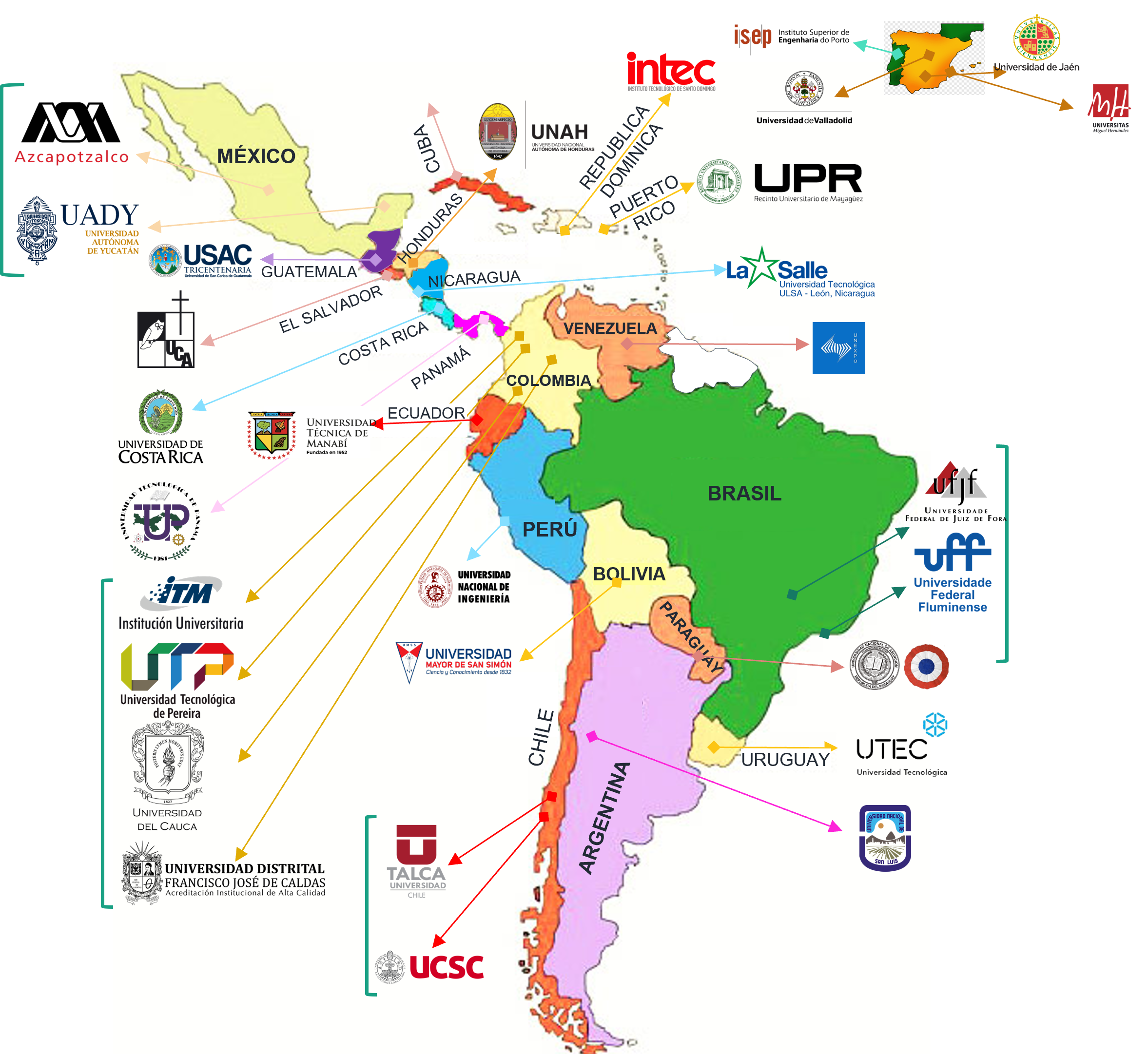
The RIBIERSE-CYTED network is made up of 48 groups and 272 researchers from 22 Ibero-American countries: Argentina, Bolivia, Brazil, Chile, Colombia, Costa Rica, Cuba, Ecuador, El Salvador, Spain, Guatemala, Honduras, Mexico, Nicaragua, Panama, Paraguay, Peru, Portugal, Puerto Rico, Dominican Republic, Uruguay, and Venezuela. 29 of the participating partners are research groups from different universities (Fig. 1) (Appendix 1) and the rest belong to companies and local administrations.

Figure 1: Geographical distribution of the Ibero-American universities in RIBIERSE-CYTED
2. Results
The significant dynamism of each of the partners and their strengths in relation to the network's objectives has allowed for a noteworthy number of achievements in 2024. Thereupon, the following actions have been taken as initially planned:
-
Holding the annual coordination meeting
-
Holding Workshop #1
-
Setting up and monitoring multiple pilot projects
-
Analyzing opportunities for external funding for the CYTED
-
Holding Workshop #2
-
Planning technical reports
As a consequence of this strong dynamism, all actions, distributed among 13 SOs, have led to the following activities:
-
23 research projects, most of which are mainly aligned with SO04 (Development of technical and economic tools for optimal electrical management in the hybridization of different renewable technologies, storage types, and 'E-Mobility'), SO05 (Identification of technological, regulatory, and socio-economic benefits and barriers for the massive integration and hybridization of renewables in Ibero-American countries), and SO06 (Study of the impact on current/future electrical systems of this integration, with an emphasis on temporal variability; promotion ofmitigation measures).
-
One infrastructure work, i.e., the construction of a new microgrid at the Automatic Control Laboratory of Universidad Nacional de San Luis, Argentina.
-
Two technological contracts, one for technical and scientific contract consultancy for a local company named Candela Solar (Argentina) and another one involving computational methods for the planning and operation of distribution networks while considering renewable energies (Colombia).
-
38 Master/Bachelor final projects from network member universities in Spain, Colombia, Brazil, and Cuba. In addition, four doctoral theses from partner universities in Spain, Colombia, and the Dominican Republic, one of which is collaborative. Out of these works, a total of 40 is aligned with SO04.
-
Four internships carried out by PhD students. Two of them were carried out at the University of Jaén (Spain), another one at Oak Ridge National Laboratory (USA), and the last one at Universidad de Talca (Chile).
-
23 short mobilities, with hosting centers in Spain, Chile, Guatemala, Panama, Mexico, Colombia, Argentina, Puerto Rico, Brazil, and Portugal. Most of these initiatives received external funding for their implementation.
-
Five national conferences organized by member universities of the network (Argentina, Brazil, and Panama).
-
Four international conferences: the VII International Ibero-American Congress on Smart Cities, ICSC-CITIES 2024, co-organized by the University of Valladolid (Spain), Universidad de la República (Uruguay), Universidad Autónoma del Estado de Morelos (Mexico), Instituto Tecnológico de Costa Rica, and the University of Jaen (Spain); the 3rd International Congress on Electrical Engineering, Electronics, and Automation and the 8th International Scientific Convention (CCIUTM-2024), co-organized by Universidad Técnica de Manabí (Ecuador) and the University of Jaén (Spain); and the 18th Brazilian Power Electronics Conference (COBEP), co-organized by two member universities from Brazil, i.e., (Universidade Federal Fluminense and Universidade Federal do Juiz de Fora).
-
Two postgraduate courses in Argentina: i) Methodology for the dissemination ofengineering sciences and ii) Distributed generation systems.
-
Four technical courses in Spain, Mexico, and Colombia.
-
One diploma course in Panama.
-
One Technical Day, organized by a Spanish university (Miguel Hernández University of Elche).
-
The annual coordination meeting of the RIBIERSE-CYTED in the city of Mérida, Mexico, co-organized by Universidad Autónoma de Yucatán (Mexico) and the University of Jaén (Spain).
-
Four events in other categories, organized by member universities in Spain, Honduras, and Ecuador.
-
One Engineering Week organized by Argentina's partner university.
-
One seminar organized by Universidad de Puerto Rico.
-
One symposium organized by the Cuban university of the network, the First International Symposium on Electromobility and Energy Transition (Electromovilidad 2024).
-
Two webinars organized by universities in Spain and Colombia.
-
One workshop organized by the University of Jaén: I International Workshop. Hardware and computational tools applied to the management/optimization of networks and microgrids with renewable energies.
-
Three technical workshops organized by the Cuban member university.
-
One cycle of postgraduate conferences with speakers from members from Spain and Mexico, which was published on the CYTED website.
-
143 articles published in scientific journals, 63 of which were collaborative works.
-
Three scientific books, two of which were collaborative works.
-
39 articles related to participation in scientific events (conferences), 31 of which were collaborative works.
-
Two deliverables with the participation of all RIBIERSE members.
-
18 internal deliverables.
-
33 news pieces available on the CYTED website, reporting on the achievements made by the network. In addition, 41 CYTED pieces have been disseminated through other channels and are related to congresses, courses, conferences, engineering weeks, workshop seminars, doctoral theses, short mobilities, and attendance to scientific events.
All these activities, categorized as Achievements, Events, and Publications, are aligned with the RIBIERSE-CYTED network's SOs and have been materialized in a total of 417 deliverables.
3. Partner interrelation activity in the network
Coordination work for the RIBIERSE-CYTED network was carried out through different meetings, held in person and/or online with different actors and objectives, i.e.,
-
An annual coordination meeting
-
Partner coordination meetings
-
Meetings at international conferences
-
Events (conferences, congresses, postgraduate courses, diploma courses, courses, seminars, other events, thematic weeks, seminar, symposium, workshop, webinar, technical days)
-
Meetings on the lines of action of the RIBIERSE-CYTED network.
In 2024, each of the activities was carried out individually by a partner or collaboratively. The total number of activities in which each partner has participated is shown in Fig. 2. In addition, Table I and Fig. 3 show the individual and collaborative activities conducted by each partner.
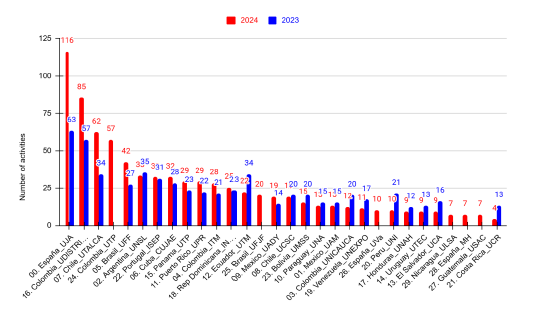
Figure 2: Total activities conducted by each partner
The second year of development of the RIBIERSE-CYTED network (2024) has been characterized by significant growth in terms of collaboration between partners, which is evidenced by the significant number of collaborative activities conducted during this period. In all categories, the percentage of collaborative activities has grown substantially, as shown in Fig. 4.
Fig. 5 presents a circular diagram of collaborations. Here, line thickness reflects the number of collaborative activities, and circle size denotes the number of individual activities. This figure highlights the change in the interrelation between the partners involved in collaborative activities. The graph for 2023 faithfully reflects what happened in the first year of the network's journey, as collaboration between member partners was still difficult, sometimes due to lack of knowledge regarding each research group's lines of work or the personal relationships that could benefit professionals in the medium and long term. However, in 2024, more than 50 % of the partners had already established solid collaboration with a significant number of their counterparts.

Figure 3: Individual and collaborative activities carried out in 2024
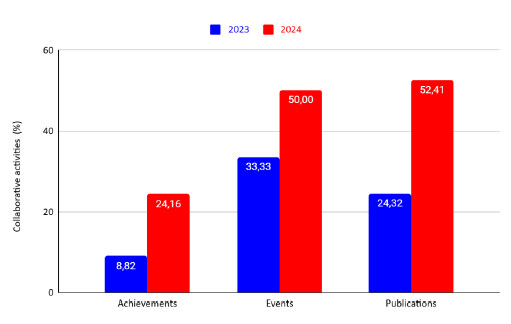
Figure 4: Percentage of collaborative activities by category 2023 vs. 2024
Table I: Individual and collaborative activities conducted in 2024
00. Espana_UJA
01. Mexico_UAM
02. Argentina_UNSL
03. Colombia_UNICAUCA
04. Colombia_ITM
05. Brasil_UFF
06. Cuba_CUJAE
07. Chile_UTALCA
08. Chile_USSC
09. Mexico_UADY
10. Paraguay_UNA
11. Puerto Rico_UPR
12. Ecuador_UTM
13. El Salvador_UCA
14. Uruguay_UTEC
15. Panama_UTP
16. Colombia_UDISTRITAL
17. Honduras_UNAH
18. Rep. Dominicana_INTEC
19. Venezuela_UNEXPO
20. Peru_UNI
21. Costa Rica_UCR
22. Portugal_ISEP
23. Bolivia_UMSS
24. Colombia_UTP
24. Brasil_UFJF
26. Espana_UVa
27. Guatemala_USAC
28. Espana_MH
29. Nicaragua_ULSA
00. España_UJA
39
6
12
6
8
11
9
22
10
9
4
14
11
6
7
12
20
4
10
11
5
4
10
5
12
5
5
6
6
4
01.México_UAM
5
4
4
4
4
4
4
4
6
4
4
4
4
4
4
4
4
4
4
4
4
4
4
4
4
4
4
4
4
02. Argentina_UNSL
14
4
4
8
5
14
7
4
4
7
5
4
4
4
13
4
5
4
4
4
6
4
7
4
4
4
4
4
03. Colombia_UNICAUCA
5
4
4
4
5
4
6
4
6
4
4
4
6
5
4
4
4
4
4
4
4
5
4
4
4
4
4
04. Colombia_ITM
4
4
4
21
4
4
4
6
4
4
4
4
21
4
4
4
4
4
4
4
6
4
4
4
4
4
05. Brasil_UFF
22
5
10
4
4
4
7
5
4
4
4
7
4
5
4
4
4
8
4
4
12
4
4
4
4
06. Cuba_CUJAE
18
5
6
4
4
5
10
6
4
6
5
4
5
6
4
4
4
4
4
4
4
4
4
4
07. Chile_UTALCA
2
11
4
5
9
5
4
4
4
37
4
7
4
4
4
8
4
20
5
4
4
4
4
08. Chile_USSC
4
4
4
4
4
5
4
6
4
4
5
6
4
4
4
4
4
4
4
4
4
4
09. México_UADY
6
6
6
4
4
4
6
4
4
4
5
4
4
5
4
4
4
4
4
4
4
10. Paraguay_UNA
6
6
4
4
4
6
4
4
4
5
4
4
5
4
4
4
4
4
4
4
11. Puerto Rico_UPR
10
5
4
4
6
10
4
8
4
4
4
6
4
5
4
4
4
4
4
12. Ecuador_UTM
6
4
4
4
4
5
4
5
4
4
4
4
4
4
4
4
4
4
13. El Salvador_UCA
3
4
6
4
4
4
6
4
4
4
4
4
4
4
4
4
4
14. Uruguay_UTEC
2
4
4
4
4
4
4
4
4
4
4
4
4
4
4
4
15. Panamá_UTP
17
4
4
4
4
4
4
4
4
4
4
4
4
4
4
16. Colombia_UDISTRITAL
13
4
5
4
4
4
6
4
41
4
4
4
4
4
17. Honduras_UNAH
5
4
4
4
4
4
4
4
4
4
4
4
4
18. Rep. Dominicana_INTEC
14
4
4
4
4
4
4
4
4
4
4
4
19. Venezuela_UNEXPO
0
4
4
5
4
4
4
4
4
4
4
20. Perú_UNI
4
4
4
4
4
4
4
4
4
4
21. Costa Rica_UCR
0
4
4
4
4
4
4
4
4
22. Portugal_ISEP
16
4
5
9
4
4
4
4
23. Bolivia_UMSS
10
4
4
4
4
4
4
24. Colombia_UTP
9
4
4
4
4
4
24. Brasil_UFJF
4
4
4
4
4
26. España_UVa
5
4
4
4
27. Guatemala_USAC
1
4
4
28. España_MH
1
4
29. Nicaragua_ULSA
1
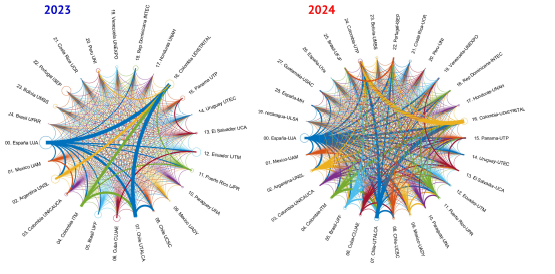
Figure 5: Interrelation between partners in collaborative activities (2023 vs. 2024)
4. Conclusion
The RIBIERSE-CYTED network includes partners from 22 countries, involving a total of 272 people. In this context, administrative management and expense forecasting has become a complex issue, especially regarding the management and organization of the II Annual Meeting of the RIBIERSE-CYTED network, held in the city of Mérida, Mexico, as well as regarding the mobility of several partners.
The different time zones of the 22 countries in the network make it difficult to agree on work schedules for events and collective meetings. To overcome this challenge, the proposals for new activities have been divided into subtasks, linking the partners in work nodes, an approach that was strengthened after the II Annual Meeting.
There has been great synergy between partners during the network's second year thanks to the initial dynamism, which has enabled the extension of our work modes to other groups, as well as their involvement, completing the activities scheduled for 2024 and exceeding the expectations in many cases. It is worth noting that all these achievements demonstrate the great commitment of the members, who are grateful for the support offered by the Ibero-American Program of Science and Technology for Development (CYTED)**. Nonetheless, the funding and support provided to the RIBIERSE-CYTED network by the University of Jaén, Universidad Autónoma de Yucatán (UADY), and all the participating universities and companies external to the network have been crucial for achieving so many activities.
Appendix 1
Appendix 1: Research group leaders
Name
Affiliation
ORCID
Email
Maria de los Angeles Medina Quesada
Department of Electrical Engineering, University of Jaen, Jaen 23071, Spain;
https://orcid.org/0000-0003-3924-7986
aquesada@ujaen.es
Oscar Danilo Montoya Giraldo
Facultad de Ingeniería, Universidad Distrital Francisco José de Caldas, Bogotá 110231, Colombia;
https://orcid.org/0000-0001-6051-4925
o.d.montoyagiraldo@ieee.org
Carlos Rodrigo Baier Fuentes
Department of Electrical Engineering, Universidad de Talca, Curicó, Chile;
https://orcid.org/0000-0002-1752-1625
cbaier@utalca.cl
Walter Julián Gil González
Department of Electrical Engineering, Universidad Tecnologica de Pereira, Pereira 660003, Colombia;
https://orcid.org/0000-0001-7609-1197
wjgil@utp.edu.co
Rubén Iván Bolaños
Instituto Tecnologico Metropolitano, Medellin, Antioquia 050034, Colombia;
https://orcid.org/0000-0002-0910-6579
rubenbolanos@itm.edu.co
Bruno Wanderley França
Departamento de Engenharia Elétrica, Núcleo de Inovação Tecnológica em Engenharia Elétrica -NITEE, Universidade Federal Fluminense, Niterói, RJ, Brazil;
https://orcid.org/0000-0003-0788-7997
bwfranca@id.uff.br
Federico Martin Serra
Laboratorio de Control Automático, Facultad de Ingeniería y Ciencias Agropecuarias, Universidad Nacional de San Luis, San Luis, Argentina;
https://orcid.org/0000-0002-4467-7836
serrafederico@gmail.com
Fabio Andrade Rengifo
Department of Electrical and Computer Engineering, University of Puerto Rico, Mayaguez, Mayaguez campus, PR 00681, USA;
https://orcid.org/0000-0002-8859-7336
fabio.andrade@upr.edu
Joao André Pinto Soares
GECAD - Research Group on Intelligent Engineering and Computing for Advanced Innovation and Development, LASI - Intelligent Systems Associate Laboratory, Polytechnic of Porto, Porto, Portugal;
https://orcid.org/0000-0002-4172-4502
jan@isep.ipp.pt
Ney Raul Balderramo Velez
Department of Electrical Engineering, Technical University of Manabi, Manabi, Ecuador;
https://orcid.org/0000-0001-8502-4332
ney.balderramo@utm.edu.ec
Bruno Henriques Dias
Electrical Energy Department, Federal University of Juiz de Fora, Juiz de Fora, MG, 36036-900, Brazil;
https://orcid.org/0000-0002-7663-235X
bhdias@gmail.com
Eduardo Enrique Espinosa Neira
Department of Electrical Engineering, Faculty of Engineering, Universidad Católica de la Santísima Concepción, Talca 3467769, Chile;
https://orcid.org/0000-0002-8896-0852
eespinosa@ucsc.cl
Miguel Castro Fernández
Centro de Investigaciones y Pruebas Electroenergéticas Centre for Electroenergetic Research and Testing (CIPEL), Faculty of Electrical Engineering, Technological University of Havana José Antonio Echeverría (CUJAE), La Habana 19390, Cuba;
https://orcid.org/0000-0002-3983-469X
mcastro1956@gmail.com
Roberto Eduardo Quintal Palomo
Facultad de Ingeniería, Universidad Autónoma de Yucatán, Cordemex, Mérida, Yucatán 97310, México;
https://orcid.org/0000-0001-8265-3977
roberto.quintal@correo.uady.mx
Félix Ramón Henriquez Espinosa
Faculty of Mechanical Engineering, Technological University of Panama Panama, Republic of Panama
https://orcid.org/0000-0002-9009-2599
felix.henriquez@utp.ac.pa
Miguel Euclides Aybar Mejia
Área de Ingeniería, Instituto Tecnológico de Santo Domingo, Santo Domingo 10602, Dominican Republic;
https://orcid.org/0000-0002-4715-3499
miguel.aybar@intec.edu.do
Carmen Luisa Vásquez Stanescu
Universidad Nacional Experimental Politécnica Antonio José de Sucre, Parque Tecnológico, Barquisimeto, Venezuela;
https://orcid.org/0000-0002-0657-3470
cvasquez@unexpo.edu.ve
Francisco Beltrán Carbajal
Departamento de Energía, Unidad Azcapotzalco, Universidad Autónoma Metropolitana, Azcapotzalco, Ciudad de Mexico 02200, Mexico;
https://orcid.org/0000-0001-5244-5587
fbeltran@azc.uam.mx
Osvaldo Julián González Barrios
Laboratory of Power Systems and Control, Facultad de Ingeniería, Universidad Nacional de Asunción, Luque, Paraguay;
https://orcid.org/0000-0002-2191-9636
ogonzalez@ing.una.py
Félix Rustan Roca Subirana
Department of Mechanical Engineering, Universidad Mayor de San Simón, Cochabamba, Cercado 0301, Bolivia;
https://orcid.org/0009-0001-1302-3311
rustanroca.s@fcyt.umss.edu.bo
Jorge Luis Mirez Tarrillo
Group of Mathematical Modeling and Numerical Simulation, Faculty of Oil, Natural Gas and Petrochemical Engineering, National University of Engineering, Lima, Peru
https://orcid.org/0000-0002-5614-5853
jmirez@uni.edu.pe
Luis Aarón Martínez Figueroa
Department of Energy and Fluid Sciences, Universidad Centroamericana José Simeón Cañas, El Salvador
https://orcid.org/0000-0002-6553-8819
lamartinez@uca.edu.sv
Franciele Weschenfelder
Offshore Wind Energy Research Group, Universidad Tecnológica del Uruguay, Durazno, Uruguay
https://orcid.org/0009-0003-1525-0766
franciele.weschenfelder@utec.edu.uy
Jesús de la Casa Hernández
Department of Electrical Engineering, University of Jaen, Jaen 23071, Spain;
https://orcid.org/0000-0001-9117-1689
jcasa@ujaen.es
License

This work is licensed under a Creative Commons Attribution-NonCommercial-ShareAlike 4.0 International License.

From the edition of the V23N3 of year 2018 forward, the Creative Commons License "Attribution-Non-Commercial - No Derivative Works " is changed to the following:
Attribution - Non-Commercial - Share the same: this license allows others to distribute, remix, retouch, and create from your work in a non-commercial way, as long as they give you credit and license their new creations under the same conditions.



2.jpg)