DOI:
https://doi.org/10.14483/23464712.23299Publicado:
2026-04-29Music and poetry as cognitive mediators in chemistry learning: an interdisciplinary approach in high school
Música y poesía como mediadoras cognitivas en el aprendizaje de la química: un enfoque interdisciplinario en la educación secundaria
Música e poesia como mediadoras cognitivas na aprendizagem de química: uma abordagem interdisciplinar no ensino médio
Descargas
Referencias
Andrade, D. R; Junior, W. E. F. (2024). Poesia “comciência”: uma gota, o tempo, um químico “invisível” e um Machado. Química Nova na Escola, 46(3): 166-175.
Assunção, R. C. B; Albuquerque, C. F. O; Silva, E. B; Navarro, D. M. A. F; Brandão, Y. B; Oliveira, D. C; Melo, A. P; Araújo, L. A. (2024). Pigmentos da Tatuagem: uma atividade contextualizada para o ensino de química orgânica. Revista Observatorio de la Economia Latinoamericana, 22(12): 01-19.
Barbosa-Lima, M. C. (2020). Literatura e Arte no ensino de Ciências: a formação de professores para alunos com deficiências visuais no Ensino Fundamental. Caderno Brasileiro de Ensino de Física, 37(2): 718-729.
Borges, R. S; Luz Junior, G. E. (2019). A contextualização do ensino de química: um olhar reflexivo sobre a prática dos professores. Revista Debates em Ensino de Química, 5(1): 109–118.
Carrijo, V. S; Souza, J. I. F. R; Miranda, M. L. D. (2020). Bisphenol A, the Villain of Plastics: Chemistry Teaching to Raise Students’ Awareness in a High School in Southeastern Brazil. Orbital: The Electronic Journal of Chemistry, 12(2): 95-99.
Côgo, S. M. B; Rainha, K. P; Teixeira, A. L; Castro, E. V. R; Ferreira, S. A. D; Lelis, M. F. F. (2022). A Química do Amor: Uma Sequência Didática para o Ensino de Química Orgânica. Revista Virtual de Química, 14(5): 843-852.
Costa, N. M. S. (2023). Ensinar química através dos poemas de primo Levi. Impacto, 1(2): e78177.
Ferreira, D. S; Nunes, V. L. N. D; Sousa, E. N. S; Fernandes, R. M. T. (2020). Ciências no nono ano do Ensino Fundamental: introdução do Ensino de Química por meio de atividades experimentais. Brazilian Journal of Development, 6(12): 100041-100049.
Ferreira, M. R; Teodoro, P. V. (2025). A música na didática em ciências: uma revisão bibliográfica a partir dos anais do ENEQ. ENCITEC - Ensino de Ciências e Tecnologia em Revista, 15(1): 7-22.
Gonçalves, G. G; Miranda, M. L. D. (2024). Your Favorite Beverage is an Opportunity to Talk About Chemistry: Didactic Application to the Brazilian High School. Orbital: The Electronic Journal of Chemistry, 16(3): 225-228.
Junior, W. E. F; Leite, W. R. (2020). Leituras de um poema científico por graduandos em química: implicações pedagógicas a partir de reações estéticas. Revista eletrônica Ludus Scientiae - (RELuS), 4(2): 26-36.
Leite, L. R; Lima, J. O. G. (2015). O aprendizado da Química na concepção de professores e alunos do ensino médio: um estudo de caso. Revista Brasileira de Estudos Pedagógicos, 96(243): 380-398.
Melo, R. A; Nunes, A. J. P; Lima, F. R. (2020). A poesia e o ensino de Ciências Naturais em escolas do campo: fronteiras entre a criatividade e o desenvolvimento de estratégias metodológicas. Revista Insignare Scientia, 3(4): 417-436.
Mota, E. C; Ferreira, M. V. (2020). Poemando por aí: metodologias ativas e ludicidade no ensino de poesia. Linguística, Letras e Artes: Cânones, ideias e lugares 2. Editora Atena, Cap. 8, p. 81-93.
Oliveira, P. W; Santos, N. P. (2017). Literatura e química: possíveis interações. Revista Scientiarum Historia, 1(1): e153.
Raupp, D. T; Reppold, D. P. (2020). Ensino de química contextualizado: analisando as diferentes perspectivas dos artigos publicados na revista Química Nova na Escola de 2009- 2019. Brazilian Journal of Development, 6(4): 17322-17332.
Santos, F. S; Brandão, E. G. (2024). Principais dificuldades e a falta de contextualização para o ensino de química. Missões, 10(1): 1-12.
Santos, I. M. Lourenço; Santos, P. F. Poema: Seu uso como Estratégia Facilitadora do Processo de Ensino e Aprendizagem em Sala de Aula. Id on Line Revista Multidisciplinar e de Psicologia, 14(52): 903-912.
Silva, C. S. (2011). Poesia de António Gedeão e a Formação de Professores de Química. Química Nova na Escola, 33(2): 77-84.
Silva, A. C; Ávila, H. M. C.; Oliveira, D. Q; Gonçalves, F. P. (2023). O conto literário no ensino e na formação de professores de Química. Química Nova na Escola, 45(4): 275-282.
Silva, C. S; Bedin, E. A. (2023). Contextualização no Ensino de Química por Meio de Séries Televisivas. Ensino, Educação e Ciências Humanas, 24(1): 1-13.
Sousa, J. L. O; Miranda, M. L. D. (2024). Intrinsic relations among chemistry, physics and mathematics in the Brazilian high school: a theoretical-methodological approach. EccoS – Revista Científica, 70(1): 1-14.
Sousa, J. A; Ibiapina, B. R. S. (2023). Contextualização no ensino de química e suas influências para a formação da cidadania. Revista Ifes Ciência, 9(1): 1-14.
Souza, A. M. A; Junior, A. M. M; Oliveira, E. G; Almeida, M. G. O. (2018). Interdisciplinaridade entre biologia e química: a bioquímica ligando disciplinas. Revista Cadernos de Estudos e Pesquisas na Educação Básica, 4(1): 197-212.
Souza Junior, F. A; Fernandes, L. M. E. (2023). A importância da utilização da música na escola. Revista Educação Pública, 23(6): 1-3.
Wallau, W. M. (2014). Química na poesia e poesia na química. Química Nova, 37(10): 1721-1731.
Cómo citar
APA
ACM
ACS
ABNT
Chicago
Harvard
IEEE
MLA
Turabian
Vancouver
Descargar cita
Recibido: 1 de marzo de 2025; Aceptado: 4 de abril de 2026
Abstract
Este estudio investiga la integración entre Química y géneros literarios como un enfoque interdisciplinario para promover el aprendizaje significativo en la educación secundaria. La investigación se caracteriza como una intervención pedagógica de naturaleza cualitativa, que involucró a 160 estudiantes de primer año de educación media técnica. La propuesta se estructuró en tres etapas: identificación e interpretación de conceptos químicos en letras de canciones y poemas, producción de textos originales con contenido científico y selección de producciones representativas para su análisis. Los datos estuvieron constituidos por las interpretaciones escritas y producciones creativas de los estudiantes, analizados mediante un enfoque de análisis temático cualitativo, considerando la precisión de los conceptos químicos, la traducción del lenguaje cotidiano al lenguaje científico y la integración entre la expresión artística y el conocimiento científico. Los resultados indican que los estudiantes fueron capaces de identificar, reinterpretar y reconstruir conceptos químicos a través del lenguaje literario y musical, evidenciando el desarrollo de habilidades cognitivas de orden superior, como la abstracción, la interpretación y la transferencia de conocimiento. Además, el proceso de creación de poemas y letras de canciones mostró que el lenguaje metafórico puede actuar como mediador cognitivo, facilitando la comprensión conceptual sin comprometer la rigurosidad científica. Los hallazgos sugieren que la integración del lenguaje artístico en la enseñanza de la Química promueve el compromiso cognitivo, afectivo y creativo, contribuyendo a procesos de aprendizaje más contextualizados y significativos. Este estudio amplía las posibilidades metodológicas en la educación científica al destacar el potencial pedagógico de enfoques interdisciplinarios que articulan los dominios científico y artístico.
Keywords
Chemistry teaching, chemical language, emotional language, protagonist of knowledge.Resumo
Este estudo investiga a integração entre Química e gêneros literários como uma abordagem interdisciplinar para promover a aprendizagem significativa no ensino médio. A pesquisa caracteriza-se como uma intervenção pedagógica qualitativa, envolvendo 160 estudantes do primeiro ano do ensino médio técnico. A proposta foi estruturada em três etapas: identificação e interpretação de conceitos químicos em letras de músicas e poemas, produção de textos autorais com conteúdo científico e seleção de produções representativas para análise. Os dados foram constituídos pelas interpretações escritas e produções criativas dos estudantes, analisados por meio de uma abordagem qualitativa de análise temática, considerando a precisão dos conceitos químicos, a tradução da linguagem cotidiana para a linguagem científica e a articulação entre expressão artística e conhecimento científico. Os resultados indicam que os estudantes foram capazes de identificar, reinterpretar e reconstruir conceitos químicos por meio da linguagem literária e musical, evidenciando o desenvolvimento de habilidades cognitivas de ordem superior, como abstração, interpretação e transferência de conhecimento. Além disso, o processo de criação de poemas e letras de músicas revelou que a linguagem metafórica pode atuar como mediadora cognitiva, favorecendo a compreensão conceitual sem comprometer o rigor científico. Os achados sugerem que a integração da linguagem artística ao ensino de Química promove engajamento cognitivo, afetivo e criativo, contribuindo para processos de aprendizagem mais contextualizados e significativos. Este estudo amplia as possibilidades metodológicas no ensino de Ciências ao evidenciar o potencial pedagógico de abordagens interdisciplinares que articulam os domínios científico e artístico.
Palavras-chave
ensino de química, linguagem química, linguagem emocional, protagonista do saber.Resumen
Este estudio investiga la integración entre Química y géneros literarios como un enfoque interdisciplinario para promover el aprendizaje significativo en la educación secundaria. La investigación se caracteriza como una intervención pedagógica de naturaleza cualitativa, que involucró a 160 estudiantes de primer año de educación media técnica. La propuesta se estructuró en tres etapas: identificación e interpretación de conceptos químicos en letras de canciones y poemas, producción de textos originales con contenido científico y selección de producciones representativas para su análisis. Los datos estuvieron constituidos por las interpretaciones escritas y producciones creativas de los estudiantes, analizados mediante un enfoque de análisis temático cualitativo, considerando la precisión de los conceptos químicos, la traducción del lenguaje cotidiano al lenguaje científico y la integración entre la expresión artística y el conocimiento científico. Los resultados indican que los estudiantes fueron capaces de identificar, reinterpretar y reconstruir conceptos químicos a través del lenguaje literario y musical, evidenciando el desarrollo de habilidades cognitivas de orden superior, como la abstracción, la interpretación y la transferencia de conocimiento. Además, el proceso de creación de poemas y letras de canciones mostró que el lenguaje metafórico puede actuar como mediador cognitivo, facilitando la comprensión conceptual sin comprometer la rigurosidad científica. Los hallazgos sugieren que la integración del lenguaje artístico en la enseñanza de la Química promueve el compromiso cognitivo, afectivo y creativo, contribuyendo a procesos de aprendizaje más contextualizados y significativos. Este estudio amplía las posibilidades metodológicas en la educación científica al destacar el potencial pedagógico de enfoques interdisciplinarios que articulan los dominios científico y artístico.
Palabras clave
enseñanza de la química, lenguaje químico, lenguaje emocional, protagonista del conocimiento.1. Introduction
Actions that aim at intertwining teaching and everyday life are important in school. When we talk about everyday life, there is a kind of consensus among teachers, especially in High School since the term has been widely used and most believe it is easy to put the relation into practice. However, some studies have shown that this proposition simply does not exist. Contextualization is an approach that enables teachers to construct, with their students, a new meaning to common sense and enrich their previous knowledge with concepts and definitions so that they may learn how to learn (Sousa; Ibiapina, 2023).
Teachers who work pedagogically from the perspective of teaching contextualization with the use of Socio-scientific Issues (SCI) enable scientific knowledge to develop as the result of their problematization, discussion and negotiation (Oliveira et al., 2023). This way of teaching makes the acquisition of chemical concepts become relevant to students. Contextualization of chemical concepts and phenomena – to highlight the importance of this Science – encompasses not only practical applications to students’ everyday lives but also critical analysis of their usefulness, use of natural resources and respect for the environment. When themes that interest students are addressed, Science lessons get more dynamic and students get more motivated (Oliveira et al., 2023).
In the process of contextualization, students are free to relate school knowledge to their everyday situations and construct meanings, transfer learning to other situations and create their own analogies (Gonçalves; Miranda, 2024). This process makes teaching more relevant, promotes students’ commitment and enables teachers to be free to emphasize several aspects, besides the scientific ones. Therefore, contextualization should not merely be a background to teach students; it should intertwine the contents and be able to shape them besides enabling them to be shaped by the students themselves (Gonçalves; Miranda, 2024).
To discuss actual and relevant issues is a way of broadening citizens’ scientific knowledge and of promoting interest in scientific and innovation careers. Formal and non-formal learning must be integrated to give voice to students and to put them at the center of the educational process by using active pedagogical methodologies and developing authentic projects. Chemistry teaching connected to society’s actual problems enables its theoretical concepts to become resources to read the world critically and to develop scientific culture in schools (Borges; Luz Jr, 2019; Carrijo et al., 2020).
Chemistry is a scientific discipline that encompasses numerous concepts, processes and transformations related to matter and its interactions. However, many students cannot make connections between the theory and actions they carry out in their everyday lives (Ferreira et al., 2020). Even though teachers give several everyday examples, many students cannot understand such concepts, mainly when the theory is full of calculations and equations. Chemistry is a curriculum component in High School but students experience an introduction to it at the end of Elementary School (9th grade). Knowledge in this field helps students to perceive chemical changes that are part of their everyday lives since it deals with the scientific study of matter constitution, its properties and its laws. As is often said, Chemistry is all around human beings; thus, we need to know it and understand it (Ferreira et al., 2020).
The literature has stated that it is hard to promote contextualized teaching if teachers’ practices are based on traditional teaching. Contextualization must be used as a way of enabling not only understanding of scientific concepts that have been constructed throughout History but also comprehension of natural, social and political facts which are related to students’ community and social reality. Contextualized Chemistry lessons make students participate actively and reflect on the issues; as a result, interesting questions and comparisons arise to enrich the dialogue with their teacher (Santos; Brandão, 2024).
It is fundamental that Chemistry be a useful course connected to the society; it cannot be just an abstract subject that “occupies space” in students’ memories. Thus, we believe that contextualization must permeate teachers’ work since it is a process and a practice that relates acquired knowledge to its origin and application (Silva; Bedin, 2023). Contextualization encompasses competences that insert Science into a historical, social and cultural process and acknowledgement and discussion of practical and ethical aspects of science in the world. Thus, contextualization in Chemistry instigates students’ participation to broaden their knowledge, connect it to their experience and intensify and maximize processes of teaching and learning in basic Education satisfactorily. If contextualization is not found in practices of teaching and learning Chemistry, the following questions may arise: “Why do I study Chemistry if I will not use it in my life?”; “What’s the use of studying Chemistry?”; and “Where can I use this content?” (Silva; Bedin, 2023).
Therefore, teachers must contextualize chemical and scientifical contents with students’ experiences and their application to society. When teachers do it, they play the role of mediator of knowledge and help students to grasp concepts that are addressed in school and relate them to their everyday lives. In this context, this study proposes an interdisciplinary approach that connects Chemistry, literature and music as pedagogical tools to promote meaningful learning in High School. Although previous studies have explored contextualization strategies in Chemistry teaching, few investigations have examined the potential of lyrical and poetic language as mediators of scientific understanding. Therefore, this study aims to investigate how chemical concepts may be identified, interpreted and reconstructed through lyrics and poems in the High School educational context.
This study contributes to the field of Chemistry Education by proposing an interdisciplinary pedagogical model that integrates literary and musical languages as mediators of scientific learning, thereby expanding traditional approaches to contextualization in science teaching. To this end, the study investigates how such integration may support the understanding and reinterpretation of chemical concepts among High School students and addresses the following research question: How can literary and musical languages contribute to the understanding and reinterpretation of chemical concepts by High School students?
2. The meeting point between Chemistry and literary Art
Brazilian Chemical Education has increasingly gained more space and respect in fields that have already been technically consolidated (Organic Chemistry, Analytical Chemistry, Inorganic Chemistry and Physical Chemistry). Teachers and researchers have searched for new alternatives in their areas to make Chemistry teaching more attractive and to strengthen students’ motivation and involvement in lessons. However, how can it be done?
A proposal that may contribute to this change is the use of literature and music. Literature has been considered an artistic sign that evokes several types of readings and interpretations. Poetry should be highlighted among different types of texts found in the literature. It is constituted as an artistic sign in a privileged representational way that evokes semiotic readings - denotative and connotative ones – because it may lead to stimuli of cognitive processes and construction of previously taught concepts through its aesthetic sign function. Among many principles that do not belong to our current discussion, there is one that reinforces that the school is the right place to read poetry in the teaching-learning process (Menezes; Vinha, 2020).
Art found in poems and lyrics is a textual genre that should be included in teachers’ methodological strategies in the teaching process. These strategies provide moments in which students are capable of reading, producing, perceiving the importance of studying several genres, such as poetry, and connecting oral and written texts. The key point of the issue is to favor communication among students as a way of sharing their readings and productions; as a result, they may intertwine both and share what they learned with the others (Santos; Santos, 2020).
In short, poetry is “everything that awakens the feeling of beauty” which may be recorded as a textual genre. A poem explores beauty by means of the lyrical and becomes a “composition in verse”. It should be highlighted that the mere exploration of a literary text does not mean that students’ views become more critical in tasks related to Chemistry teaching; such exposure must work with issues that are intrinsic to text reading, interpretation and extraction of chemical concepts (Ormay; Ramos, 2025). The following poem has a chemical theme that explores the characteristics of an alkaline metal (Na = sodium).
On the Wave of Sodium
I am Sodium,
I got no hate.
When I am with the water, I don’t hold grudges.
I explode with emotion, In this reaction.
I don’t waste my potential, I’m cool.
My family is number one, I get along well with everyone. My period is the third, I’m its partner.
There is a special halogen,
I bind to all, but chlorine...
I love it!
What a great connection!
I get involved with many reactions, With different emotions.
Base, cation, salt...
I’m definitely radical!
(Written by a team that took part in the 2011 Chemistry Competition at the Universidade Federal do Ceará - QUÍMICA TAMBÉM É POESIA - YouTube).
When Education is well understood, it is not mere preparation for life; it is permanent and harmonious manifestation of life. The same should happen to all artistic studies, mainly music Education, which uses most of a human being’s main faculties. Music plays an important role in Education. It contributes to psychomotor, socioaffective, cognitive and linguistic development and to learning. Musicalization is a process of knowledge construction which not only favors sensitivity, creativity, rhythmic notions and pleasure for musical audition but also develops imagination, concentration, respect for others, socialization and affectivity (Souza Junior; Fernandes, 2023).
Another aspect that should be highlighted is the importance of inserting literature into Exact and Natural Sciences, such as Chemistry, and Teacher Education in general. Since poems are usually short texts, they have advantages when teachers insert them into their lessons; besides, they strengthen the ties between Science and Art. This union between literature and Science is fascinating. It brings benefits to writers, who find new ways of expressing their ideas, and to readers, who are encouraged to think beyond what is obvious and expand their intellectual horizons (Barbosa-Lima, 2020).
Regarding students’ better understanding of chemical concepts, linguistic tools may potentialize meaningful learning of different chemical knowledges. Linguistic relations have characteristics and potentialities to construct semiotic references that may improve concepts learned by students and bring more meaning to learning through language. Literature, as every art, is the transfiguration of the real; it is reality recreated through the artist’s spirit and re-transmitted through language in different forms, i. e., genres. Therefore, related to a creative action, the concept of poiesis may be useful to reflect carefully on some intertwinement between the scientist and the artist, considering them creators in their fields (Fusaro, 2020).
The development of scientific knowledge involves an initial phase of imaginative and creative reasoning, comparable to poetic thinking, followed by systematic organization and analysis. From this perspective, innovation in both science and literature emerges from individuals who are capable of envisioning ideas and articulating them through narrative forms. In the first stages of creation, both in literature and in science, there is just a story in our minds. We imagine an end; we usually imagine a beginning and a selection of parts and pieces that may fit into the middle. In literary and scientific work, any part may be altered, thus, causing changes in connections with other parts, which may be discarded while others are added (Lima et al., 2020; Navas, 2020).
Both scientists and writers engage in complex cognitive processes that involve imagination, reasoning, intuition and creativity when they develop their work. With no intentions to use quantitative percentages, the movement of scientists’ and writers’ thoughts – and of the ones who wander in both fields – is required, more or less, by imagination, reason, intuition, projection, reverie, digression and fantasy (Lima et al., 2020; Navas, 2020).
In this scenario, the use of poetry and music in science teaching is considered a way of broadening possibilities of understanding the world and potentializing previously learned scientific concepts since poetic language appropriates the aesthetic function of the sign, a fact that broadens its reading in terms of the plurality of concepts and ideas. Few scientific studies have addressed the connection between literature and Chemistry teaching; researchers in the field of Education have reported this deficit and have aimed at analyzing the potentiality of literary work to articulated it with Chemistry teaching (Oliveira; Santos, 2017; Silva et al., 2023). As a result, this study is a call for intertwining knowledges between “literary genres and Chemistry teaching”, a scientific appeal that aims at reinforcing the introduction of the artistic signs poem-lyrics in chemical science to improve the processes of teaching and learning. In short, signs, according to Andrade and Junior (2024), may be considered a linguistic entity that has semantic and aesthetic functions.
3. Methodological path
This study, which is characterized as a qualitative educational intervention conducted in a real class context, aims to analyze how students interpret, reconstruct and express chemical concepts through literary and musical languages in Chemistry teaching.
3.1 Context and participants
This study was carried out at the Instituto Federal do Triângulo Mineiro – Campus Uberlândia Centro, located in Uberlândia, Minas Gerais, Brazil. Participants were 160 High School freshmen, aged between 14 and 16 years, enrolled in technical educational programs, including Commerce (Groups A and B), System Development (Groups A and B) and Digital Game Programming.
The study was conducted at the end of the 2024 academic year, a period in which students had already been exposed to the full range of Chemistry content established by the official curriculum, such as atomic structure, chemical bonding, inorganic functions, chemical reactions and stoichiometry. This condition enabled students to acquire sufficient knowledge to engage in interpretative and creative tasks.
3.2 Design of the pedagogical intervention
The design of the pedagogical intervention was based on principles of active learning, interdisciplinary teaching and literary literacy and aimed to promote the articulation between scientific knowledge and artistic expression.
The intervention was structured into three sequential stages:
Stage 1: Identification and Interpretation of Chemical Concepts in Lyrics and Poems
Students were instructed to search for Brazilian lyrics and poems that contained references to Chemistry. To guide this process, the teacher suggested descriptors such as: “Chemistry in Brazilian songs”, “Chemistry in poetry” and “Chemistry translated into art”.
After selecting the texts, students were asked to:
• identify explicit and implicit chemical concepts;
• interpret metaphorical or symbolic expressions;
• translate these elements into formal scientific language.
This stage aimed to activate prior knowledge and promote the connection between everyday language and scientific discourse.
Stage 2: Production of Poems and Lyrics with Chemical Content
In the second stage, students were organized into groups of six and were invited to create original poems or lyrics incorporating chemical concepts that they had learned.
To support this process, the teacher systematized key curricular topics on the board, including:
• properties of matter
• atomic structure
• periodic table
• chemical bonding
• inorganic functions
• chemical reactions
• stoichiometry
Students were encouraged to:
• select one or more chemical themes;
• creatively integrate scientific concepts into poetic or lyrical structures;
• use metaphorical language while maintaining conceptual coherence.
The production process involved:
• collective discussion within groups;
• drafting and revision of texts;
• teacher mediation to ensure scientific accuracy and conceptual clarity.
This stage was fundamental to analyze how students recontextualize scientific knowledge through artistic expression, which was the focus of this study.
Stage 3: Selection of Texts for Analysis
In the third stage, the researchers selected a set of students’ productions for detailed analysis. The selection followed predefined criteria:
• (i) explicit presence of chemical concepts;
• (ii) conceptual accuracy;
• (iii) diversity of chemical topics;
• (iv) representativeness of different groups of students;
• (v) evidence of integration between scientific and artistic language.
This procedure ensured that the analysis was based on representative and analytically relevant data rather than isolated examples.
3.3 Data Analysis Procedures
The data corpus consisted of:
• students’ interpretations from Stage 1;
• poems and lyrics produced in Stage 2;
• selected excerpts for analytical discussion.
Data were subject to a qualitative thematic analysis after having followed a systematic process of preanalysis, identification of meaning units, categorization and interpretative synthesis to ensure analytical consistency. To enhance analytical reliability, the categorization process was conducted systematically, ensuring coherence between identified themes and the objectives of the study. The analytical process followed three main stages:
1. Pre-analysis:
Comprehensive reading of all collected texts to identify initial impressions and recurring patterns.
2. Exploration of the material:
Identification of meaning units related to chemical concepts and their organization into analytical categories.
3. Interpretation and categorization:
Construction of thematic categories based on:
a) presence and accuracy of chemical concepts;
b) ability to translate everyday language into scientific language;
c) use of metaphorical and symbolic expressions;
d) integration between artistic creativity and scientific knowledge.
This analytical procedure enabled a structured interpretation of how students mobilize prior knowledge and reconstruct scientific concepts in interdisciplinary contexts.
3.4 Ethical Considerations
All participants were informed about the educational nature of the activity. Their productions were used exclusively for research purposes and anonymity and confidentiality were preserved.
4. Results and discussion
This section presents and critically analyzes excerpts of lyrics, poems and students’ productions. It aims to examine how chemical concepts are interpreted and reconstructed through interdisciplinary learning processes. The analysis goes beyond description by examining how students cognitively process, reinterpret and reconstruct chemical concepts when exposed to interdisciplinary contexts that integrate scientific and artistic language. In Chemistry lessons, students’ evaluation was based on their skills to use chemical language while intertwining reality and abstraction, concreteness and imagination. In Chemistry, simple words and icons may express complex concepts that lead to even more complex phenomena and events. Besides, some of them, such as precipitation, even in science, may have different meanings but be reduced to a word which may produce more than a sense. This evaluative perspective emphasizes not only the correctness of scientific content but also students’ ability to articulate meanings across different semiotic systems, which is a key aspect of meaningful learning in interdisciplinary approaches.
Regarding the first step, after the interpretative reading of texts found on the internet, the following competences were required: idea association, transference of situations, comparison of purposes, freedom of thought and relation of verses to previously learned chemical concepts. This stage allowed the identification of students’ initial perceptions about Chemistry in cultural and artistic contexts. It also revealed how students connect informal language found in music with formal scientific knowledge learned in class. The four following excerpts of lyrics which have been sung by Brazilian singers and bands were selected by the students:
1st Excerpt: Chemistry of love (Luan Santana)
...How about mixing our color now,
To see the combustion, the Chemistry of our love…
2nd Excerpt: Chemistry (João Bosco & Vinícius)
...Since the first day we saw each other
Impressive was the Chemistry that connected us. Just like a spark that became an explosion.
I tattooed you on my chest; it’s glued to me for good.
3rd Excerpt: Chemistry (Legião Urbana)
... I know nothing about Physics
Literature or Grammar
I just like Sexual Education
And I hate Chemistry, Chemistry, Chemistry…
4th Excerpt: Chemistry (Rashid)
... This Chemistry is strong, can’t remove it from my cells anymore. If I tell you that I know Chemistry, it is a fib. I
can only say that it clicked between us…
Afterwards, students were asked to transcribe the scientific concepts found in the excerpts of the selected lyrics into chemical language. They gave the following answers:
Answer given by Student A to the 1st excerpt: “mixing our color” makes us think about the chapter which teaches us about mixtures – homogeneous and heterogeneous ones - in the Chemistry book. When more than a compound is mixed, when the final mixture has only one phase, it is called “homogenous mixture”; on the other hand, when the final mixture has two or more phases, it is called “heterogeneous”. “To see the combustion” reminds us of the burning process, a reaction with variation in negative enthalpy (exothermic reaction – it releases heat). Student A also focused on explaining how combustion occurs: it occurs between a fuel and an oxidizer; the latter is the gas oxygen. Some examples are burning processes of wood, paper and gasoline. “The Chemistry of our love” is used to show that love is Chemistry! When a person falls in love, an avalanche of pleasure hormones is released into the bloodstream. Dopamine, phenylethylamine and oxytocin are the compounds that have been more associated with love manifestations (Figure 1). This response indicates that the student was able to establish connections between metaphorical language and scientific concepts; it showed the use of prior knowledge in a contextualized learning situation.
The reinterpretation of the term “combustion” and its association with exothermic reactions reveal not only conceptual understanding but also the ability to translate symbolic language into scientific reasoning. Furthermore, this process reflects the development of cognitive flexibility and reinforces the role of contextualization and interdisciplinary approaches as effective mediators of learning in Chemistry Education.Chemistry involved in love has been part of the society’s everyday life since the origin of the world in sentimental interactions and hormone variations. Love is a feeling that happens sometimes throughout life; thus, individual and collective experiences have constructed popular knowledge about the topic, which becomes socially constructed learning. Therefore, meaningful Chemistry teaching uses basic issues related to everyday life as a guiding structure to enable students to produce scientific knowledge based on previously learned contents (Côgo et al., 2022).
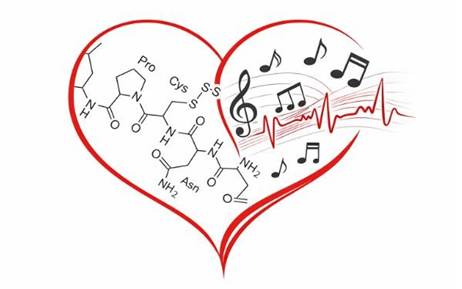
Figure 1
:
Illustration of the activity of the molecule oxytocin in the symbolic heart in love.
Answer given by Student B to the 2nd excerpt: I didn’t know the song because it is a kind of country music [sic] and I don’t like it very much. “The Chemistry that connected us” is related to love between boyfriends and girlfriends. “A spark that became an explosion”, everyone who starts the first year in High School thinks that Chemistry is the course that teaches how to make a bomb! “I tattooed you on my chest”, the tattoo itself has much Chemistry. Tattoos and the Chemistry of colors, for instance, white may be titanium dioxide, zinc oxide or lead carbonate. These compounds are stable under the skin and the tattoo is permanent. Production of black was based on soot (carbon) and iron oxide. On the other hand, red dye results from Mercury sulfide (cinnabar). Several shades of red, orange and yellow were made from cadmium compounds.
Tattoos, which have become increasingly popular, require the use of pigments and dyes that may be analyzed from a chemical perspective, thus, enabling the content to be addressed in practical and contextualized ways. Contextualization of the theme ‘formulation and pigmentation of tattoos’ may contribute to improve Chemistry teaching in High School. Educators have reinforced the need to investigate efficacy of teaching methods that use relevant and contemporaneous themes to boost students’ interest and understanding in Chemistry (Assunção et al., 2024). In this case, the student extends the interpretation beyond the original text by incorporating additional scientific knowledge related to pigments and chemical compounds. It shows a high level of cognitive engagement and the ability to transfer knowledge across contexts. This response also demonstrates the activation of prior knowledge within a contextualized learning environment, as well as the development of cognitive flexibility, reinforcing the pedagogical potential of interdisciplinary approaches in Chemistry Education.
Answer given by Student C to the 3rd excerpt: what struck me the most in this excerpt of the lyrics is that I really don’t like Chemistry, neither Physics, let alone Math. Mainly in Chemistry, I try to get grades that are good enough to pass; I really like Human Sciences! I believe that this excerpt mirrors many students’ feelings towards Chemistry; it is hard to find someone who really likes Chemistry. On the contrary, it is easier to find people who hate it. And Sexual Education (laughs!), which adolescents are not curious about it?!
A study in the literature has already tried to understand why most students do not like Chemistry, Physics and Mathematics. Or hate the three! The literature has recently proposed that a way of changing this picture is to make them work together in an interdisciplinary way (Sousa; Miranda, 2024). This statement also reveals affective dimensions involved in the learning process. Students’ resistance to Chemistry highlights the importance of adopting alternative pedagogical approaches capable of reshaping their perceptions. In this sense, the integration between Chemistry and artistic language may contribute to mitigate negative attitudes and foster greater engagement. The result reveals that the student was able to relate informal language to scientific concept, a fact that demonstrates the effective use of prior knowledge in a contextualized setting. This process of reinterpretation points to the development of cognitive flexibility and highlights the relevance of interdisciplinary strategies in Chemistry teaching.
Answer given by Student D to the 4th excerpt: when the lyrics says “strong Chemistry”, it makes me think about something that impregnates, so deep that it gets to the cell level. In fact, there is much Chemistry within a cell; take the plasma membrane. In the nucleus, where the genetic material is, there are DNA and RNA, which are molecules, and a molecule is a “Chemistry thing”. We, freshmen, learn in Biology lessons, the feared and complex Biochemistry. The use of the slang fib is funny and true! It fits perfectly in my case, it would be a fib if I said that I like Chemistry! I know it is an important course, but it is not my strength, I prefer Physics or even Math.
The 4th excerpt from Rashid’s song shows a brief connection between Chemistry and Biology. Besides Biochemistry, both sciences also got together in the song. We know that freshmen need the intertwinement between Chemistry and Biology since they study carbohydrates, lipids, proteins, etc. Educators have suggested that Biology and Chemistry should teach concomitantly the issue Biochemistry, highlighting chemical structures of molecules in Chemistry and their applicability to maintain life in Biology (Souza et al., 2018). The student's response also demonstrates the ability to establish interdisciplinary connections, particularly between Chemistry and Biology, which reinforces the integrative nature of scientific knowledge. This type of articulation is essential for overcoming fragmented learning and promoting a more holistic understanding of scientific concepts. The results indicate that the use of literary language in Chemistry teaching facilitates conceptual understanding by promoting cognitive bridges between everyday discourse and scientific language. In this context, students were able to reinterpret metaphorical expressions and convert them into scientifically grounded explanations, effectively mobilizing prior knowledge in a meaningful learning setting. This reinterpretative process reflects the development of cognitive flexibility and highlights the pedagogical value of interdisciplinary approaches in Chemistry Education.
Concepts and the chemical universe have been translated into technical language in the novel “Elective Affinities”. Blend of literary tools and the formal style which is typical of scientific literature may be observed when the novel is read (Wallau, 2014). Wallau’s paper (2014) shows that the use of elements of literary style, such as colloquialisms and open talks, in scientific texts, enables chemists to communicate clearly with laymen so that the message is not disrupted by technical terms. To communicate with the society accessibly and easily would make scientists’ lives easier and would make Chemistry be accepted by the society. However, objectivity and formal scientific style have been responsible for the difficulty that people have to access reliable knowledge for centuries. The author also advocates that valuable knowledge should not only be understood by a little percentage of the population (Wallau, 2014). When scientific texts use expressions of emotions and personal topics, the result is improvement in comprehension and acceptance of Chemistry by the public. On the other hand, the use of a literary style in other scientific productions, such as reviews, textbooks, workbooks, theses and dissertations, would not only make reading more fun and interesting for laymen, but would also make scientists’ communication become more colloquial and understandable. The dream is that this way of writing would decrease disgust at Chemistry (Wallau, 2014).
The literature shows that, when Chemistry teaching makes an association between science and literature, learning of different contents get easier (Costa, 2023). Articulation of Literature and Chemistry may result in more complete understanding since this connection brings a cultural, historical and social context related to certain scientific knowledge. In particular, the use of literary genres to teach Chemistry has an innovative and positive nature to enable effective and exclusive learning (Costa, 2023).
The following example illustrates how external resources identified by students may also contribute to the construction of scientific knowledge in an interdisciplinary approach. A freshman (Group B - Commerce) found a YouTube video of a song called “Matter under transformation” written by two teachers called Fábio Ferraz and Irene B. Ferraz. The student, who was enchanted by the song, its rhythm and tune, showed it to his teacher and said that it encompassed several themes of the theoretical chemical context. Read the lyrics of the song:
“Matter under transformation”
Chemistry is the science that will teach us
matter and unravel its transformation.
Everything is made from atoms, don’t forget it,
Protons, electrons and neutrons, it is the composition. In the periodic table, every element has its place, Organized in a way that we will decipher.
Atomic number and mass, just observe them, To be able to study their properties.
We will explore the states of matter,
Solid, liquid, gas and plasma to show us Fusion and vaporization, changes that will happen,
Condensation, solidification and sublimation will also emerge.
Pure compounds have defined compositions, whereas the ones of mixtures are diverse. Homogeneous ones are uniform, they won’t change, Heterogeneous ones have phases, easy to separate. In pH, there is the potential of hydrogen, Either acid or basic, it will tell us. There are three chemical bonds, pay attention, Ionic, covalent and metallic, what a lesson!
We will distinguish organic from inorganic matter, We will study different compounds.
In chemical balancing, we will balance the equation, To achieve the right reaction, always.
Electrons will transfer ionic bonds, In covalent ones, atoms will share.
In metallic bonds, electrons move freely, Shaping metals that we can use. Endothermic reactions will absorb energy, Exothermic ones release it, we can see.
Catalysts help to accelerate the reaction,
Without consuming themselves, they will collaborate. In solutions, we will mix solute and solvent, Concentration and dilution, just calculate.
In titration, we will find acidity or basicity,
With indicators, we will feel the turning point.
In Inorganic Chemistry, mineral compounds, Metals and nonmetals, with real properties.
We will see reactions of salts, oxides and acids, Happen in nature and in the industry.
In nature, Organic Chemistry, carbon is the king, Forming chains with hydrogen, all is well.
Alkanes, alkenes and alkynes, structures to be studied, With functional groups, reactions to unravel. In photosynthesis, the sunlight will shine, Plants and algae will capture energy.
With water and carbon dioxide combining,
They produce glucose and oxygen, life to sustain.
Chemistry is fascinating, you will like it,
With these lessons, we will shine in the world.
Everything is Chemistry, in everything you see, With knowledge, we will grow.
Chemistry, the science of matter.
Chemistry, atoms to study.
Chemistry, we will mix everything.
With knowledge, we will grow.
Chemistry, the science of matter.
Chemistry, atoms to study.
Chemistry, we will mix everything.
Chemistry, to unravel the universe.
(Video available at: https://www.youtube.com/watch?v=3Vy3FqF2EMY)
The following texts were written by students that go to the Instituto Federal do Triângulo Mineiro - Campus Uberlândia Centro.
Text 1 (Student’s production, 1st SD Group B) In the stage of the atom, the song starts, The elements dance in perfect reaction.
Atomic numbers organized in ascending order, The table guides us, science and poetry.
Hydrogens collide, nuclear fusion,
Helium from the stars, heat shines.
So bright, powerful, brave metals,
Sodium and potassium, fiery reagents.
Calcium builds, gives resistance to life, While iron runs in the blood.
Noble gases are emotionally stable, Neon and argon,
Inert, stable, lights in the darkness, Keep loneliness in silence.
The periodic table, a map for incredible recipes,
Compounds from black pepper to the mineral kingdom.
Carbon, strong and capable link,
In life bonds, making four bonds is not an option.
Metal and nonmetal will stay together,
Teaching us the importance of donation.
The table teaches us verbs to use in life,
To donate, to get, to share and to lend,
Showing that Chemistry is also able to humanize.
Text 2 (Student’s production, 1st SD Group A)
If the taste is sour, you can bet,
It is an acid, for sure, write it down.
Meanwhile, bases are astringent and slippery, They are in soup and in your routine.
Acid is H+, base is OH-,
If you mix well, water and salt emerge! The pH does not lie, look at the change in color, Choose your acid-base indicator and let’s play!
If the scale shows a number below 7, there is acid, If it is above 7, it is a base, baby!
Mix both to neutralize,
Everything is in Chemistry, you will love it.
Text 3 (Student’s production, 1st SD Group B)
Electronegativity is an important issue,
Every atom pulls the electron to itself, without hesitating, The more electronegative,
The better for the atom,
In this tug of war, the strongest will win.
You are able to memorize the electronegative sequence, F, O, N is where you start.
From left to right,
From bottom to top,
Forget the noble gases,
Electronegativity does not match them.
Text 4 (Student’s production, 1st Commerce Group B) What are atoms?
According to Dalton, “a billiard ball”,
Afterwards, Thomson came and decided to cook, Write down the recipe, to tell this story, You can draw a raisin pudding.
The nucleus is like the sun, As a planet, electrons circulate around it,
Write it down, boy! It is what Rutherford says.
The atomic model,
As Bohr improved,
Excite the electrons,
And they put on a show!
The analysis of students’ productions reveals that participants were able to incorporate chemical concepts into poetic and lyrical structures while maintaining conceptual coherence. The use of metaphorical language functioned as a cognitive tool that facilitated understanding rather than compromising scientific accuracy. These findings suggest that artistic expression plays a mediating role in the construction of scientific knowledge. Students demonstrated the ability to incorporate chemical issues, such as atomic structure, electronegativity and acid-base concepts, into poetic and lyrical forms without losing scientific coherence.
Moreover, the use of metaphorical language did not compromise scientific accuracy; on the contrary, it functioned as a cognitive tool that facilitated understanding. These findings suggest that artistic expression may act as a mediating element in the construction of scientific knowledge and enable students to attribute meaning to abstract concepts.
Overall, results show that the integration of Chemistry with literary and musical languages promotes not only content learning, but also cognitive, affective and creative engagement. Students were able to reinterpret and reconstruct scientific concepts, which boosted the development of higher-order cognitive skills, such as abstraction, interpretation and knowledge transfer. These findings reinforce the potential of interdisciplinary approaches to foster meaningful learning in Chemistry Education. In short, poems and lyrics are didactic tools that helped to enrich and promote more interesting, meaningful and motivational Chemistry teaching (Ferreira; Teodoro, 2025).
5. Conclusion
This study demonstrated that the insertion of literary and musical language into Chemistry teaching constitutes a powerful interdisciplinary strategy for promoting meaningful learning in High School. In response to the guiding research question: How can literary and musical languages contribute to the understanding and reinterpretation of chemical concepts by High School students? Findings indicate that such languages function as effective cognitive mediators and enable students to establish connections between everyday discourse and scientific knowledge.
Results revealed that students were able not only to identify chemical concepts in lyrics and poems but also to reinterpret and reconstruct them with the use of scientifically grounded explanations. This process involved the mobilization of prior knowledge, the development of cognitive flexibility and the use of metaphorical language as a tool for conceptual understanding. In this sense, artistic expression neither simplifies nor distorts scientific content; rather, it enables the construction of meaning by bridging abstract concepts and familiar linguistic structures.
Furthermore, production of original poems and lyrics allowed students to actively engage in the learning process while promoting higher-order cognitive skills, such as interpretation, abstraction and knowledge transfer. These findings reinforce the pedagogical value of interdisciplinary approaches that integrate scientific and artistic domains, i. e., they foster cognitive, affective and creative engagement in Chemistry Education.
Despite its contributions, this study is limited by its qualitative nature and by the specific educational context in which it was conducted. It may restrict generalization of findings. Further studies may expand this investigation either by applying similar approaches to different educational settings or by combining qualitative and quantitative methods to explore learning outcomes.
Therefore, this study contributes to the field of Chemistry Education by expanding methodological possibilities and highlighting the role of literary and musical languages as mediators of scientific learning. By promoting articulation between science and art, this approach offers a meaningful pathway for transforming students’ relations with Chemistry, making learning more accessible, contextualized and intellectually engaging.
6. Author Contributions
Gabriella Maria Candida Feliciano Dias: conceptualization and methodology.
Mayker Lazaro Dantas Miranda: writing, investigation, visualization.
All authors: review and editing.
7. Funding Statement
This study did not receive financial support from any institution or funding agency.
8. Artificial Intelligence Use Statement
The authors declare that they did not use generative artificial intelligence tools or AI-assisted technologies during the preparation of the manuscript.
9. Conflict of Interest Statement
The authors declare that there are no conflicts of interest related to the publication of this article.
References
Licencia
Derechos de autor 2026 Mayker Lazaro Dantas Miranda, Gabriella Maria Candida Feliciano Dias

Esta obra está bajo una licencia internacional Creative Commons Atribución-NoComercial-CompartirIgual 4.0.
Góndola, Ens Aprend Cienc. es una publicación de acceso abierto, sin cargos económicos para autores ni lectores. La publicación, consulta o descarga de los contenidos de la revista no genera costo alguno para los autores ni los lectores, toda vez que la Universidad Distrital Francisco José de Caldas asume los gastos relacionados con edición, gestión y publicación. Los pares evaluadores no reciben retribución económica alguna por su valiosa contribución. Se entiende el trabajo de todos los actores mencionados anteriormente como un aporte al fortalecimiento y crecimiento de la comunidad investigadora en el campo de la Enseñanza de las Ciencias.
A partir del 01 de diciembre de 2018 los contenidos de la revista se publican bajo los términos de la Licencia Creative Commons Atribución–No comercial–Compartir igual 4.0 Internacional (CC-BY-NC-SA 4.0), bajo la cual otros podrán distribuir, remezclar, retocar, y crear a partir de la obra de modo no comercial, siempre y cuando den crédito y licencien sus nuevas creaciones bajo las mismas condiciones.
Los titulares de los derechos de autor son los autores y la revista Góndola, Ens Aprend Cienc. Los titulares conservan todos los derechos sin restricciones, respetando los términos de la licencia en cuanto a la consulta, descarga y distribución del material.
Cuando la obra o alguno de sus elementos se halle en el dominio público según la ley vigente aplicable, esta situación no quedará afectada por la licencia.
Asimismo, incentivamos a los autores a depositar sus contribuciones en otros repositorios institucionales y temáticos, con la certeza de que la cultura y el conocimiento es un bien de todos y para todos.
.jpg)