DOI:
https://doi.org/10.14483/23448393.22843Published:
2026-07-25Issue:
Vol. 31 No. 1 (2026): January-AprilSection:
Electrical, Electronic and Telecommunications EngineeringTechnical Feasibility Analysis of DC Microgrids in a Non-Interconnected Area
Análisis de viabilidad técnica de Microrredes DC en una zona no interconectada
Keywords:
DC microgrid, Matlab, Non-interconnected zones, Distributed generation, Incremental conductance (en).Keywords:
Microrred DC, Matlab, Zonas no interconectadas, Generación distribuida, Conductancia incremental (es).Downloads
References
[1] F. De La Cruz and C. Avila, “Sistemas fotovoltaicos: solución energética en las comunidades aisladas,” Rev. Cien. Ing., vol. 9, no. 2, 2022.
[2] M. I. Torres Villamizar, “Caracterización de soluciones para comunidades en zonas no interconectadas al sistema eléctrico en Colombia,” Jul. 2022, [Online]. Available: http://hdl.handle.net/1992/59144
[3] M. Castaneda, P. Yanguas, F. Corral, E. Ángel-Sanint, F. Palacios, D. Gómez, R. Ávila, J. D. Cortés, P.-Y. Oei, S. Zapata, and I. Dyner, “Achieving a 100% renewable electricity supply in Colombia by 2030: Dream or feasible possibility?,” Sustain. Futures, vol. 10, Art. no. 101468, 2025. https://doi.org/10.1016/j.sftr.2025.101468
[4] I. Granit, “What makes Colombia’s indigenous peoples adopt microgrids? Social acceptance and financial constraints in renewable energy diffusion,” Energy Res. Soc. Sci., vol. 101, Art. no. 103132, Jul. 2023. https://doi.org/10.1016/j.erss.2023.1031
[5] F. Ojeda Peña, “Revisión de contenido teórico sobre microrredes y estudios previos Colombia,” Universidad Santo Tomas, 2022. [Online]. Available: http://hdl.handle.net/11634/49251
[6] G. Liu, Z. Li, Y. Xue, and K. Tomsovic, “Microgrid assisted design for remote areas,” Energies, vol. 15, no. 10, Art. no. 3725, May 2022. https://doi.org/10.3390/en15103725
[7] UPME, “Plan Indicativo de Expansión de Cobertura de Energía Eléctrica,” 2019. [Online]. Available: https://www1.upme.gov.co/siel/PIEC/2019-23/2019/Informacion_Base_PIEC_Dic302019.pdf
[8] J. A. Cerón, E. Gómez-Luna, and J. C. Vasquez, "Driving the Energy Transition in Colombia for Off-Grid Regions: Microgrids and Non-Conventional Renewable Energy Sources," Energies, vol. 18, no. 4, Art. no. 1010, Feb. 2025. https://doi.org/10.3390/en18041010
[9] T. Mosetlhe, A. Yusuff, T. Ayodele, and A. Ogunjuyigbe, "Sustainable rural electrification through micro-grids in developing nations—A review of recent development," Energy Reports, vol. 13, pp. 1171–1177, 2025. https://doi.org/10.1016/j.egyr.2024.11.040
[10] F. Randibarnas, K. S. Gautama, E. Agustian, T. Ardriani, J. Furqani, and A. Rizqiawan, “A distributed PCS based DC microgrid system for rural electrification,” in Proc. 5th Int. Conf. Power Eng. Renew. Energy (ICPERE), 2022, pp. 1–6. https://doi.org/10.1109/ICPERE56870.2022.10037531
[11] D. Li and C. N. M. Ho, “A module-based plug-n-play DC microgrid with fully decentralized control for IEEE Empower a Billion Lives competition,” IEEE Trans. Power Electron., vol. 36, no. 2, pp. 1764–1776, Feb. 2021. https://doi.org/10.1109/TPEL.2020.3009631
[12] N. Wang, Y. Jiang, Y. Wang, D. Mou, Y. Liu, and W. Hu, “Advanced operation and control schemes of retired batteries in DC microgrid for secondary usage,” IEEE Trans. Smart Grid, vol. 16, no. 4, pp. 3155–3166, Jul. 2025. https://doi.org/10.1109/TSG.2025.3555181
[13] B. Modu, M. P. Abdullah, M. A. Sanusi, and M. F. Hamza, “DC-based microgrid: Topologies, control schemes, and implementations,” Alexandria Eng. J., 2023. https://doi.org/10.1016/j.aej.2023.02.021
[14] A. Bastidas and A. Pantoja, “Análisis técnico-económico de una microrred DC en un edificio universitario,” Sep. 2023, pp. 1–11. https://doi.org/10.26507/paper.3209
[15] A. Valencia-Díaz, E. M. Toro, and R. A. Hincapié, "Optimal planning and management of the energy–water–carbon nexus in hybrid AC/DC microgrids for sustainable development of remote communities," Applied Energy, vol. 377, pt. B, Art. no. 124517, 2025. https://doi.org/10.1016/j.apenergy.2024.124517
[16] K. El Mezdi, A. El Magri, A. Watil, I. El Myasse, N. El Aadouli, and P. Kumar, "Efficient energy management of a low-voltage AC microgrid with renewable and energy storage integration using nonlinear control," Sci. Rep, vol. 15, no. 1, Art. no. 38651, 2025. https://doi.org/10.1038/s41598-025-22473-6
[17] N. Peter, P. Gupta, and N. Goel, "Intelligent strategies for microgrid protection: A comprehensive review," Appl. Energy, vol. 379, Art. no. 124901, 2025. https://doi.org/10.1016/j.apenergy.2024.124901
[18] S. Anbuchandran, M. Arumuga Babu, D. Silas Stephen, and M. Thinakaran, "Dynamic voltage regulation in DC microgrids using super-twisting sliding mode controllers," Electr Eng, vol. 107, no. 11, pp. 14205–14227, 2025. https://doi.org/10.1007/s00202-025-03256-8
[19] M. Fotopoulou, D. Rakopoulos, D. Trigkas, F. Stergiopoulos, O. Blanas, and S. Voutetakis, "State of the art of low and medium voltage direct current (DC) microgrids," Energies, vol. 14, no. 18, Art. no. 5595, Sep. 2021. https://doi.org/10.3390/en14185595
[20] S. Jayaprakash, B. Gopi, M. G. Raj, S. Sujith, S. Deepa, and S. Swapna, “Development of Energy Management System for Micro Grid Operation,” Comp. Syst. Sci. Eng., vol. 45, no. 3, pp. 2537–2551, 2023. https://doi.org/10.32604/csse.2023.032038
[21] S. Coffey, V. Timmers, R. Li, G. Wu, and A. Egea-Àlvarez, "Review of MVDC applications, technologies, and future prospects," Energies, vol. 14, no. 24, Art. no. 8294, Dec. 2021. https://doi.org/10.3390/en14248294
[22] V. F. Pires, A. Pires, and A. Cordeiro, “DC Microgrids: Benefits, Architectures, Perspectives and Challenges,” Energies (Basel), vol. 16, no. 3, Feb. 2023. https://doi.org/10.3390/en16031217
[23] V. Srimathi and D. Vijayakumar, "Design and Implementation of Power Management System in Multi-String Solar-Interfaced DC Microgrid With Energy Storage System," IEEE Access, vol. 13, pp. 140012-140027, 2025. https://doi.org/10.1109/ACCESS.2025.3595594
[24] Z. Ali et al., “Fault Management in DC Microgrids: A Review of Challenges, Countermeasures, and Future Research Trends,” IEEE Access, vol. 9, pp. 128032–128054, 2021. https://doi.org/10.1109/ACCESS.2021.3112383
[25] A. Baqar, M. B. Camara, and B. Dakyo, “Supercapacitors Fast Ageing Control in Residential Microgrid Based Photovoltaic/Fuel Cell/Electric Vehicle Charging Station,” Energies (Basel), vol. 16, no. 13, p. 5084, Jun. 2023. https://doi.org/10.3390/en16135084
[26] S. S. Rangarajan, R. Raman, A. Singh, C. K. Shiva, R. Kumar, P. K. Sadhu, E. R. Collins, and T. Senjyu, "DC Microgrids: A Propitious Smart Grid Paradigm for Smart Cities," Smart Cities, vol. 6, no. 4, pp. 1690–1718, Jul. 2023. https://doi.org/10.3390/smartcities6040079
[27] J. A. G. Archetti et al., “Real time validation of a control system for microgrids with distributed generation and storage resources,” Elec. Power Syst. Res., vol. 223, Oct. 2023, https://doi.org/10.1016/j.epsr.2023.109683
[28] B. Aljafari, S. Vasantharaj, V. Indragandhi, and R. Vaibhav, "Optimization of DC, AC, and Hybrid AC/DC Microgrid-Based IoT Systems: A Review," Energies, vol. 15, no. 18, Art. no. 6813, Sep. 2022. https://doi.org/10.3390/en15186813
[29] J. Kang, B. Hao, Y. Li, H. Lin, and Z. Xue, “The Application and Development of LVDC Buildings in China,” Energies (Basel), vol. 15, no. 19, Art. no. 7045, Oct. 2022, https://doi.org/10.3390/en15197045
[30] M. Nasir, S. Iqbal, H. A. Khan, J. C. Vasquez, and J. M. Guerrero, “Sustainable rural electrification through solar PV DC microgrids—An architecture-based assessment,” Processes, vol. 8, no. 11, pp. 1–23, Nov. 2020, https://doi.org/10.3390/pr8111417
[31] H. M. Mohan and S. K. Dash, “Renewable Energy-Based DC Microgrid with Hybrid Energy Management System Supporting Electric Vehicle Charging System,” Systems, vol. 11, no. 6, p. 273, May 2023, https://doi.org/10.3390/systems11060273
32] S. Azizi, M. H. Asemani, N. Vafamand, S. Mobayen, and A. Fekih, “Adaptive Neural Network Linear Parameter-Varying Control of Shipboard Direct Current Microgrids,” IEEE Access, vol. 10, pp. 75825–75834, 2022, https://doi.org/10.1109/ACCESS.2022.3191385
[33] J. Díaz , “Propuesta metodológica para el análisis integral de la factibilidad de la implementación de microrredes para zonas no interconectadas (ZNI) colombianas,” Universidad de los Andes, 2023. [Online]. Available: http://hdl.handle.net/1992/69629
[34] Y. L. Correa, I. F. Muñoz, F. Franco Obando, and M. Bueno Lopez, "Computational comparison of AC and DC motors to hydrodynamic changes in marine fishing vessels," TecnoL, vol. 26, no. 56, Art. no. e2442, 2023. https://doi.org/10.22430/22565337.2442
[35] M. Bueno Lopez, M. T. Rengifo Ordoñez, D. Chacón Campo, J. Tocancipá-Falla, and A. Osorio Arias, "Energy Transition for rural development: A preliminary case study in Colombia for improving artisanal fishing," Sci. Tech, vol. 29, no. 2, pp. 89–96, 2024. https://doi.org/10.22517/23447214.24944
[36] IPSE, “Informe Mensual de telemetría,” 2023. [Online]. Available: https://ipse.gov.co/cnm/informes-de-operacion/
[37] K. Jithin, P. P. Haridev, N. Mayadevi, R. Hari Kumar, and V. P. Mini, "A Review on Challenges in DC Microgrid Planning and Implementation," J. Mod. Power Syst. Clean Energy, vol. 11, no. 5, pp. 1375–1395, Sep. 2023. https://doi.org/10.35833/MPCE.2022.000053
[38] T. Castillo-Calzadilla, M. A. Cuesta, C. Olivares-Rodriguez, A. M. Macarulla, J. Legarda, and C. E. Borges, "Is it feasible a massive deployment of low voltage direct current microgrids renewable-based? A technical and social sight," Renew. Sustain. Energy Rev., vol. 161, Art. no. 112198, Jun. 2022. https://doi.org/10.1016/j.rser.2022.112198
[39] PVGIS, “Solar radiation,” 2022. [Online]. Available: https://re.jrc.ec.europa.eu/pvg_tools/en/#MR
[40] J. F. Franco Martínez and B. S. Laserna Murcia, “ Diseño y simulación de controladores por aprendizaje reforzado para convertidores de potencia utilizados en micro redes de corriente directa.,” Universidad Antonio Nariño, 2023. [Online]. Available: http://repositorio.uan.edu.co/handle/123456789/8263
[41] H.-Y. Lu, C.-E. Ye, H.-Y. Tsai, and Y.-P. Huang, "Enhanced harmony search for MPPT control in solar systems," Results Eng, vol. 25, Art. no. 104274, 2025. https://doi.org/10.1016/j.rineng.2025.104274
How to Cite
APA
ACM
ACS
ABNT
Chicago
Harvard
IEEE
MLA
Turabian
Vancouver
Download Citation
Recibido: 2 de noviembre de 2024; Revisión recibida: 9 de diciembre de 2025; Aceptado: 2 de marzo de 2026
Abstract
Context:
In recent times, access to electricity in non-interconnected areas has been a constant challenge. Therefore, this article evaluates the technical feasibility of implementing direct-current (DC) microgrids in these areas, focusing on food conservation. Our evaluation focuses on the region of Chacón Playa (Timbiquí) in the Cauca Pacific, Colombia.
Method:
This work analyzes the advantages and disadvantages of DC microgrids vs. alternating-current (AC) systems, selecting a radial topology for its simplicity and expandability. A simulation is performed in MATLAB-Simulink with a control system based on the incremental conductance algorithm, which incorporates solar photovoltaic generation, battery backup, power converters, and a load composed of four DC coolers.
Results:
The results and simulations show that DC microgrids are effective in meeting voltage and current demands in response to changes in solar radiation and power demand. Our findings highlight the ability of DC microgrids to provide a stable and efficient power supply suitable for food conservation in non-interconnected areas. Conclusions: DC microgrids represent a viable solution to cover energy needs in isolated areas. This study supports their implementation as a sustainable and reliable alternative, opening new opportunities for the development of regulatory frameworks that facilitate the expansion of this type of technology in similar regions.
Keywords:
DC microgrid, MATLAB, non-interconnected zones, distributed generation, incremental conductance.Resumen
Contexto:
En los últimos tiempos, el acceso a la electricidad en zonas no interconectadas ha sido un desafío constante. Por ello, este artículo evalúa la viabilidad técnica de implementar microrredes de corriente continua (DC) en estas áreas, centrando su atención en la conservación de alimentos. Nuestra evaluación se enfoca en la región de Chancón Playa (Timbiquí) en el Pacífico del Cauca, Colombia.
Método:
Este trabajo analiza las ventajas y desventajas de las microrredes DC frente a los sistemas de corriente alterna (AC), seleccionando una topología radial por su simplicidad y capacidad de expansión. Se desarrolla una simulación en MATLAB-Simulink con un sistema de control basado en el algoritmo de conductancia incremental, la cual incorpora generación solar fotovoltaica, respaldo de baterías, convertidores de potencia y una carga compuesta por cuatro refrigeradores DC.
Resultados:
Los resultados y las simulaciones muestran que las microrredes DC son efectivas para satisfacer las demandas de tensión y corriente en respuesta a cambios en la radiación solar y en la demanda de potencia. Nuestros hallazgos destacan la capacidad de las microrredes DC para ofrecer un suministro de energía estable y eficiente, adecuado para la conservación de alimentos en zonas no interconectadas.
Conclusiones:
Las microrredes DC representan una solución viable para cubrir las necesidades energéticas en zonas aisladas. Este estudio respalda su implementación como alternativa sostenible y confiable, abriendo nuevas oportunidades para el desarrollo de marcos regulatorios que faciliten la expansión de este tipo de tecnología en regiones similares.
Palabras clave:
microrred DC, MATLAB, zonas no interconectadas, generación distribuida, conductancia incremental.1. Introduction
In developing countries such as Colombia, the energy demand is steadily increasing. The emergence of new industries, ongoing technological advancements, and efforts towards economic reactivation to meet the needs of a growing population have led to a substantial rise in electricity consumption. Consequently, there is an urgent need to expand the electrical infrastructure, but persistent economic and social crises have played a critical role in delaying the implementation of projects aimed at achieving universal access to electricity. This challenge disproportionately affects rural areas, where its impacts are most pronounced. As a result, the disparity between urban and rural regions continues to widen 1, 2.
Today, many regions still lack access to electricity or are served by low-quality systems characterized by intermittent and unreliable supply. In these areas, the consequences are particularly severe since the absence of continuous and dependable electricity significantly hinders human development and constrains the social and economic progress of affected communities. These areas are known as non-interconnected zones (NIZ), covering approximately 52% of the national territory. Out of this total, almost 90% is made up of rural areas, while the remaining percentage corresponds to urban areas that obtain electricity access through isolated grids, diesel power plants and a few individual generation systems based on renewable sources. In rural areas, most of the electricity comes from diesel generators, representing about 85% 3. These data underline a marked dependence on this fuel, according to statistics provided by the Institute for Planning and Promotion of Energy Solutions (IPSE) for NIZ in 2025.
The expansion of the interconnected power system to NIZ has been constrained by their remote location and difficult geographic access. Even in areas where grid extension has been achieved, service quality and reliability are not guaranteed. Consequently, local generation systems have been implemented to provide a limited electricity supply. However, these systems exhibit frequent operational failures, resulting in a high dependence on diesel-based generation to meet the daily demand. This reliance leads to elevated operating costs due to fuel price volatility and the logistical complexity of fuel transportation to remote regions, often accessible only by air or river 4. Furthermore, diesel-based generation produces significant CO₂ emissions, contributing to climate change and environmental degradation.
In Colombia, small-scale distribution systems have been developed to operate as alternating-current (AC) microgrids with centralized local generation, providing stable operation in NIZ. These microgrids are designed to supply electricity in areas that are not linked to the national interconnected system, delivering a level of service comparable to that of the main grid 5. Although these systems are technically capable of integrating renewable energy sources such as solar photovoltaic (PV), biomass, and micro-hydropower generation, most of them continue to rely predominantly on fossil fuel-based generators 6.
In light of the above, the energy transition has become a strategic priority for the Colombian government, aiming to reduce dependence on conventional fossil fuel-based generation systems, particularly diesel generators. To this effect, multiple initiatives and planning frameworks have been proposed to expand the national electricity coverage while promoting the integration of renewable energy sources. Programs such as the Indicative Plan for the Expansion of Electricity Coverage (PIEC) have incorporated, in addition to individual solutions, the deployment of isolated microgrids. These systems are characterized by a reduced reliance on conventional generation and an increased use of environmentally sustainable distributed energy resources 7. In this context, microgrids based on a direct-current (DC) main bus have emerged as promising alternatives since they facilitate the integration of renewable generation sources with low or negligible greenhouse gas emissions.
The relevance of DC microgrids for supplying electricity to remote areas without access to the conventional power grid has been demonstrated in several studies. The high penetration of renewable energy sources and DC-based energy storage systems allows these microgrids to operate autonomously in isolation while avoiding pollutant emissions. Previous research includes comprehensive analyses of microgrid deployment in remote areas, concluding that DC microgrids exhibit higher efficiency than their AC counterparts 8-10.
Furthermore, other studies have highlighted that DC systems offer improved controllability due to the absence of reactive power and harmonic issues, in contrast to AC microgrids, which often depend on diesel generation or conventional grid support and require frequency regulation 11, 12.
In the context of Colombia’s energy transition, however, the adoption of DC microgrids faces regulatory and technical challenges that must be addressed in order to ensure successful implementation. Recent advances in power electronics have enabled the development of converters that facilitate the direct integration of DC loads and generation units. This capability is particularly relevant for meeting essential energy needs in remote areas, such as lighting and food refrigeration 13.
In this scenario, DC microgrids play a crucial role. Their integration with clean generation sources and power converters, including reducers, boosters and bidirectional devices, allows directly incorporating DC loads 13, 14, which, though not widely adopted in the country, show potential for increasing efficiency and reducing losses, thus guaranteeing quality services in these regions while also satisfying their essential needs.
This paper presents a technical analysis of a DC microgrid and its implementation in a non-interconnected region located in the Cauca Pacific (Colombia), specifically in the area of Chacón Playa (Timbiquí). In this context, it is of vital importance to ensure energy supply for food conservation, since the main source of economic livelihood in this area derives from fishing activities. Thus, our work’s creation and evaluation of the DC microgrid considers the essential inclusion of a DC load (e.g., refrigerators) for food preservation. This analysis will be complemented with the implementation of a control system based on the incremental conductance algorithm, with the purpose of optimizing and efficiently managing the microgrid.
The key contributions of this paper are as follows:
-
Evaluation of the technical feasibility of food preservation in non-interconnected zones. This paper shows that DC microgrids are an effective and stable solution for critical energy needs, specifically the refrigeration of fish products in isolated communities. This contribution is fundamental because it addresses the socioeconomic problems of a region that depends on fishing for its livelihood but currently lacks a reliable electricity service to preserve its food.
-
Design and validation of an optimal control system through simulation. This research develops a detailed configuration that uses a radial topology and an maximum power point tracking (MPPT) control system. Through simulations in MATLAB-Simulink with real solar radiation and temperature data, it is confirmed that the system can maintain a constant voltage of 24 V and supply the necessary power (288 W) to operate four DC refrigerators—even in the face of climatic changes and periods deprived of sunlight—thanks to battery backup.
-
Promoting the energy transition and sustainability in rural areas. Our study provides technical evidence that supports the migration from diesel generator-based systems (which account for 85% of the energy in the rural areas of Colombia) to renewable sources integrated into DC microgrids. This implementation not only reduces dependence on fossil fuels and CO2 emissions but also offers a more efficient system with lower initial costs than traditional AC microgrids, laying the groundwork for future regulatory frameworks in these regions.
The structure of this article is as follows. Section 2 provides general details on DC microgrids, highlights their advantages compared to AC microgrids, and explores their future directions. Section 3 details the methodology employed in this research. Section 4 is devoted to presenting and analyzing the results obtained, and, finally, Section 5 presents the conclusions drawn from our findings.
2. Overview and trends in DC microgrids
A microgrid is an electrical system that encompasses a variety of generation components, mostly based on renewable sources, but also conventional ones, as well as storage centers, loads, power electronics, management, and communication and control systems. Unlike the traditional power grid, a microgrid operates on a smaller scale, and its main objective is to provide a constant supply of high-quality and reliable energy to a community with a low dispersion index who live close to the generation center (i.e., distributed generation). Microgrids are located in the vicinity of consumption centers and can operate in two main modes: connected to the AC grid or in islanded mode. When operating in interconnected mode, there is a flow of energy between the generation systems within the microgrid, its components, and the traditional electrical grid. On the other hand, in islanded mode, energy is generated and stored only through the generation systems and internal components of the microgrid 15.
A microgrid manages two types of configurations, which are classified depending on the type of current in the main bus connection.
2.1 AC operation
In this configuration, the main connection bus operates with AC, which makes it directly compatible with the common connection point of the large-scale grid, also known as the traditional AC grid. The microgrid is designed to be able to transmit power over long distances, benefiting from the ease of transforming AC voltage at different levels. In 16, the authors provide a comprehensive review of the operation of these systems, and they propose a nonlinear control strategy combined with an efficient energy flow management algorithm for a low-voltage AC microgrid integrating a wind turbine, a PV system, and a battery energy storage system (BESS). A comprehensive mathematical model of the system is developed, and backstepping-based controllers are designed to achieve the control objectives, including the maximization of renewable energy extraction, battery storage management, and power factor correction at the grid interface. Simulation results confirm that the proposed strategy significantly improves energy efficiency, system stability, and dynamic performance under variable load and generation conditions.
2.2 DC operation
In this configuration, the main connection bus operates with DC, which simplifies the integration of renewable generation sources thanks to the reduced use of power converters. This system enables the connection to the electrical grid through an inverter for bidirectional electrical flow between the DC bus of the microgrid and the conventional grid. This technology has positioned itself as an excellent alternative due to the multiple advantages compared to AC microgrids. Below are some advantages and disadvantages of this type of technology.
-
From a protection perspective, the main advantage of DC microgrids over AC microgrids lies in their simpler and more predictable system behavior, resulting from the absence of frequency, reactive power, and phase-angle dynamics, which facilitates fault detection, protection coordination, and the implementation of adaptive protection schemes 17.
-
In 18, the authors mention some advantages of DC microgrids from the perspective of control systems. The paper investigates super-twisting sliding mode controllers for dynamic DC microgrid voltage regulation. The proposed control approach aims to enhance robustness against disturbances and load variations while mitigating the chattering effects inherent to classical sliding mode control, thereby maintaining stable DC bus voltage under dynamic operating conditions.
-
Much of the renewable generation systems and storage facilities (e.g., batteries) supply DC power, which simplifies their integration with a DC main bus when compared to an AC main bus, which may lead to synchronization difficulties 19.
-
The DC microgrid exhibits superior reliability in contrast to its AC counterpart. This is due to the ability to adjust the DC bus to the system requirements as the number of components increases 16. In addition, these systems have a greater ability to operate in islanded mode, which improves their reliability.
-
In 20, the authors presented an intelligent energy management system (EMS) for a hybrid microgrid incorporating multiple generation sources, and they examined its technical viability and economic performance. The EMS integrates control strategies and multilevel grid interface conversion to manage energy flows, enhance power quality, and reduce operating costs, demonstrating the benefits of coordinated generation, storage, and control in microgrid operation.
-
Regarding the implementation, the size of a DC microgrid tends to be significantly smaller compared to an AC microgrid. This is due to the decrease in the required conversion components 20.
-
In systems operating via DC, imbalances in the circulation of electric current are prevented through a conductor, thus avoiding the phenomenon known as skin effect, which manifests itself in the transport of AC 21.
-
A significant proportion of electronic loads require DC as a voltage source to operate, whereas, for interconnection to an AC system, they rely on an internal rectifier which can negatively impact their efficiency. In contrast, DC microgrids offer a direct power supply, which results in reduced costs and higher efficiency 22.
-
In a DC microgrid, the quality of power transmission can experience significant improvements since reactive power and frequency must not be regulated, factors that influence system performance. In addition, DC microgrids are free of phase imbalance and harmonics, which contributes to a more efficient transmission 23.
The current development of research works and applications of DC microgrids reflects their numerous advantages over AC microgrids, given the technological advances, the increase in DC equipment and devices—such as the direct integration of renewable energy systems—, and the obvious technical advantages. However, these systems also come with challenges and disadvantages that require attention in future research and applications. Some of them are listed below:
-
DC microgrids have not undergone an extensive development and research as their AC counterparts. This translates into a lack of standardization in voltage levels and regulatory frameworks that are essential to defining technical aspects. This lack becomes a significant obstacle for a faster transition to the implementation of DC microgrids 22.
-
In a bidirectional power flow, protection techniques continue to be a challenge due to the complexity of fault management and the lack of standardization and coordination, problems that arise due to the intermittency of renewable generation sources. Likewise, DC microgrids generate constant current in only one direction, which means that there are no zero crossing cycles, as occurs in AC microgrids. This feature complicates the natural extinction of the electric arcs that can be generated when contacts are opened in protective devices such as circuit breakers 24.
-
Microgrids, which on renewable generation sources, often face voltage swings and variations. Power generation can be intermittent due to climatic factors and the availability of the main resource. Over time, this can complicate the regulation of the power supplied. This implies the need to implement backup and advanced management systems to mitigate this variability 22.
The paragraphs above discussed the main advantages and limitations of DC microgrids. Although several challenges remain in their large-scale deployment, the reported benefits indicate that these systems are increasingly being regarded as promising solutions for a wide range of applications. Driven by ongoing research efforts and technological advancements, recent studies on DC microgrids have focused on the integration of advanced energy storage technologies such as supercapacitors and high-performance lithium-based batteries 25. These developments allow DC microgrids to efficiently exploit weather-dependent renewable energy sources, including solar and wind power, as primary generation resources. Consequently, reliance on diesel-based generators is significantly reduced, leading to lower CO₂ emissions and mitigating negative environmental impacts, including ecosystem degradation and adverse effects on human and animal health.
Furthermore, the growing adoption of DC-compatible loads and the direct interfacing of traditionally AC-based devices without extensive power conversion stages contribute to reduced system complexity, lower investment costs, and decreased energy losses 22. In parallel, the emergence of smart grid technologies and advances in automation support a more effective operation and management of DC microgrids. Intelligent energy management and control systems enable real-time decision-making regarding energy generation, storage, and distribution, thereby enhancing system stability and reliability 26-28.
Additionally, a clear trend towards the deployment of DC generation systems at the household and building levels is observed, allowing end-users to manage energy locally and participate more actively in electricity markets 29. This decentralization paradigm is particularly relevant for NIZ, where the installation of standalone DC microgrids facilitates access to electricity, supports basic community needs, and enables the development of productive activities in remote areas, overcoming the limitations of conventional centralized infrastructure 30. Finally, the interconnection of multiple microgrids is being explored as a means to improve energy management and configure hybrid systems that combine renewable and conventional generation sources, thereby reducing environmental impacts while expanding electricity coverage in a coordinated manner 28.
In the future, the enactment of new laws and technical standards is expected to foster an increased adoption of DC power systems at the local and rural levels, allowing industries and businesses to manage energy more efficiently and mitigate the impact of power outages on continuous production.
Another area of research and continued growth involves the integration of electric vehicles in the context of DC microgrids. These vehicles operate on DC, where microgrids are ideal for charging them, which not only provides a convenient form of charging, but also allows their batteries to be used as energy storage devices for the grid. This can be essential for balancing demand and power generation in real time 31. In addition, this trend extends to electric marine vehicles, which can take advantage of DC microgrids through systems for lighting or cooling needs, DC motors powered by renewable generation sources, or DC charging systems 32.
These trends reflect the potential growth of DC microgrids thanks to significant advances in research and technological development, in response to an energy transition that seeks to reduce environmental impacts while expanding energy availability. This not only improves efficiency in urban areas but also meets the needs of rural areas and contributes to their social development and access to electricity.
3. METHODOLOGY
This section first describes the NIZ of the department of Cauca, for which the proposed microgrid was designed, emphasizing the main challenges associated with the lack of access to reliable and high-quality electricity services. In Colombia, the Pacific is one of the regions with the highest concentration of NIZ. Within this area, the department of Cauca features three municipalities, i.e., Timbiquí, López de Micay, and Guapi, which are particularly affected by limited or intermittent electricity supply 33, 34.
Along the Pacific coast of Cauca, the municipality of Timbiquí stands out as one of the areas with the highest number of households without access to electricity in the department. According to the telemetry report issued by the Institute for Planning and Promotion of Energy Solutions for NIZ (IPSE) in 2024, approximately 2196 users in Timbiquí lack access to electricity. The municipality also includes the township of Chacón Playa, where the absence of continuous and high-quality electricity service has resulted in significant social and economic challenges. The following subsection provides a brief characterization of the municipality and this NIZ, highlighting the main issues associated with inadequate energy access.
3.1 Description of the municipality of Timbiquí
Timbiquí is located in the western part of the department of Cauca, at approximately 230 km from the departmental capital, Popayán. Its territory extends for 1813 km2 and has an estimated population of about 27 182 inhabitants, according to projections made by DANE from the 2018 census. About 74% of its residents live in rural areas, while the remaining percentage corresponds to urban population. The predominant economic activities in Timbiquí focus on fishing, agriculture, mining, and timber exploitation, making it a municipality with an economy based on extractive and primary sectors 35. In 2017, the municipal capital of Timbiquí was interconnected through the San Bernardino-Guapi-Olaya Herrera electrical interconnection line at 115 000 V, from the San Bernardino substation in Popayán to the Guapi substation. However, the conditions of the layout have imply suboptimal service conditions for this population.
3.2 Description and main problems at the Chacón Playa-Timbiquí district
Chacón Playa is one of the smallest of the townships in terms of population and geographic extension, but it faces profound challenges due to the lack of access to essential public services. It is inhabited by about 570 people who reside in the rural areas of the municipality of Timbiquí. Chacón Playa's main economic activity corresponds to fishing and agriculture. The population is deeply rooted to its environment, as it is highly dependent on it for survival.
Chacón Playa faces difficulties in terms of the availability of essential services for community development. The quality of the electricity service is poor and currently relies on a 56 kW diesel-fueled generation plant. According to the telemetry report provided by the IPSE in July 2023, there is limited availability of electricity. The average daily electricity supply is limited to approximately five hours and 56 minutes in the Chacón region 36. This limitation is evidence of persistent difficulties in accessing quality electricity. These problems can be attributed to a number of factors, including price fluctuations in the fuel supply, the challenging geographic conditions of the area, and the technical limitations of its power generation system. All of these highlight the marked dependence on fossil fuels in regional power generation and, as a consequence, the shortages in electricity supply. This dependence on fuels has a negative impact on the environment, especially in the Pacific Ocean and the region as a whole.
In addition to the environmental implications, the lack of electrical power poses significant challenges for the social and economic development of the local community. The absence of refrigerators makes it difficult to preserve food, which is a crucial source of economic livelihood. It also results in literacy problems due to lack of access to quality education and inadequate healthcare. The lack of reliable energy services has led to increased deforestation, as firewood is used as a source of energy for cooking. The community is also forced to rely heavily on fuel for transportation and electricity generation. These issues continue to perpetuate the precarious living conditions in the Chacón region and reflect the urgent need to address and improve access to quality electricity, in order to promote sustainable development and improve the quality of life of its inhabitants.
3.3 Selection of pressing need in the Chacón Timbiquí area
The availability of refrigeration equipment is essential, since it keeps food products in optimal conditions by ensuring adequate temperatures, thus preventing spoilage caused by bacteria and pathogens. In the case of foods, it is crucial to keep them at adequate temperatures to preserve their nutrients and avoid the proliferation of microorganisms that can affect their quality 37.
Fisheries play a fundamental role in the economic development of the region and in the livelihood of the local community. Therefore, the conservation of these foods takes on even greater importance.
Fish products can be prone to contamination by parasites, which can be controlled by using refrigerators and maintaining appropriate temperatures, ensuring that they can be sold in perfect conditions 38.
In addition to benefiting food preservation, the availability of electrical power and refrigeration systems is also crucial for the proper storage of vaccines and medicines. This is essential to improving the quality of life in the area and contribute to the general well-being of the community.
3.4 Topology of the DC microgrid
Once the energy needs of the selected NIZ had been identified, an isolated DC microgrid topology was selected to address the urgent need for a reliable and high-quality electricity supply. These microgrids can be deployed in close proximity to load centers, which facilitates the integration of distributed renewable energy resources. The literature reports several DC microgrid topologies for different applications, with their selection depending on key factors such as system security, fault resilience, scalability, operational complexity, and overall reliability, all of which must be tailored to the specific requirements of the context 13.
DC microgrid topologies can be classified according to their structural complexity and reliability, including single-bus, radial, ring-loop, mesh, and zonal configurations 19, 22. The selection of a given topology is primarily influenced by its capacity to withstand faults and ensure continuity of service. Table I summarizes the main characteristics of these topologies and their typical applications. Among them, the single-bus topology exhibits the lowest structural complexity, as all generation units, energy storage systems, and loads are connected to a common DC bus. While this configuration offers simplicity in installation and operation, it presents reduced reliability due to its high vulnerability to component failures 38.
Table I: Characteristics and applications for DC microgrid topologies
Criteria/topology
Single-bus
Radial
Ring-Loop
Meshed
Zonal
Difficulty of installation
Low
Low
Average
High
High
Difficulty of maintenance
Low
Low
Average
High
High
Reliability
Low
Average
Average
High
Very high
Cost
Low
Low
Average
High
High
Dependability
Low
high
High
High
Average
Reconfiguration
No
No
Yes
Yes
Yes
Response to Failures
Low
Low
Average
High
High
Expansion to multiple buses
X
Applications
Small buildings and villas, isolated systems, low voltage loads
Low voltage domestic applications, small villages and isolated systems
Small towns, DC distribution systems
Distribution systems, large cities
Ships, on-board systems
In contrast, the zonal topology provides the highest level of reliability, given its ability to establish interconnected zones that enable multiple power supply paths to the loads. Additionally, this topology allows interconnection with conventional AC grids, offering enhanced flexibility in fault management and system reconfiguration. However, these benefits come at the expense of increased installation complexity and higher implementation costs 19.
Based on the characteristics of the different topologies presented in Table I, and considering the needs of this project, which seeks to analyze the technical feasibility of DC networks in NIZ, as is the case with Chacón, Timbiquí, a radial topology was selected. This is because the region is geographically isolated and has limitations regarding communication, as well as limited access to electricity due to its dependence on diesel energy sources and its lack of connection to the national interconnected system. In this context, a system of less complexity and easier maintenance is recommended. A radial topology constitutes an excellent option for isolated systems and low-voltage domestic applications 40. In addition, it offers the possibility of expanding to multiple buses through series or parallel connections, which significantly improves its reliability. This topology is versatile and can initially operate with a single bus, but it can be expanded to multiple buses, which allows sharing power between them and working with different voltage levels 39.
The choice of this topology is based on its low installation complexity, ease of maintenance, affordability, and suitability for applications in rural areas. It is also important to highlight its ability to establish connections with AC grids and its extension to multiple buses and points for renewable DC generation.
4. RESULTS
After selecting the topology, a DC microgrid was developed which employs a PV source and a storage center based on batteries. To this effect, it was essential to verify if the area of the village of Chacón in Timbiquí had any availability of primary resources. To carry out this verification, the NASA Data Access Viewer was used, which, thanks to the collection of data over several years and its historical record, allows evaluating the hours of greatest solar irradiance in the study area throughout the year. UMPE solar maps were also used to obtain the average annual radiation.
-
The data are listed below by database consulted.
-
NASA Data Access Viewer:
-
Peak Solar Hour PSH = 4.02Kwh/m2, evaluated between 2021 and 2022.
-
UPME solar maps: Average annual radiation = 3.8 Kwh/m2
Based on the above-presented data, the study area exhibits a significant solar radiation potential, which supports the analysis of microgrids powered by PV generation with energy storage systems as backup sources. Accordingly, solar irradiance and ambient temperature data were collected to characterize the operating conditions and simulate a DC microgrid using real environmental data. Daily irradiance and temperature profiles were obtained from the Photovoltaic Geographical Information System (PVGIS). Fig. 1 shows that solar irradiance is available between approximately 06:00 and 18:00, which is consistent with the expected sunrise and sunset times for the analyzed location. The global irradiance curve exhibits a smooth bell-shaped profile, reaching its maximum value around solar noon (12:00-13:00), with peak values close to 700-750 W/m². This behavior reflects the effective alignment of the tracking plane with the sun’s apparent motion, maximizing the incident radiation during the central hours of the day.
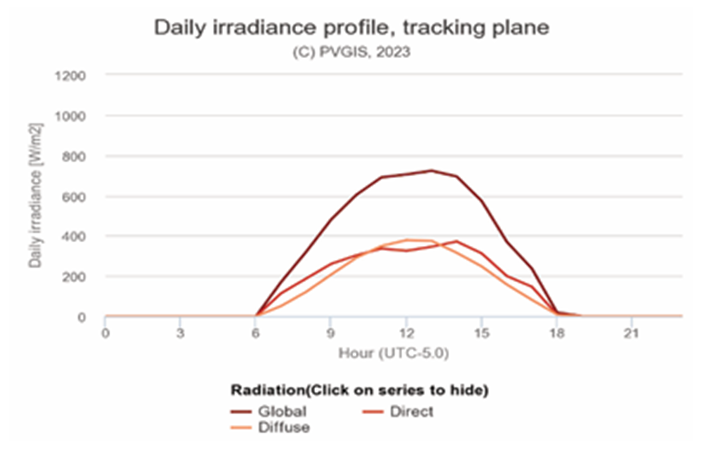
Figure 1: Daily irradiance data for Chacón Playa, Timbiquí
Fig. 2 illustrates the hourly evolution of the daily average ambient temperature, as obtained from the PVGIS database. The temperature profile exhibits a clear diurnal pattern, with relatively stable values during nighttime hours and a gradual increase after sunrise, followed by a peak in the early afternoon. From a PV performance perspective, this temperature profile is particularly relevant, as higher ambient temperatures coincide with periods of maximum solar irradiance. This overlap may lead to increased module operating temperatures and, consequently, to a reduction in conversion efficiency.
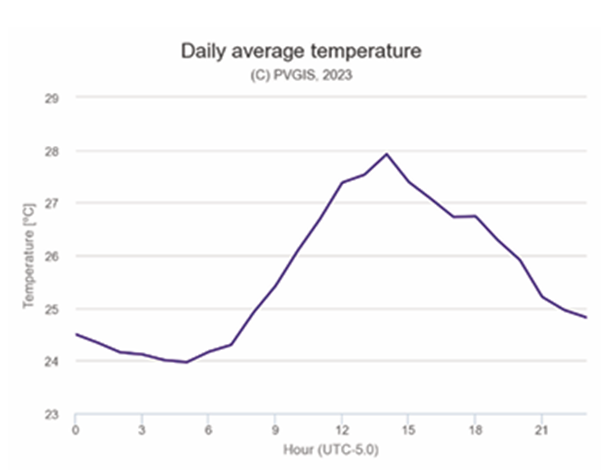
Figure 2: Daily temperature data for Chacón, Timbiquí
Once the solar irradiance and temperature data had been collected, we selected the actual generation equipment for the DC microgrid. The details of the solar panels and batteries obtained from the datasheets and considered in the simulation are given below.
Polycrystalline Solar Module CS6C-145P
-
Brand: Canadian Solar CS6C-145 P
-
Maximum power: Pmax = 145 W
-
Optimum operating voltage: Vmp = 17.9 V
-
Optimum operating current: Imp = 8.09 A
-
Open-circuit voltage: Voc = 22.2 V
-
Short-circuit current: Isc = 8.65A
-
Cells per polycrystalline module: Ncell = 36
-
Operating temperature: -40℃ ~+ 85℃
-
Power tolerance: ± 3%
Lithium Battery LFP12V100 12V 100 Ah deep cycle
-
Nominal voltage = 12.8 V
-
Nominal capacity = 100 Ah
-
Cycles at 100% = 2000
-
Cycles at 80% = 3600
-
Energy = 1280 Wh
-
Maximum depth of discharge = 80%
-
Maximum output current = 100 A
The proposed microgrid is primarily intended to address one of the most pressing needs of the area, which is to provide energy for food preservation. Therefore, a DC solar freezer was selected as the load to be powered by the DC microgrid. This choice is due to the microgrid's focus on operating in isolation and with DC loads, which allows evaluating its technical feasibility.
The technical data of the DC freezer are presented below.
Solar horizontal freezer 430 liters 24V
-
System voltage = 24 VDC
-
Input voltage range = 21.3 to 31.5 V
-
Deep discharge protection = 22.8 V
-
Power = 72 W
-
Recommended fuse = 7.5 A
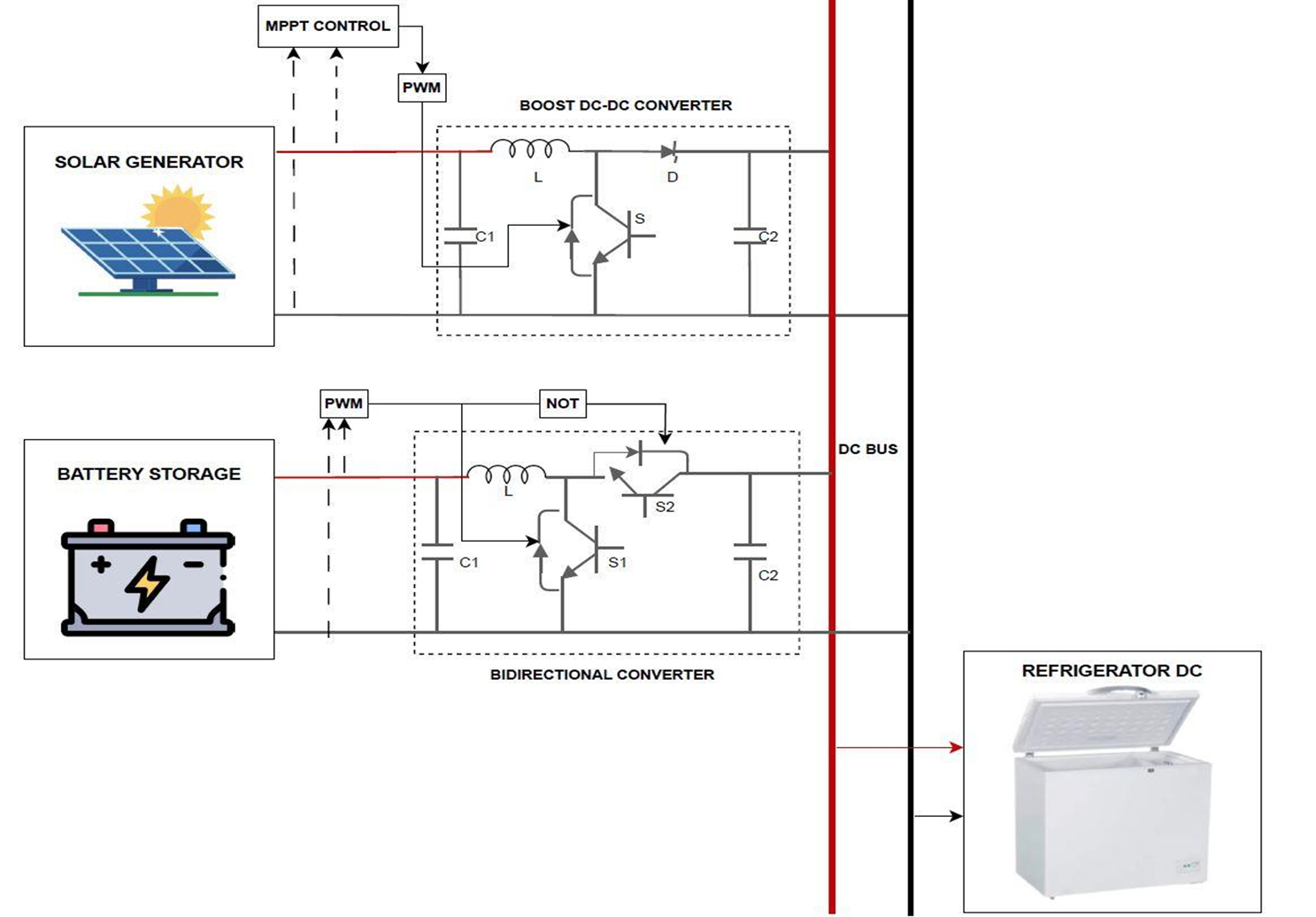
Based on the above-presented information, the DC microgrid was designed. The key components of this microgrid include a solar PV generation system, composed of four solar panels connected in series and in parallel; a storage center based on two batteries connected in series; a DC-DC boost converter; a bidirectional DC-DC converter; and the specific load to be fed, which, in this case, consisted of four DC solar chillers. Fig. 3 shows the microgrid design, which was used to conduct our simulations.
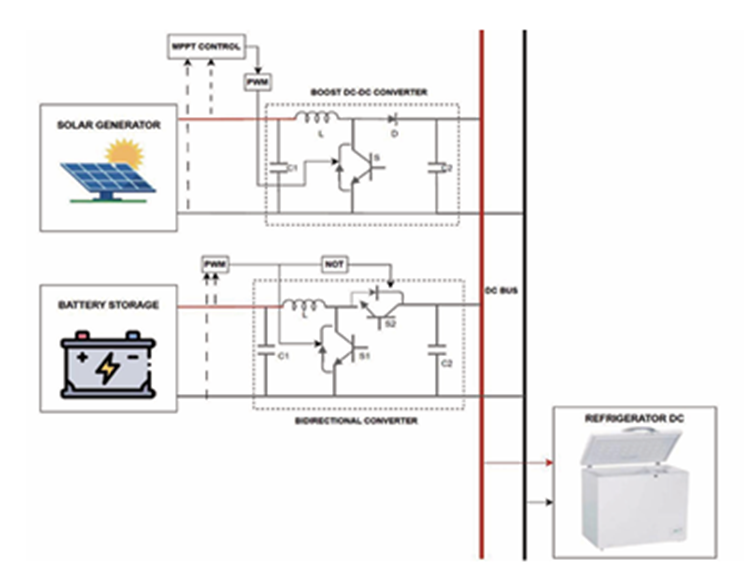
Figure 3: DC microgrid design
After developing the microgrid structure, it was essential to ensure a constant power flow to the four selected chillers. To this effect, the microgrid had to be equipped with a power electronics system comprising converters and their corresponding control systems. These components are vital to maintaining proper voltage and current levels in the DC bus, allowing each of the chillers to be adequately powered. The boost converter was entrusted with raising the voltage of the solar generation source to the values required by the microgrid. On the other hand, the bidirectional converter was responsible for supplying controlled energy to the batteries and, if necessary, delivering it to the microgrid. In this role, the bidirectional converter can act as a step-down buck converter or as a boost converter depending on the specific demands of the microgrid.
The objective was to power four 72 W chillers, which requires supplying a total power of 288 W. The system was configured to maintain a constant voltage of 24 V on the DC bus to power the load, since the microgrid was set at 24 V. To achieve this, it was essential to properly size the DC-DC converters (both boost and bidirectional), which had to be able to handle the total power of 288 W and guarantee a constant 24 V.
The calculations for the electrical circuit components of each converter were conducted under the standard procedures and equations presented below 40, 41:
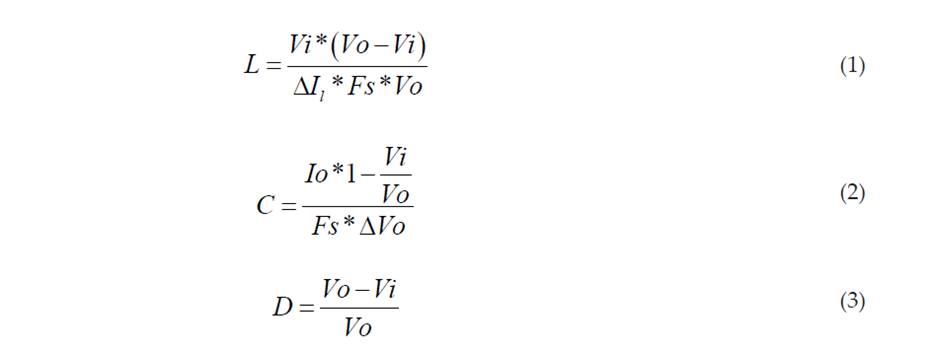
First, parameters were defined according to the technical datasheet of modules, batteries and frezzer presented above. The calculation of the electrical components of the DC-DC boost converter of the solar array was conducted using the following equations, which are presented with their corresponding results:
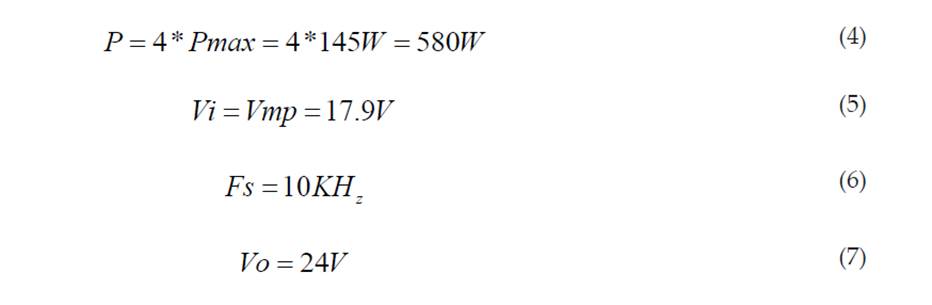
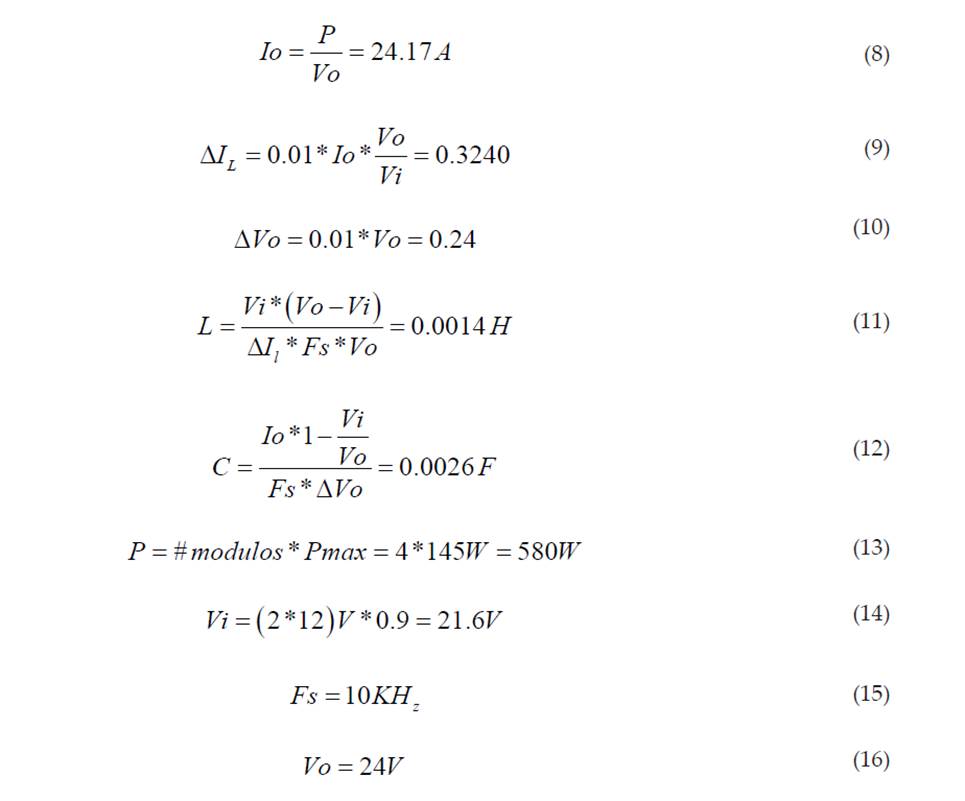
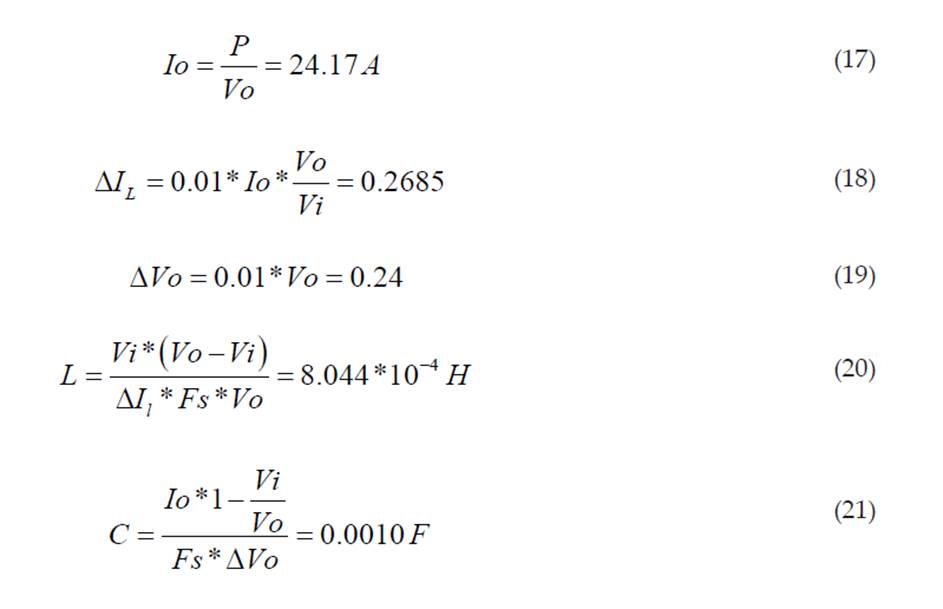
In these calculations, we emphasized that the variable parameter is the input voltage 𝑉𝑖, which is equivalent to 90% of the nominal battery voltage. The main purpose of the bidirectional converter in this configuration is to maintain a constant voltage of 24 V in the microgrid and, if necessary, to take advantage of the battery as a complementary power supply. Performing these calculations is essential, as it allows determining the precise inductance and capacitance values required to ensure the optimal operation of the bidirectional converter for the microgrid and the load requirements.
Once the sizing of the converters had been completed, it became essential to implement a controller to measure the duty cycles of these converters, with the aim of monitoring and optimizing their efficiency. To this effect, MPPT control was adopted, which is based on the incremental conductance algorithm. The purpose of this strategy was to keep the solar system operating at its maximum power point, even in the face of variations in solar irradiance or temperature. We mainly aimed to improve efficiency in the conversion of the energy absorbed by the solar system. This algorithm focuses on adjusting the voltage of the solar system while considering the derivative of the power with respect to the converter voltage—this is achieved by constant measurements of the current and voltage in the system. The above can be explained with the following equation and the incremental conductance algorithm diagram shown in Fig. 4.

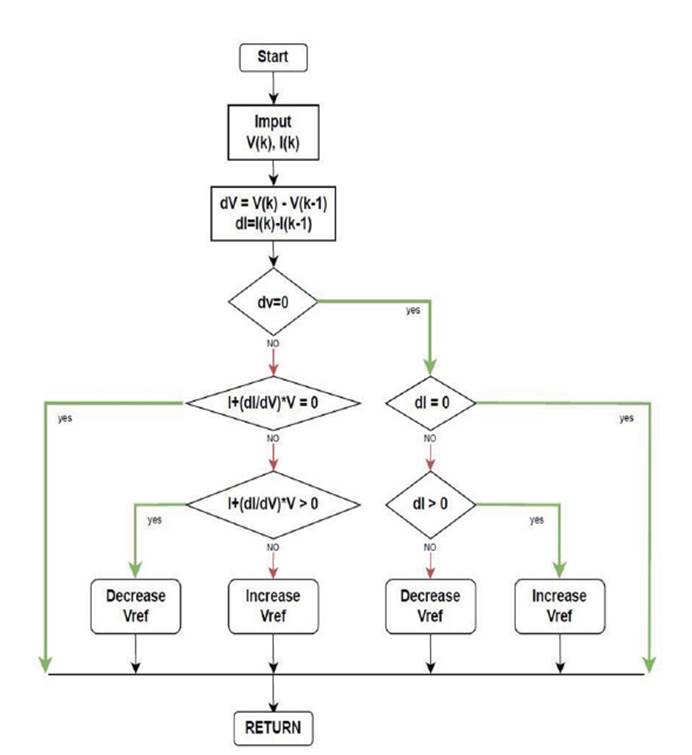
Source:: Figure 4: inspired by 41
The algorithm operates as follows. First, the controller receives the initial values of current and voltage from the solar system. Next, the power is calculated, and the converter connected to the PV system is initialized to the optimum operating voltage. Then, the variations in current and voltage in the converter are calculated. Afterwards, the derivative of power with respect to the converter voltage is calculated. Depending on whether this derivative is equal to, greater than, or less than zero, the converter output voltage is adjusted to operate near the maximum power point. If the derivative of power with respect to voltage is not greater than zero, the output voltage is increased. Conversely, if it is greater than zero, the voltage is reduced. This algorithm operates in a continuous cycle to keep the converter output as close as possible to the maximum power point.
Once the MPPT control system had been defined, we simulated the microgrid using MATLAB-Simulink software and its Simscape complement. A diagram showing our proposal’s structure and its different components is shown in Fig. 5.
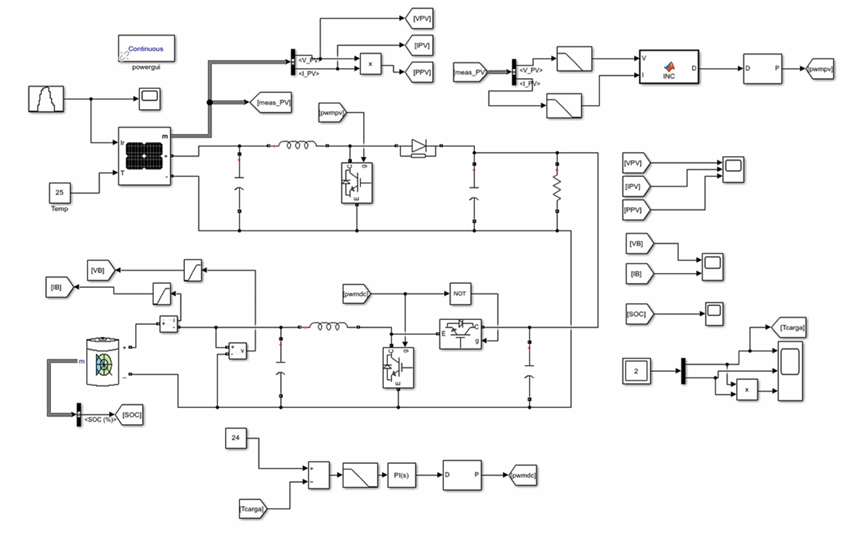
Figure 5: Implementation of our DC microgrid in Simulink
A commercial PV module was selected from the Simulink library, specifically the Canadian Solar CS6C-145P, whose electrical characteristics were presented above. The PV array was configured using four modules arranged in two series-connected modules per string and two parallel strings.
Simulink also enabled the selection of an energy storage system based on predefined characteristic curves. In this study, two lithium iron phosphate (LiFePO₄) batteries—model LFP12V100 (12 V, 100 Ah)—were employed and connected in series to form the battery bank. The load was modeled as a constant DC load with an active power demand of 288 W, representing the operation of four DC coolers.
A boost converter and a bidirectional DC-DC converter were incorporated into the system. The inductance and capacitance values of both converters were calculated analytically and implemented in the model. The solar irradiance and ambient temperature inputs to the PV module were defined using a step function and a constant value, respectively, based on the data obtained from the PVGIS platform for the Chacón-Timbiquí region.
To enhance the efficiency of the power converters, appropriate control strategies were implemented. An incremental-conductance MPPT algorithm was applied to the boost converter and developed using a MATLAB function. The initial reference voltage was set to 0 V, with a maximum voltage limit defined according to the module’s optimal operating voltage of 17.9 V and a reference value close to 15 V. For the bidirectional converter, a proportional-integral (PI) controller was employed to regulate the DC bus voltage, with the proportional and integral gains set to 0.001 and 0.1, respectively.
The remaining components of the microgrid, including the switches, filters, measurement blocks, DC-DC PWM generators, and comparison elements, were implemented using standard Simulink blocks. Once the system architecture had been completed, simulations were conducted to evaluate the technical feasibility and dynamic response of the microgrid under the specified operating conditions. The objective was to maintain a regulated DC bus voltage of 24 V while supplying a constant power of 288 W to the DC load.
Said simulations were performed over a 24-hour period using time-varying irradiance profiles derived from PVGIS data and assuming an average ambient temperature of 25 °C for the studied location.
The simulation results can be seen in Figs. 6, 7, 8 and 9, respectively.
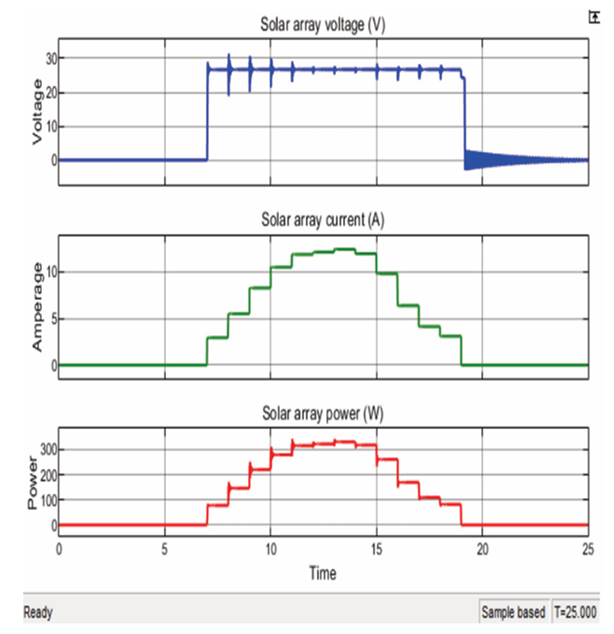
Figure 6: PV system response
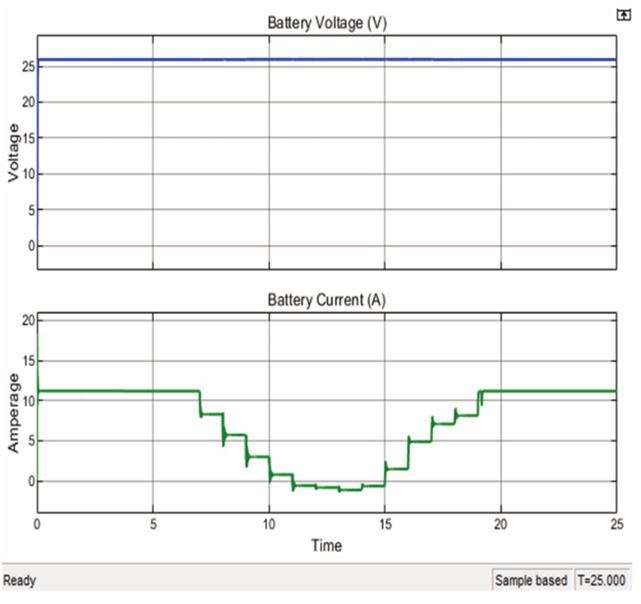
Figure 7: Battery response
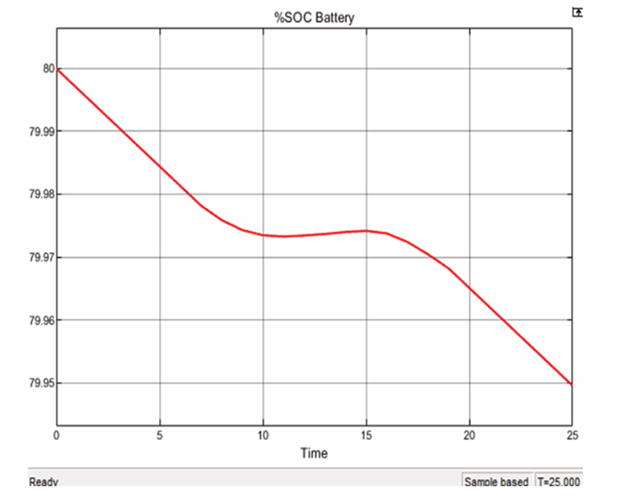
Figure 8: %SOC response
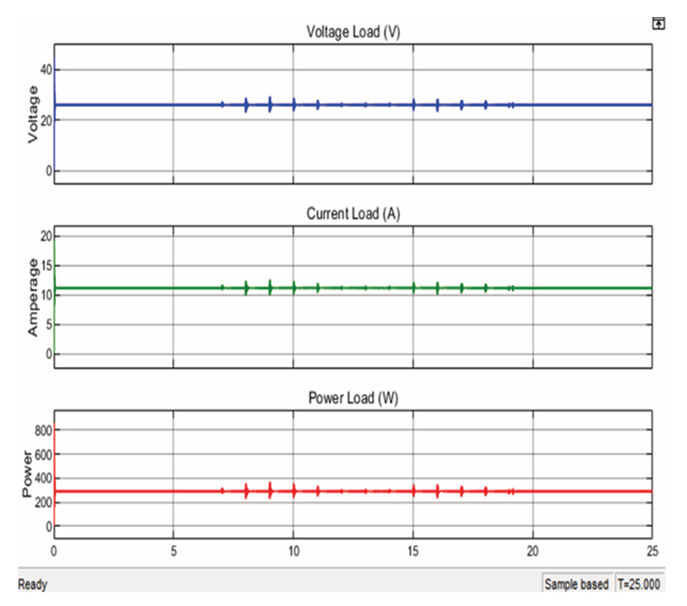
Figure 9: DC chiller load response
The simulation and the behavior of the microgrid must be adapted to the variations in the global irradiance, which was previously shown in Figure 1. In this graphical representation, it is observed that the irradiance is zero from 12 am to 6 am. Between 7 am and 7 pm, a variation in irradiance is recorded, reaching its maximum value at 1 pm with a total of 722 W/m^2. Subsequently, between 8 pm and 11 pm, the irradiance returns to zero. It is essential that the system is able to operate efficiently under these conditions.
Fig. 6 illustrates the response of the solar array during these changes in irradiance. During periods of high irradiance, the system, with the help of the boost converter and its corresponding controller, maintains the voltage close to 24 V, where the current varies according to the fluctuations in irradiance. This naturally affects the power delivered by the solar array, which also varies according to these changes.
When irradiance is low or zero, the solar array provides little or no power. At these times, the batteries come into play as a storage source, wherein the supplied voltage is also maintained at a constant 24 V throughout the operation. Here, the current is also adjusted according to the presence or absence of irradiance, as shown in Fig. 7. The batteries play a crucial role in supplementing the microgrid during hours of low or no solar irradiance, serving as a backup source to maintain optimal levels of power supplied to the load.
Fig. 8 provides a glimpse of the charging and discharging behavior of the batteries, which start at 80% charge. In the absence of solar radiation, the batteries gradually discharge by supplying power to the microgrid. When solar radiation is present again, the batteries are recharged.
Fig. 8 shows how the four DC coolers are provided with a constant voltage of 24 V, with a current of approximately 10 A and a power output of about 288 W. This guarantees their operation and demonstrates the technical feasibility of the microgrid to meet the voltage and current demands of the chillers in response to changes in solar radiation, with the aim of supplying the demanded power.
This system evidences the potential of DC microgrids to meet the energy needs in the region, especially in non-interconnected areas such as Chacón-Timbiquí in the department of Cauca. The simulation supports the technical feasibility of providing a reliable and essential energy supply in response to the priorities of this area.
5. CONCLUSIONS
This paper demonstrates that DC microgrids constitute a technically superior solution for supplying electricity in NIZ, as their architecture reduces the number of power conversion stages, resulting in more compact, efficient, and cost-effective systems compared to their AC counterparts. By eliminating the need for frequency regulation and reactive power management, DC microgrids provide high-quality and reliable electricity supply, particularly suitable for geographically dispersed rural communities. The results show that a significant reduction in diesel generator dependence—up to 85%—can be achieved, thereby mitigating fuel transportation costs and CO₂ emissions. The integration of PV generation with battery energy storage systems enables remote communities, such as Chacón Playa, to achieve energy autonomy and maintain service continuity even under low or zero solar irradiance conditions. Furthermore, the proposed DC microgrid supports critical local economic and healthcare activities by enabling reliable food and medical supply preservation through DC loads such as refrigeration systems. System feasibility was validated through simulations using the incremental conductance algorithm, ensuring stable 24 V regulation to protect refrigeration equipment. The adoption of a radial topology facilitates deployment in hard-to-access areas due to its reduced installation complexity, ease of maintenance, and inherent scalability, allowing expansion to multiple buses as community demand increases without compromising system stability. Finally, the findings provide technical evidence to support the development of regulatory frameworks that promote the adoption of DC microgrids as a reliable and sustainable alternative, contributing to national objectives of universal electricity access and social development in remote regions of Colombia.
The future of DC microgrids is shaped by several research and technological development directions aimed at addressing current challenges related to standardization, efficiency, and system reliability. A key priority involves the development of regulatory frameworks and technical standards that define standardized voltage levels and operational requirements to enable the safe and accelerated deployment of DC microgrids in isolated and remote areas. Advances in energy storage technologies, including high-performance lithium-based batteries and supercapacitors, are expected to enhance the integration of variable renewable energy sources such as solar and wind power. In parallel, the incorporation of intelligent energy management and automation through smart grid technologies will enable the real-time control of generation, storage, and load dispatch, thereby improving system reliability and operational efficiency. Additionally, a trend towards increased decentralization is anticipated, with DC-based generation systems being deployed at the household and building levels, allowing end-users to manage energy autonomously and participate in electricity markets. The interconnection of multiple DC microgrids to form hybrid systems is also envisioned as a means to increase renewable penetration, expand coverage, and reduce environmental impacts in a coordinated manner. Finally, future research must address the development of advanced protection schemes capable of managing bidirectional power flows and fault conditions in DC systems, particularly considering the absence of natural current zero crossings, which complicates arc extinction in protection devices.
References
License
Copyright (c) 2026 Iván Felipe Muñoz Sarria, Maximiliano Bueno López

This work is licensed under a Creative Commons Attribution-NonCommercial-ShareAlike 4.0 International License.

From the edition of the V23N3 of year 2018 forward, the Creative Commons License "Attribution-Non-Commercial - No Derivative Works " is changed to the following:
Attribution - Non-Commercial - Share the same: this license allows others to distribute, remix, retouch, and create from your work in a non-commercial way, as long as they give you credit and license their new creations under the same conditions.