DOI:
https://doi.org/10.14483/23464712.24305Publicado:
2026-04-29Teachers’ Perceptions of Curriculum Integration between Natural Sciences and Mathematics in High School: a diagnostic study for the development of interdisciplinary proposals
Percepciones Docentes sobre la Integración Curricular entre las Ciencias Naturales y la Matemática en la Educación Secundaria: un diagnóstico para el desarrollo de propuestas interdisciplinarias
Percepções Docentes sobre a Integração Curricular entre Ciências da Natureza e Matemática no Ensino Médio: um diagnóstico para o desenvolvimento de propostas interdisciplinares
Palabras clave:
curriculum integration, interdisciplinarity, teacher education, natural sciences, high school (en).Palabras clave:
integración curricular, interdisciplinariedad, formación docente, ciencias naturales, educación secundaria (es).Palabras clave:
integração curricular, interdisciplinaridade, formação docente, ciências da natureza, ensino médio (pt).Descargas
Referencias
Barbosa, J. C. (2009). Modelagem e modelos matemáticos na educação científica. Alexandria: Revista de Educação em Ciência e Tecnologia, 2(2), 69–85. https://periodicos.ufsc.br/index.php/alexandria/article/view/37949
Bardin, L. (2011). Análise de conteúdo. Edições 70.
Biembengut, M. S. (2016). Modelagem na Educação Matemática e na Ciência. Livraria da Física.
Borba, M. C., Scucuclia, R. M., & Gadanidis, G. F. (2014). Fases das Tecnologias Digitais em Educação Matemática: sala de aula e internet em movimento. Autêntica.
Borba, M. C., & Villarreal, M. E. (2005). Humans-with-media and the reorganization of mathematical thinking: Information and communication technologies, modeling, visualization, and experimentation (Vol. 39). Springer.
Brasil. Ministério da Educação. (2018). Base Nacional Comum Curricular. https://www.gov.br/mec/pt-br/escola-em-tempo-integral/BNCC_EI_EF_110518_versaofinal.pdf
Brunieri, H. T. dos S. (2024). Base Nacional Comum Curricular e currículo por áreas do conhecimento: motivações e implicações para o ensino. Revista e-Curriculum, 22, 1–29. http://dx.doi.org/10.23925/1809-3876.2024v22e57155
Castro, G. A. M., Almeida, H. A., & Borges, R. G. V. (2020). Desafios para o professor de ciências e matemática revelados pelo estudo da BNCC do ensino médio. REVEMAT: Revista Eletrônica de Educação Matemática, 15(2), 1–32. https://doi.org/10.5007/1981-1322.2020.e73147
Fazenda, I. C. A. (Ed.). (1998). Didática e Interdisciplinaridade. Papirus.
Fazenda, I. C. A. (Ed.). (2014). O que é interdisciplinaridade? Cortez.
Fidelis, A. K., & Geglio, P. C. (2019). Interdisciplinaridade e contextualização: desafios de professores de Ciências Naturais em preparar os alunos para o ENEM. REnCiMa, 10(6), 215–234. https://doi.org/10.26843/rencima.v10i6.2047
Freire, P. (1996). Pedagogia da autonomia: Saberes necessários à prática educativa. Paz e Terra.
Gauthier, C., Mellouki, M., Simard, D., Bissonnette, S., & Richard, M. (1998). Por uma teoria da pedagogia. Unijuí.
Gilbert, J. K., & Justi, R. (2016). Models of modelling. In Modelling-based teaching in science education (pp. 17–40). Springer. https://doi.org/10.1007/978-3-319-29039-3_2
Gil, A. C. (2008). Métodos e técnicas de pesquisa social (6. ed.). Atlas.
Imbernón, F. (2016). Qualidade do ensino e formação do professorado: Uma mudança necessária (S. C. Leite, Trad.). Cortez.
Japiassú, H. (2006). O espírito interdisciplinar. Cadernos EBAPE, 4(3), 1–9. https://doi.org/10.1590/S1679-39512006000300006
Klein, J. T. (2015). Interdisciplinary teamwork: The dynamics of collaboration and integration. In S. J. Derry, C. D. Schunn, & M. A. Gernbacher (Eds.), Interdisciplinary collaboration: An emerging cognitive science (pp. 23–50). Lawrence Erlbaum Associates.
Marconi, M. de A., & Lakatos, E. M. (2003). Fundamentos de metodologia científica (5. ed.). Atlas.
Millar, V. (2020). Trends, issues and possibilities for an interdisciplinary STEM curriculum. Science & Education, 29(4), 929–948. https://doi.org/10.1007/s11191-020-00144-4
Minayo, M. C. de S. (2001). O desafio do conhecimento: Pesquisa qualitativa em saúde (8. ed.). Hucitec.
Moreira, M. A. (2011). Meaningful learning: From the classical to the critical view. Aprendizagem Significativa em Revista/Meaningful Learning Review, 1(1), 1–15.
Morin, E. (2000). Os sete saberes necessários à educação do futuro. Cortez.
Nóvoa, A. (2022). Escolas e professores: Proteger, transformar, valorizar. SEC/IAT.
Perrenoud, P. (2001). Ensinar: Agir na urgência, decidir na incerteza (2. ed.). Artmed.
Sampieri, R. H., Collado, C. F., & Lúcio, M. del P. B. (2013). Metodologia de pesquisa (5. ed.). McGraw Hill; Penso.
Selwyn, N. (2019). Should robots replace teachers? AI and the future of education. Polity Press.
Zabala, A. (1998). A prática educativa: Como ensinar. Artmed.
Cómo citar
APA
ACM
ACS
ABNT
Chicago
Harvard
IEEE
MLA
Turabian
Vancouver
Descargar cita
Recibido: 28 de octubre de 2025; Aceptado: 7 de abril de 2026
Abstract
This article is part of a paper-based doctoral thesis and presents the results of a diagnostic-exploratory investigation into Basic Education teachers’ perceptions of curricular integration and interdisciplinarity among Mathematics, Physics, Chemistry, and Biology. The study adopts a mixed-methods approach, using a structured questionnaire with closed and open-ended questions applied to 41 high school teachers from public schools in the state of Ceará, Brazil. Descriptive analysis of quantitative data and thematic content analysis of open responses were employed. The findings reveal significant gaps in initial and continuing teacher education, a lack of institutional time for collaborative planning, limited familiarity with interdisciplinary proposals, and insufficient institutional support. Despite these obstacles, teachers report successful isolated experiences using projects, problem-based learning, and educational technologies, underscoring the feasibility of integrative practices when structural and formative conditions are met. The study reinforces the need for educational initiatives that overcome disciplinary fragmentation and promote collaborative teaching. As a diagnostic foundation for a broader doctoral research, the results support the development of a context-sensitive interdisciplinary methodological framework for Natural Sciences and Mathematics in secondary education.
Keywords
curriculum integration, interdisciplinarity, teacher education, natural sciences, high school.Resumen
Este artículo forma parte de una tesis doctoral en modalidad paper-based y presenta los resultados de una investigación de carácter diagnóstico-exploratorio sobre las percepciones de docentes de Educación Básica acerca de la integración curricular y la interdisciplinariedad entre Matemáticas, Física, Química y Biología. El estudio, de enfoque mixto, utilizó un cuestionario estructurado con preguntas cerradas y abiertas aplicado a 41 profesores de Enseñanza Media de escuelas públicas del estado de Ceará, Brasil. El análisis descriptivo de los datos cuantitativos y el análisis de contenido de las respuestas abiertas revelaron deficiencias en la formación inicial y continua, falta de espacios institucionales para la planificación conjunta, desconocimiento de propuestas interdisciplinarias y escaso apoyo institucional. A pesar de estos obstáculos, los docentes reportan experiencias aisladas exitosas mediante proyectos, metodologías activas y tecnologías educativas, mostrando que las prácticas integradoras son viables cuando existen condiciones estructurales y formativas adecuadas. Los resultados refuerzan la necesidad de iniciativas formativas que superen la fragmentación disciplinar y fomenten la colaboración docente. Como base para una investigación doctoral más amplia, los hallazgos sustentan el desarrollo de un modelo metodológico interdisciplinario contextualizado para las Ciencias Naturales y las Matemáticas en la educación secundaria.
Palabras clave
integración curricular, interdisciplinariedad, formación docente, ciencias naturales, educación secundaria.Resumo
Este artigo integra uma tese de doutorado no formato paper-based e apresenta os resultados de uma investigação de caráter diagnóstico-exploratório sobre as percepções de professores da Educação Básica acerca da integração curricular e da interdisciplinaridade entre os componentes de Matemática, Física, Química e Biologia. A pesquisa, de abordagem mista, utilizou um formulário estruturado com questões fechadas e abertas, aplicado a 41 docentes do Ensino Médio de escolas públicas do Ceará. A análise descritiva dos dados quantitativos e a análise de conteúdo das respostas abertas revelaram lacunas na formação inicial e continuada, ausência de espaços institucionais para planejamento coletivo, desconhecimento de propostas interdisciplinares e carência de apoio institucional. Apesar desses obstáculos, os professores relatam experiências isoladas bem-sucedidas com projetos, metodologias ativas e tecnologias educacionais, evidenciando que práticas integradoras são viáveis quando condições estruturais e formativas são garantidas. Os achados reforçam a necessidade de propostas formativas que superem a compartimentalização disciplinar e valorizem a colaboração docente. Como subsídio para uma pesquisa de doutorado mais ampla, os resultados fundamentam o desenvolvimento de um modelo metodológico interdisciplinar contextualizado para as Ciências da Natureza e Matemática no Ensino Médio.
Palavras-chave
integração curricular, interdisciplinaridade, formação docente, ciências da natureza, ensino médio.1. Introduction
The fragmentation of knowledge in secondary education has been a recurring critique in educational literature. Authors such as Japiassú (2006) and Imbernón (2016) warn of the adverse effects of a compartmentalized curriculum, which separates school content from the complexity of students’ lived reality. The latter even poses a categorical question: “Is this what our youth need in order to live in a society of ignorance and manipulation, where they are expected to know many things, perhaps poorly, and without any relation among them?” (Imbernón, 2016, p. 55). The author further challenges the longstanding educational discourse on globalization and interdisciplinarity by asking, “Is it possible to learn competencies while fragmenting the curriculum?” (p. 55).
According to Japiassú (2006, p. 1), unlimited specialization “has culminated in an increasing fragmentation of the epistemological horizon. We have reached a point where the specialist has been reduced to an individual who, by knowing more and more about less and less, ends up knowing everything (or almost everything) about nothing.” The author discusses the fragmentation of knowledge and the compartmentalization among disciplines as a major problem in education, analyzing how knowledge has become overly specialized and subdivided, thereby losing both the holistic perspective and its connection with students’ lived reality.
The Base Nacional Comum Curricular (BNCC, Brazilian Common National Curriculum), however, moves in the opposite direction of fragmented teaching by proposing a curriculum organized by areas of knowledge. This structure seeks to strengthen the relationships among different forms of knowledge and their contextualization (Brazil, 2018). Within this framework, interdisciplinarity, under the broader concept of curricular integration, constitutes a key strategy for connecting distinct subject areas and curricular components, enabling contextualized learning through the exploration of contemporary themes and the development of the general competencies established for Basic Education.
The normative document highlights the need to “decide on forms of interdisciplinary organization of curricular components and to strengthen the pedagogical competence of school teams to adopt more dynamic, interactive, and collaborative strategies regarding the management of teaching and learning” (Brazil, 2018, p. 16). However, as Brunieri (2024) points out, the BNCC does not provide specific guidelines on how teachers and schools should implement such interdisciplinary organization, nor does it specify which pedagogical strategies should be adopted to achieve these objectives.
According to Castro et al. (2020), the absence of clear methodological guidelines in the BNCC has created significant challenges and uncertainties for teachers, particularly in implementing interdisciplinary approaches. The search for teaching methodologies that align with the realities of students and schools has been a persistent challenge. Currently, many educators combine traditional teaching materials with the new textbooks and resources guided by the BNCC in an effort to identify more effective teaching strategies and to enhance the overall quality of teaching and learning.
The situation is particularly critical in the fields of Natural Sciences and Mathematics. As highlighted by Fidelis and Geglio (2019), this scenario becomes even more challenging in light of the requirements of the Exame Nacional do Ensino Médio (ENEM, National High School Examination), which demands that students demonstrate the ability to connect knowledge from different disciplines, a skill that fragmented teaching can scarcely foster.
The integration among Mathematics, Physics, Chemistry, and Biology, constituting the core of this study, is intrinsic to the essence of the BNCC. By not explicitly referencing each curricular component within the competencies of the area of Natural Sciences and their Technologies, the BNCC implicitly assumes an interdisciplinary approach. Although there is no direct mention of the specific curricular components, the relationships established between them and the knowledge objects present in the competencies suggest an internal coherence that fosters dialogue, as pointed out by Fazenda (1998). This premise of interdisciplinarity in the formulation of competencies supports the possibility of developing standardized methodological models with clear structures that assist teachers in achieving such integration. However, as Fidelis and Geglio (2019) point out, practical gaps in teacher education and professional practice emerge as a critical issue, highlighting the need for continuous support and professional development so that educators can translate this interdisciplinary vision into concrete and effective pedagogical practices.
Despite the strong theoretical consensus on the importance of interdisciplinarity, its effective implementation frequently clashes with practical challenges encountered in the daily school environment, which need to be investigated. What are the perceptions, barriers, and training needs of high school teachers in the fields of Natural Sciences and Mathematics regarding the effectiveness of curricular integration and interdisciplinarity? This article aims to conduct a preliminary diagnostic study with high school teachers to understand their perceptions, barriers, and needs regarding curricular integration and interdisciplinarity. This research is part of a paper-based doctoral thesis (thesis by publication) and serves as the foundation for the development of an interdisciplinary methodological framework that integrates the areas of Natural Sciences and Mathematics.
2. Theoretical framework
Curricular fragmentation is characterized by the compartmentalization of school knowledge into isolated disciplines, lacking articulation among them and disconnected from students’ lived contexts. This historically consolidated model still prevails in Brazilian secondary education, hindering the development of meaningful learning. According to Morin (2000), such a reductionist logic prevents the understanding of the complexity of phenomena, disarticulating knowledge into isolated parts and neglecting its totality.
Authors such as Japiassú (2006) and Imbernón (2016) denounce fragmentation as both an epistemological and pedagogical obstacle. Japiassú (2006) argues that excessive specialization empties the meaning of education, turning the specialist into someone who knows increasingly more about increasingly less. Imbernón (2016), in turn, questions the capacity of a fragmented curriculum to foster integrated competencies, warning that the lack of connections among school subjects undermines students’ critical and civic education. On this matter, Morin states that:
Specialized knowledge represents a particular form of abstraction. Specialization “abstracts,” that is, it extracts an object from its context and its whole, rejects its connections and interrelations with the surrounding environment, and introduces the object into an abstract conceptual domain, the compartmentalized discipline, whose boundaries arbitrarily fragment the systemic nature (the relationship between part and whole) and the multidimensionality of phenomena. It leads to a mathematical abstraction that, in turn, creates a rupture with the concrete, privileging everything that is measurable and capable of formalization (Morin, 2000, pp. 41-42, our translation).
Within the context of Basic Education, such compartmentalization tends to become even more pronounced in the fields of Natural Sciences and Mathematics, where teaching often prioritizes the memorization of formulas and procedures over the understanding of complex and interdisciplinary phenomena. Zabala (1998) adds that this curricular organization, inherited from a Cartesian tradition of thought, prevents the establishment of connections between school knowledge and real-world problems.
Curricular integration emerges, in this context, as a pedagogical alternative aimed at restoring the wholeness of knowledge by promoting connections among different curricular components through realworld problems, meaningful contexts, and investigative projects. This perspective aligns directly with Moreira’s (2011) concept of meaningful learning, which advocates for an approach grounded in the problematization of reality and the articulation between school knowledge and lived contexts. According to Fazenda (2014), interdisciplinarity, as a strategy to overcome fragmentation, involves building bridges among distinct domains of knowledge, preserving their specificities while being guided by a logic of convergence. This conception is enriched by a broader understanding that interdisciplinarity manifests through multiple dimensions – epistemological, pedagogical, and institutional – each demanding distinct approaches to its practical implementation (Balbino et al., 2021).
The BNCC, by proposing an organization based on areas of knowledge, represents a normative advancement toward an interdisciplinary and integrative perspective, particularly within Natural Sciences and Mathematics, which often operate in conjunction. However, its implementation faces barriers that extend beyond the legal framework. As noted by Castro et al. (2020) and reinforced by Brunieri (2024), the absence of clear methodological guidelines for the practical realization of interdisciplinarity generates uncertainty among teachers, who frequently lack specific training to design and implement integrated proposals. Zabala (1998) warns that interdisciplinarity does not occur spontaneously; it requires pedagogical intentionality, collective planning, and the reorganization of school time and space. It cannot be reduced to a mere juxtaposition of contents but rather demands the construction of shared objects of study and the joint mobilization of disciplinary knowledge to interpret and act upon reality.
In the field of Natural Sciences and Mathematics, such articulation is particularly promising given the interdependence among the concepts and languages of the disciplines involved. Physicochemical phenomena, for instance, can only be fully understood through the integration of mathematical foundations, physical principles, and chemical properties. This epistemic convergence justifies the adoption of methodologies that promote the resolution of real-world problems based on interdisciplinary approaches, as advocated by authors such as Barbosa (2009), Biembengut (2016), and Gilbert and Justi (2016).
Despite the growing recognition of the importance of interdisciplinarity, its implementation in everyday school practice faces both structural and formative obstacles. One of the main barriers concerns teacher education itself, which still largely follows a disciplinary logic, focused on the acquisition of specific content and scarcely oriented toward the development of transversal and collaborative competencies (Klein, 2015; Millar, 2020). Complementarily, this gap in teacher preparation is emphasized by Castro et al. (2020):
The lack of contextualization in teacher education consequently compromises another aspect present in some of the analyzed competencies: the ability to intervene in reality through the proposition of solutions to social problems. This occurs because there is an intrinsic relationship between the contextualization of knowledge objects and the theoretical grounding and discussion necessary to identify and understand such social issues. Thus, there is a strong likelihood that teachers will reproduce the decontextualized instruction they themselves received, thereby educating students who perceive little or no practical meaning in the scientific knowledge offered at school (Castro et al., 2020, p. 14, our translation).
This fragmented training has direct repercussions on pedagogical practice. The research conducted by Gauthier et al. (1998) constitutes an extensive investigation into the nature of the knowledge that underpins the act of teaching, aiming to identify and define the repertoire of essential knowledge for teaching practice. The authors argue that teaching requires much more than mastery of content; it presupposes the development of complex professional knowledge, among which stand out the ability to think critically, make decisions in unpredictable situations, and work collaboratively and collectively. Such forms of knowledge are not acquired in isolation but demand contextualized and articulated formative practices.
In this same vein, Nóvoa (2022) observes that we are living in a time of metamorphosis in schooling, in which the traditional model is losing its effectiveness. Although it is not yet clear what the school of the future will look like, it is already evident that the current model will not remain sustainable for much longer. According to the author, one of the most significant transformations in this process, highlighted by several ongoing experiences, “is the transition from an individual teacher, who works alone with ‘his or her’ group of students, to a collective work among teachers, within a diversity of pedagogical organizational forms” (Nóvoa, 2022, p. 85). This transition reinforces the importance of teacher education oriented toward collaborative work and interdisciplinary articulation.
Even within teacher education programs, curricula often reproduce a disciplinary logic, which limits opportunities for prospective teachers to experience interdisciplinary practices. In professional practice, factors such as the lack of time for collaborative planning, the scarcity of integrative materials, insufficient institutional support, and assessment models focused on specific content further hinder the implementation of integrated approaches (Zabala, 1998; Fidelis & Geglio, 2019).
Given this scenario, it becomes essential to listen to teachers, mapping their perceptions, barriers, and formative needs regarding curricular integration. Such listening acknowledges teachers not merely as policy implementers but as epistemological and transformative agents whose experiences and challenges should serve as the foundation for developing contextualized, collaborative, and pedagogically and politically viable proposals and/or methodological models.
3. Methodology
This study adopts a quantitative methodological approach with qualitative elements, of diagnostic and exploratory nature (Gil, 2008), aimed at identifying teachers’ perceptions, the barriers they face, and their formative needs related to curricular integration between Natural Sciences and Mathematics in secondary education. According to Minayo (2001), diagnostic studies may employ mixed instruments to capture both objective data and the symbolic representations of the participants involved.
The instrument used was a structured questionnaire specifically designed for this study, comprising both multiple-choice questions and open-ended reflective questions, thereby constituting a mixed instrument (Sampieri et al., 2013). The questions were organized into four thematic blocks: (1) teacher profile and professional practice; (2) pedagogical practices and teaching strategies; (3) teacher education and institutional support; and (4) perceptions and familiarity with interdisciplinary approaches. The construction of the instrument was guided by the research objectives and by the theoretical framework previously established.
The sample consisted of 41 Basic Education teachers, intentionally selected according to the following inclusion criteria: (a) working in secondary education; (b) teaching Mathematics, Physics, Chemistry, or Biology; (c) having proven classroom experience within the state public school system; and (d) providing informed consent to participate in the study. The teachers came from different municipalities in the state of Ceará and worked predominantly in public schools belonging to either the state or federal network (Institutos Federais – IFs), encompassing both regular and vocational education institutions.
The questionnaire was administered online between June and August 2025 through a link shared via email, professional groups, and institutional networks. The choice of a digital format aimed to accommodate participants’ availability and facilitate access to the instrument, considering the wide geographical distribution of the teachers involved.
Given the exploratory and diagnostic nature of the study, the sample of 41 participants was considered sufficient to identify trends, recurrent barriers, and teachers’ needs related to the proposal of curricular integration, without claims of statistical generalization. The intentional selection of secondary education teachers working in the areas of Natural Sciences and Mathematics, with direct experience in school contexts, resulted in a limited yet qualified sample for the diagnostic purposes of the research. According to Gil (2008), purposive sampling is recommended when the goal is to understand the perceptions and experiences of individuals with specific profiles, being common in exploratory and qualitative studies. It is noteworthy that one participant did not complete the questionnaire, responding to only part of the questions.
Although efforts were made to increase the number of participants, the administration of the instrument faced typical limitations of active educational contexts, such as teacher workload, time constraints, and low adherence to voluntary questionnaires. This limitation is therefore acknowledged as an inherent aspect of fieldwork, without compromising the quality of the initial data collection or the consistency of the findings for the purposes of this investigation.
The closed-ended responses were analyzed through descriptive statistics, with calculations of absolute and relative frequencies (percentages) (Marconi; Lakatos, 2003). All data processing, including the descriptive statistics and the generation of Figures 1 through 13, was executed using Python scripts within the Google Colab environment. The open-ended responses, in turn, were subjected to thematic content analysis following the procedures described by Bardin (2011), involving inductive coding of recording units and the emergence of analytical categories. This strategy enabled the identification of discursive regularities, interpretive nuances, and recurrent patterns in teachers’ narratives.
4. Results
The data collected from the participating teachers were organized into four thematic subsections, corresponding to the thematic blocks of the structured questionnaire.
4.1. Profile of the participating teachers
The profile of the participating teachers regarding their area of academic background, the specific subject(s) they teach, years of experience in secondary education, highest academic degree attained, and the type(s) and modality(ies) of educational institutions in which they work is presented on Figure 1.
The research sample consisted of teachers with degrees in Mathematics (53.7%), followed by those in Biology (17.1%) and Physics (12.2%), with a smaller representation of professionals from Chemistry (7.3%) and other areas of Natural and Exact Sciences (9.7%). Regarding academic qualifications, there is a predominance of teachers holding a master’s degree (68.3%), followed by those with a specialization degree (26.8%) and a doctorate (4.9%), indicating a highly qualified profile within the sample. Concerning teaching experience, most participants have between 11 and 20 years of professional practice (51.2%), while 26.8% have been teaching for over two decades, reinforcing the experienced nature of the group.
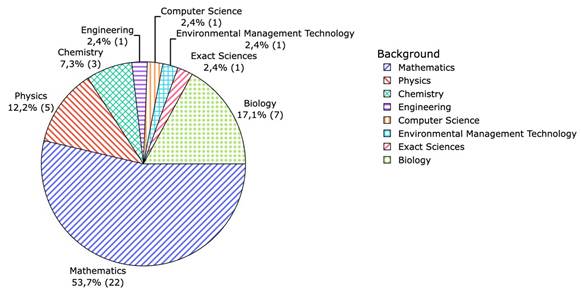
Figure 1 :
Profile of the participating teachers
The research sample consisted of teachers with degrees in Mathematics (53.7%), followed by those in Biology (17.1%) and Physics (12.2%), with a smaller representation of professionals from Chemistry (7.3%) and other areas of Natural and Exact Sciences (9.7%). Regarding academic qualifications, there is a predominance of teachers holding a master’s degree (68.3%), followed by those with a specialization degree (26.8%) and a doctorate (4.9%), indicating a highly qualified profile within the sample. Concerning teaching experience, most participants have between 11 and 20 years of professional practice (51.2%), while 26.8% have been teaching for over two decades, reinforcing the experienced nature of the group.
Regarding the modality of teaching, respondents work primarily in Regular Secondary Education (56.1%), but also in contexts of Integrated Technical and Vocational Education (43.9%) and Youth and Adult Education (16.2%), with some engaged in other modalities (14.6%). In terms of the educational network, most participants are affiliated with the state public system (75.6%), followed by the municipal network (19.5%), while a smaller proportion work in private (3%) or federal (9.6%) institutions. These data reflect a sample predominantly situated within the public Basic Education system, particularly at the secondary level, which aligns with the focus of this research.
4.2. Curricular integration practices and the use of technologies in teaching
Based on the data in Figure 2, it is observed that the laboratories most frequently available in the schools of the participating teachers are Computer Science laboratories (75%), followed by Chemistry (60%), Biology (62.5%), and Physics laboratories (55%). In contrast, 42.5% reported the existence of Mathematics laboratories, revealing a lower institutional appreciation for this type of infrastructure in teaching. Language laboratories (20%) and facilities specifically designed for interdisciplinary projects (22.5%) also show low incidence, as do maker spaces (2.5%) and general-purpose Science laboratories (5%).
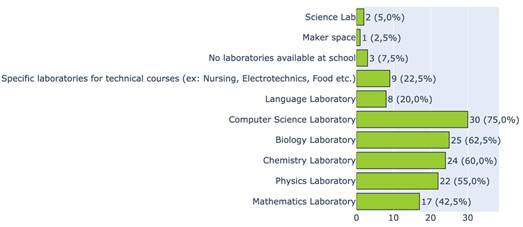
Figure 2:
Types of laboratories available in the schools where the teachers work
A relevant finding is that 7.5% of the respondents (three teachers) reported not having access to any type of laboratory, highlighting disparities in material conditions among schools. The variety of responses, including specific remarks such as “schools in my city don’t have any” (2.5%), reveals the heterogeneity of the educational landscape, as well as the need for public policies that promote greater equity in access to teaching and technological resources.
The degree of teachers’ familiarity with the BNCC guidelines on curricular integration between Mathematics and Natural Sciences (Brazil, 2018) is presented in Figure 3.
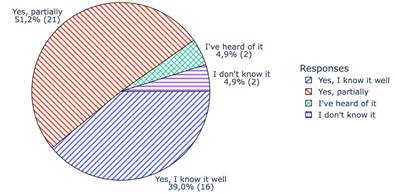
Figure 3 :
Teachers’ level of knowledge about the BNCC guidelines for curricular integration
The chart shows that 21 respondents (51.2%) reported knowing these guidelines only partially, while 16 (39%) stated that they know them well. In contrast, two teachers (4.9%) reported never having heard about the topic, and another two (4.9%) claimed not to know it. Although most participants demonstrate some level of familiarity, the fact that fewer than half report full knowledge of these guidelines indicates the need for further institutional and formative development on the subject, particularly concerning its practical implementation in school planning. This partial understanding may reflect gaps in both initial and continuing teacher education, which compromises the effectiveness of the integrative approaches advocated by the BNCC.
How teachers describe their practices of integrating content within their own field of expertise (Mathematics or Natural Sciences) is illustrated in Figure 4.
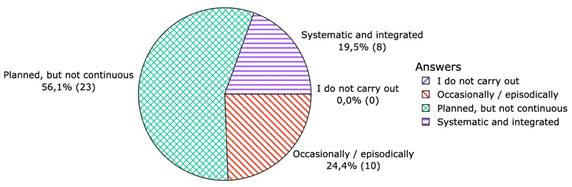
Figure 4 :
Description of teaching practices regarding the integration of content within the same area
It is observed that most respondents (56.1%) reported carrying out integrative actions in a planned but non-continuous manner, indicating the existence of a pedagogical intention that has not yet been consolidated into systematic practices. Another 24.4% stated that integration occurs sporadically or on an ad hoc basis, without articulated planning, while 19.5% reported developing integration in a systematic and structured way. Although representing a minority, this latter group reveals that there are ongoing, organized experiences of interdisciplinarity. No respondents reported a complete absence of integrative practices, which reinforces the existence of an emerging, albeit incipient, culture of connection among contents within subject areas. Nevertheless, the low frequency of continuous and systematic actions underscores the need for policies and strategies that strengthen curricular articulation within the knowledge domains themselves.
Teachers’ responses to the question regarding how often they plan interdisciplinary activities are shown in Figure 5.
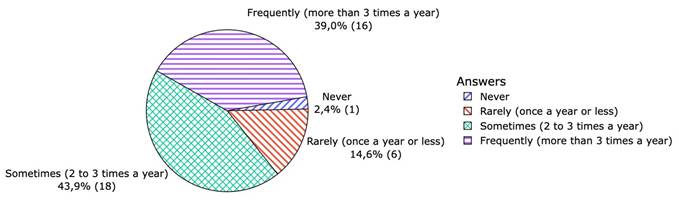
Figure 5 :
How often teachers plan interdisciplinary activities
The data reveal an exact division between those who engage in such planning “sometimes” (43.9%) and those who do so “frequently” (39%). This indicates a significant predisposition toward interdisciplinary articulation, although not always in a systematic manner. Conversely, 14.6% of participants reported planning interdisciplinary activities rarely (once a year or less), and a small proportion (2.4%) stated that they never engage in this type of practice. These results suggest the existence of a pedagogical culture oriented toward interdisciplinarity among part of the teaching staff yet still marked by disparities in the frequency and consistency of such practices, differences that may be associated with institutional, formative, or pedagogical time-related factors.
The teaching and pedagogical strategies used by teachers to promote curricular integration are shown in Figure 6.
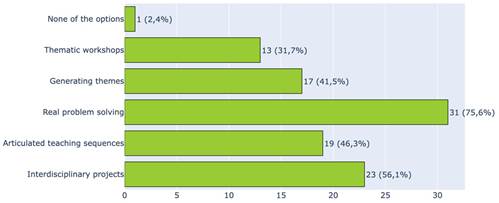
Figure 6 :
Strategies used to promote curricular integration
The most frequently mentioned practice is the solving of real-world problems, adopted by 75% of participants, which demonstrates a tendency to connect school content with concrete and contextualized situations, in line with the principles of scientific modeling (Biembengut, 2016). Interdisciplinary projects also stand out, being used by 56.1% of respondents, followed by articulated teaching sequences (46.3%), generative themes (41.5%), and thematic workshops (31.7%). Only one teacher (2.4%) reported not using any of the listed strategies. These data indicate a diversified methodological repertoire, albeit with an emphasis on approaches centered on problem solving and interdisciplinary articulation through projects, reinforcing the feasibility of developing methodological proposals or models to be structured and implemented within the investigated context.
The use of technological resources by the participating teachers is presented in Figures 7 and 8.
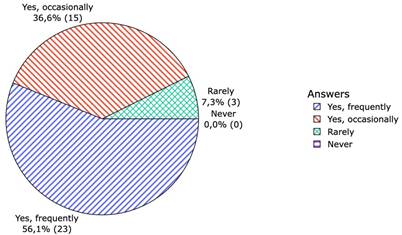
Figure 7 :
Frequency of use of digital or technological resources in classroom teaching
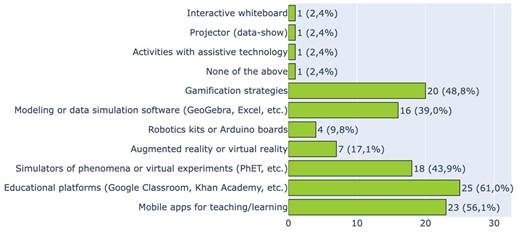
Figure 8 :
Types of digital or technological resources used with students
Most respondents reported frequently using such resources in the classroom (56.1%), while 36.6% do so occasionally, and only 7.3% reported rare use. No participant stated never using technologies, which indicates a broad acceptance, albeit with varying levels of intensity (Figure 7). When asked which digital resources they employ (Figure 8), the most prominent were educational mobile applications (56.1%), educational platforms (61%), and gamification strategies (48.8%). There was also substantial use of phenomenon simulators (43.9%) and modeling software (39%). To a lesser extent, teachers mentioned using augmented reality (17.1%), robotics kits (9.8%), and other specific tools. The diversity of resources reveals a promising scenario for the incorporation of methodological proposals based on digital technologies, particularly those focused on the modeling of contextualized phenomena and technological mediation in learning (Borba et al. 2020).
Most of the teachers participating in the study (63.4%) reported using technologies with confidence and pedagogical intentionality, demonstrating not only familiarity with the resources but also didactic mastery in their application (Figure 9). Conversely, 24.4% stated that they use technologies without specific training, pointing to a gap in continuing professional development. Another 12.2% reported depending on technical or pedagogical support from the school, revealing a certain fragility in their autonomy for the pedagogical use of technologies.
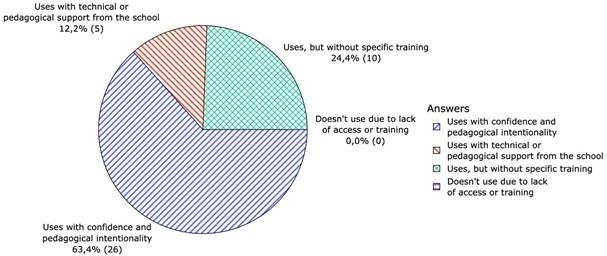
Figure 9 :
Teachers’ perceptions of the use of technologies integrated into the curriculum
It is noteworthy that no participant reported refraining from using technologies due to lack of access or training, which suggests an expansion in access to such tools. However, there remains a need for training policies aimed at fostering the critical and methodologically coherent appropriation of these resources.
4.3. Teacher education and institutional support
Figure 10 shows that teachers’ participation in continuing education programs focused on interdisciplinary practices is considerable, though still irregular.
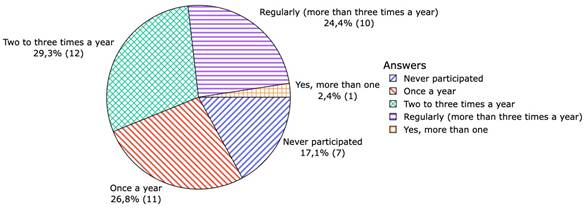
Figure 10 :
Frequency of participation in training programs on interdisciplinary practices
Most respondents reported participating in such training programs two to three times a year (29.3%) or once a year (26.8%), indicating sporadic yet consistent involvement. Another 24.4% participate regularly (more than three times a year), revealing a group more engaged in methodological updating. However, 17.1% of teachers stated that they have never participated in training with this focus, highlighting a concerning gap. These data reinforce the need for institutional policies that ensure more frequent, systematic training initiatives oriented toward curricular integration, particularly in contexts where interdisciplinarity is desired but not always operationalized in pedagogical practice.
Table 1 presents data addressing formative and institutional aspects related to interdisciplinary teaching practice, with emphasis on the frequency, sources, and quality of continuing education initiatives focused on curricular integration. This information helps to contextualize the environment in which teachers work and the structural constraints that influence the adoption of integrative methodologies in secondary education.
Table 1:
Overview of Teacher Training for Interdisciplinarity and Curricular Integration
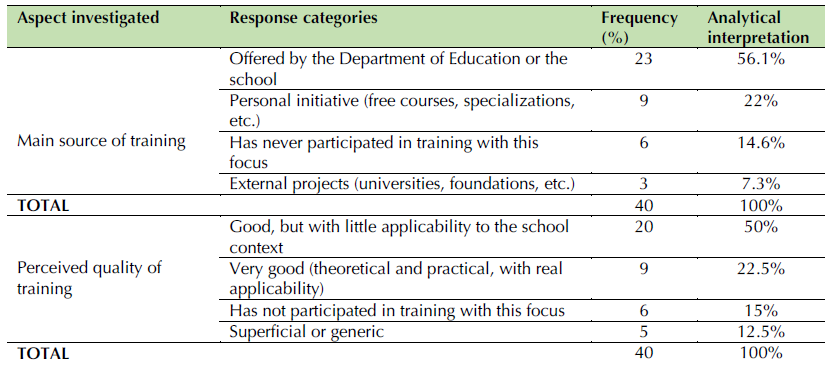
The data presented in Table 1 show that the main source of professional development initiatives is public management (Departments of Education and schools), mentioned by 56.1% of respondents. However, a significant portion of teachers (22%) reported seeking training opportunities on their own initiative, which reveals institutional gaps and highlights teachers’ proactive stance in the absence of structured formative policies. Only 7.3% identified external projects as their primary source, indicating that collaborations with universities and foundations remain incipient. Furthermore, 14.6% reported never having participated in training focused on this area, signaling a concerning lack of institutional opportunities for developing integrative teaching practices.
Regarding the perceived quality of professional development initiatives, 50% of respondents consider them good but with limited applicability to the school context, and 12.5% classify them as superficial or generic, reflecting a mismatch between theory and practice. Only 22.5% evaluated the training positively in terms of applicability, while 15% reported never having participated in any program with this focus. These findings underscore the urgency of more effective continuing professional development policies aimed at interdisciplinarity and integration, with greater contextualization, theoretical–methodological depth, and alignment with school demands.
Regarding the question “Which format(s) of professional development do you consider most appropriate for deepening interdisciplinary practices?”, participants could select more than one option or leave the question unanswered, as shown in Figure 11.
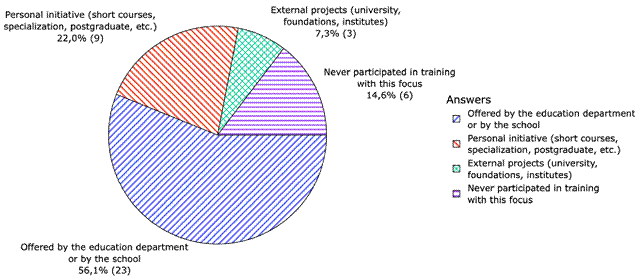
Figure 11 :
Format of professional development considered most appropriate by participants
The data indicate that hands-on workshops featuring activity simulations are widely recognized as the most effective format for deepening interdisciplinary practices, with 77.5% of respondents (31 participants) selecting this option. This result reinforces the demand for experiential professional development centered on teaching practice and contextualized within the school environment. Following this, online certified courses (45%), teacher study groups (42.5%), and in-service training with pedagogical mentoring (37.5%) were also valued, indicating that different formats are appreciated as long as they promote exchange, applicability, and formal recognition. Partnerships with universities, though relevant, were cited by only 35% of participants, which may reflect both limited access and a persistent gap between academic institutions and schools.
4.4. Teachers’ perceptions and familiarity with pedagogical approaches
To assess teachers’ familiarity with integrative teaching approaches, participants were asked to rate, on a scale from 1 to 5, how prepared they felt, based on their professional training, to teach content in an integrated manner. The results are shown in Figure 12.
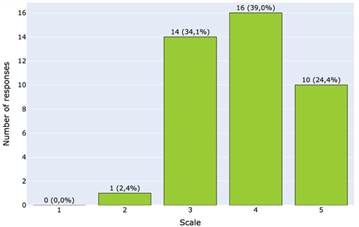
Figure 12 :
Teachers’ self-assessment of preparedness to teach content in an integrated way
The data shown in the figure indicate that most teachers consider themselves at least moderately prepared to work in an integrated manner, with 97.5% of responses falling between levels 3 and 5. Notably, levels 4 (39%) and 3 (34.1%) together account for just over 70% of the sample, suggesting a considerable perception of competence, although there is still room for improvement. The absence of responses in the “not prepared at all” category reveals participants’ openness to interdisciplinary practices, which may indicate receptiveness to ongoing professional development in this area.
The second question in this section aimed to assess teachers’ level of familiarity and experience with the interdisciplinary approaches known as STEM and STEAM, which have gained increasing relevance in contemporary discussions on educational innovation and curriculum integration. The results are summarized in Figure 13.
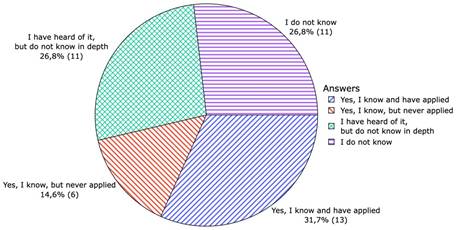
Figure 13 :
Teachers’ familiarity with and application of STEM/STEAM approaches
A significant portion of the participants (31.7%) reported having already implemented STEM or STEAM approaches in their teaching practice, while another 14.6% stated that they are familiar with these methodologies but have not yet applied them. However, 53.6% of teachers indicated limited familiarity with such approaches, either due to complete unawareness (26.8%) or only superficial knowledge (26.8%). These results reveal a substantial training gap regarding the adoption of internationally recognized integrative methodologies, highlighting the need for professional development initiatives that expand teachers’ pedagogical repertoire in this field. This finding is consistent with recent analyses of the incipient consolidation of STEM education in Brazil, which point to conceptual and formative challenges that hinder its effective integration into school curricula (Carvalho de Melo et al., 2025).
To understand teachers’ conceptions of what characterizes interdisciplinary practice, this question allowed multiple answers, enabling participants to select all alternatives they deemed appropriate. The systematization of responses is presented in Table 2.
Table 2:
Elements defining an interdisciplinary practice according to teachers
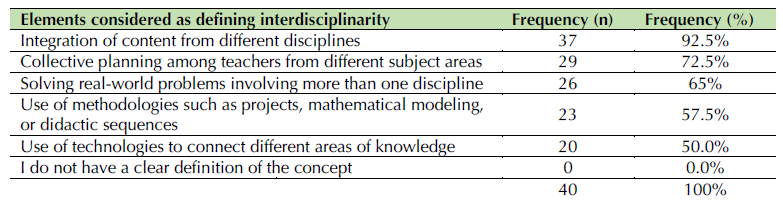
Most participants (92.5%) associate interdisciplinarity with the integration of content from different disciplines, reflecting an understanding consistent with a curriculum integration perspective. Additionally, aspects such as collaborative lesson planning among teachers (72.5%) and the resolution of real-world interdisciplinary problems (65%) also stand out, indicating an appreciation for pedagogical collaboration and contextualization. Active methodologies, such as project-based learning and mathematical modeling, were recognized by 57.5% of teachers, while half of the respondents (50%) emphasized the role of digital technologies as a means of connecting different areas of knowledge. It is noteworthy that none of the participants reported lacking a clear definition of the concept, which demonstrates a significant level of conceptual familiarity among the teachers who took part in the study.
Beyond the conceptions of what characterizes interdisciplinary practice, the study also sought to investigate the factors that teachers identify as personal obstacles to their work in this field. The question allowed multiple responses, reflecting the complexity and overlap of the challenges experienced. The results are summarized in Table 3.
Table 3:
Main difficulties perceived by teachers in interdisciplinary practice
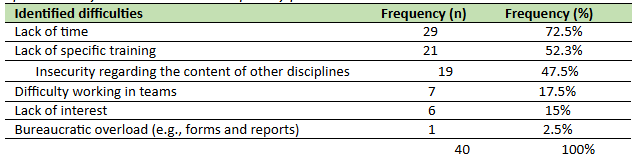
The lack of time was the most frequently reported obstacle, mentioned by 72.5% of teachers, reinforcing the argument that the absence of institutional spaces dedicated to collaborative planning hinders the implementation of effective interdisciplinary practices. Next, the shortage of specific training (52.3%) and insecurity regarding the content of other disciplines (47.5%) stand out, revealing gaps in both initial and continuing teacher education, as well as the persistent compartmentalization of knowledge within the school curriculum. Difficulties related to teamwork (17.5%) and lack of interest (15%), though less frequent, suggest that the desire to innovate is present among teachers, albeit constrained by structural and formative limitations. The isolated mention of bureaucratic issues represents a minor critique, yet it may signal underlying tensions between administrative and pedagogical demands.
The analysis of the personal difficulties perceived by teachers in relation to interdisciplinary practice is enriched when the focus is broadened to include systemic and structural obstacles to curricular integration between Mathematics and the Natural Sciences. While the previous table reflects individual perceptions, Table 4 highlights institutional, cultural, and operational factors that undermine the feasibility of integrated practices in everyday school contexts. This distinction helps to clarify the complexity of the issue, showing that curricular integration does not depend solely on teachers’ willingness or training, but also on objective working conditions and institutional support.
Table 4:
Factors considered obstacles to integration between Mathematics and Natural Sciences
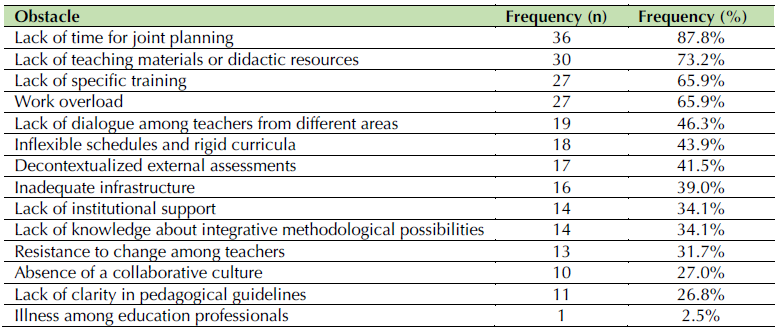
Among the main factors identified by teachers as obstacles to the integration between Mathematics and the Natural Sciences, the lack of time for joint planning emerges as the most recurrent barrier, reported by 87.8% of participants. This finding highlights the overload of teachers’ routines and the absence of institutional conditions that foster collaborative practices. Next, the lack of teaching materials or didactic resources (73.2%) and work overload (65.9%) stand out, revealing limitations that are both structural and organizational in nature.
The lack of specific training (65.9%) was also widely acknowledged, pointing to a gap in both initial and continuing education that prepares teachers to work in an interdisciplinary manner. In addition, the lack of dialogue among teachers from different subject areas (46.3%) and inflexible schedules and rigid curricula (43.9%) reinforce the perception that institutional arrangements still hinder the articulation between curricular components.
Other factors, such as lack of institutional support (34.1%), inadequate infrastructure (39%), limited knowledge of integrative methodologies (34.1%), and resistance to change (31.7%) were also mentioned, outlining a multifactorial scenario that requires interventions in both school management and educational policy. It is noteworthy that only 2.5% attributed these barriers to teachers’ illness, which may suggest underreporting or the normalization of this reality in everyday school life.
These results corroborate critiques of the compartmentalization of knowledge and highlight the need for formative and structural policies that promote effective conditions for curricular integration, as proposed by the BNCC (Brazil, 2018) and several studies on interdisciplinarity (Fazenda, 2014; Zabala, 1998; Klein, 2015).
In order to understand the conditions that teachers consider fundamental for promoting interdisciplinary practices, participants were asked to indicate the institutional and pedagogical supports they deemed most relevant for integrating curricular components. These data are summarized in Table 5.
Table 5:
Conditions and/or supports considered essential for curricular integration
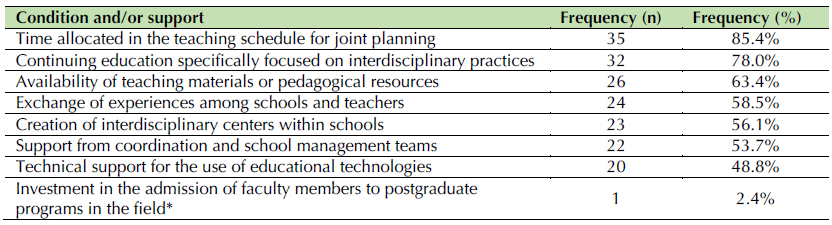
Based on Table 5, it is observed that teachers identify a set of structural and formative conditions as essential for enabling interdisciplinary practices in high school. The most frequently mentioned factor was the need for dedicated time within the teaching schedule for joint planning (85.4%), which underscores the importance of institutionalized time as a minimum condition for articulating distinct areas of knowledge, a requirement also emphasized by Zabala (1998) and Fazenda (2014) when discussing the development of integrative projects. The continuing education specifically focused on interdisciplinary practices, indicated by 78% of participants, reveals that overcoming curricular fragmentation requires not only teachers’ goodwill but also critical and context-based professional development, as argued by Fazenda (2014).
Other key elements include the availability of appropriate pedagogical materials (63.4%) and the creation of interdisciplinary centers within schools (56.1%), which point to the need for institutional environments that foster teacher collaboration. Attention is also drawn to the emphasis on the exchange of experiences among schools and teachers (58.5%), which aligns with the perspective of collaborative work advocated by authors such as Perrenoud (2001) and Freire (1996), in which knowledge is constructed dialogically and collectively. Finally, the 48.8% rate regarding technical support for the use of educational technologies corroborates the idea that, although the use of digital resources is welcomed, it still faces operational barriers that must be overcome through specialized support and public infrastructure policies (Selwyn, 2019; Borba & Villarreal, 2005). These findings therefore reinforce that curricular integration does not occur through spontaneous adherence but requires concrete conditions, supportive policies, and a school culture open to change.
4.5. Analysis of open-ended responses: teachers’ perceptions of curricular integration
Based on the thematic content analysis technique (Bardin, 2011), three recurring core themes were identified in the participants’ open-ended responses:
(1) successful practices and concrete interdisciplinary experiences
(2) perceived pedagogical contributions of interdisciplinarity
(3) challenges and expectations regarding training and the future of integrated teaching.
These thematic cores were established from recurring elements that reveal both successful experiences and teachers’ perceptions and suggestions concerning the challenges of interdisciplinary practice. Table 6 presents a summary of the main emerging themes, accompanied by representative excerpts from the teachers’ statements.
Table 6:
Summary of thematic categories from the open-ended responses
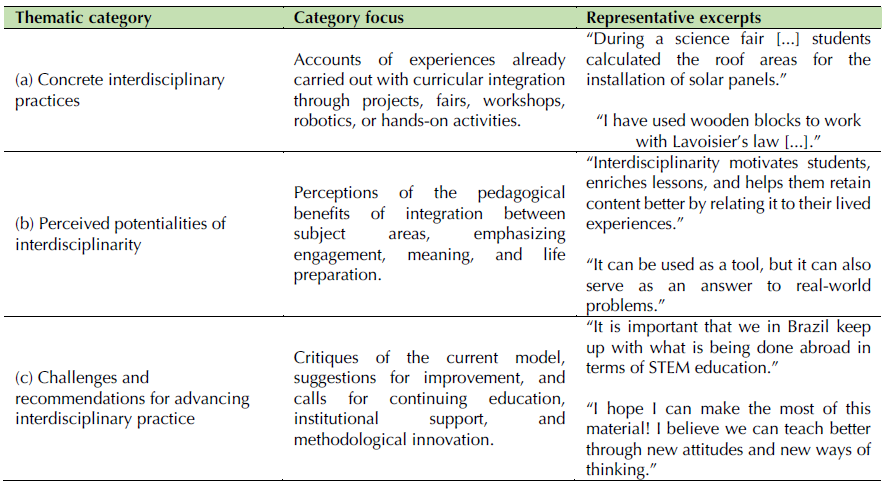
We organized the main teacher statements into the three subsections that follow.
4.5.1. Successful practices and concrete interdisciplinary experiences
Several teachers reported successful experiences of curricular integration involving didactic sequences, projects, science fairs, competitions, or interdisciplinary activities that articulated different curricular components. These experiences, often of an investigative nature, highlight the potential of interdisciplinarity as a concrete methodological strategy. One example was the account of a teacher who integrated Mathematics, Science, and Geography in a project on sustainability:
“In my teaching practice, I have sought to promote interdisciplinarity through projects that connect Mathematics with other areas of knowledge. [...] The students calculated roof areas for the installation of solar panels, analyzed energy consumption data, and discussed environmental impacts. This integration fostered meaningful learning and stimulated students’ interest by relating the content to real-world problems.”
Other participants highlighted the use of playful activities and tangible materials, such as wooden blocks, to integrate Mathematics and Chemistry, as well as the development of competitions and workshops involving interdisciplinary in dynamic and collaborative contexts:
“I have already used wooden blocks to work with Lavoisier’s law, in which each block had a fictitious mass and students had to perform calculations; however, to determine the mass, it was necessary to measure each one and convert it into meters. It was very interesting.”
“I have worked with biology and mathematics competitions in an interdisciplinary way, and students become very interested when they perceive the content as applied to everyday life and interconnected. They also show greater engagement in project-based and team activities.”
In this same perspective, one of the teachers described an experience with Educational Robotics as a privileged space for integrating Physics, Mathematics, Chemistry, and Programming, emphasizing realworld problem-solving and the development of 21st-century skills.
“In my teaching practice, I have been constantly seeking to integrate Physics with other areas of knowledge through interdisciplinary projects. A significant experience was the development of activities involving Educational Robotics, in which students applied concepts from Physics, Mathematics, Chemistry, and Programming to solve real-world problems. Curricular integration not only made learning more meaningful and contextualized but also fostered teamwork, creativity, and students’ critical thinking. I believe that interdisciplinarity is essential for a more comprehensive education, connected to contemporary demands and 21st-century skills.”
These accounts highlight the potential of interdisciplinary practices as didactic-pedagogical strategies that foster knowledge contextualization, student protagonism, and the construction of meaningful learning. Although occasional and often driven by teachers’ individual initiatives, such experiences demonstrate that curricular integration is feasible when supported by concrete proposals linked to real-life situations and sustained by collaborative methodologies. Recognizing these practices is essential so that they may serve not only as inspiration but also as a starting point for the consolidation of broader formative and structural policies.
4.5.2. Perceived pedagogical contributions of interdisciplinarity
Participants also frequently emphasized the positive pedagogical effects of interdisciplinarity on student motivation, meaningful learning, and the development of social competencies:
“Interdisciplinarity motivates students, enriches the class, and helps them retain content more effectively by relating it to their own experiences. Teamwork among teachers motivates students. Group work practices among students prepare them for life.”
Other participants emphasized that project-based and problem-solving practices enhance student engagement and promote contextualized learning, as “Students show great interest when they perceive content as applied to everyday life and articulated across subjects. They also become more engaged in project-based and team activities.”
These statements demonstrate that the connection between different forms of knowledge and the collaboration among teachers constitute fundamental dimensions for strengthening the teaching-learning process, especially when seeking to overcome curricular fragmentation and foster more meaningful learning experiences.
4.5.3. Challenges and expectations regarding teacher training and the future of integrated teaching
Despite the positive experiences, teachers expressed concerns about initial and continuing education, the lack of institutional support, and the shortage of space and time for interdisciplinary planning. One participant highlighted the importance of aligning with international trends in STEM education:
“It is important for us here in Brazil to keep up with what has been done abroad in terms of STEM education. The job market needs this and demands it from our students.”
“Recently, I received an augmented reality (AR) material designed for Mathematics and Biology classes! I was very happy with the gift! I hope I can make the most of it! I believe we can provide better teaching with new attitudes and new ways of thinking. Interdisciplinarity shows that teaching can be more comprehensive in the classroom! Great work!”
These statements reveal a critical and constructive perspective among teachers, who view interdisciplinarity as a viable and desirable path but recognize that its implementation depends on institutional support, dedicated planning time, and investments in teacher education, as already evidenced by the quantitative data.
5. Discussion
The results obtained in this investigation reveal a set of barriers and gaps that weaken the implementation of curricular integration between Mathematics and the Natural Sciences in high school. These findings not only confirm observations already reported in the specialized literature but also unveil important nuances for shaping teacher training policies and contextualized pedagogical methodologies.
The strong adherence of participants to the importance of interdisciplinarity, despite the practical challenges to its implementation, reveals a persistent tension between discourse and school reality. This gap is deeply rooted in the current curricular organization model, which, as analyzed by Morin (2000), fragments knowledge into isolated compartments and overlooks the complexity of real-world phenomena. The recurrent separation between disciplines prevents the construction of a systemic and integrated understanding, an essential condition for critical and contextualized scientific education.
In this regard, the research corroborates the analyses of Fazenda (1998), who understands interdisciplinarity as an epistemic and political gesture aimed at overcoming the disciplinary logic, and of Japiassú (2006), who emphasizes that excessive specialization tends to obscure the global intelligibility of problems, reducing the school’s role to the mere transmission of isolated content.
The difficulties reported by teachers, such as the lack of time for joint planning, insufficient specific training, and limited institutional support, align with the challenges identified by Imbernón (2016) and Zabala (1998), who emphasize that curricular integration requires pedagogical intentionality, investment in continuing education, and a reorganization of school time and space. The data analysis also reinforces the observations of Castro et al. (2020), according to whom the BNCC itself, although proposing the organization of knowledge by areas, does not provide concrete methodological guidelines to support teachers in the effective implementation of interdisciplinary proposals.
From the perspective of teacher education, the findings reinforce Gauthier et al.’s (1998) critique of technical and content-centered training by revealing that many teachers still lack formative experiences that foster collaborative work, joint planning, and the construction of contextualized professional knowledge. Nóvoa (2022), when discussing the need to transform teaching practice, highlights the importance of collaborative approaches that value collective experience and the shared construction of the curriculum, elements that remain incipient in the context investigated.
Furthermore, the emphasis placed by participants on investigative practices, project-based learning, and active methodologies as facilitating strategies for interdisciplinarity aligns with Moreira’s (2011) proposal, which advocates for meaningful learning grounded in the problematization of reality and in the articulation between school knowledge and lived contexts. This perspective also resonates with Millar’s (2020) analysis, which supports a STEM approach centered on complex problem solving and the collective engagement of teachers from different disciplines.
The suggestions and experiences shared by teachers in the open-ended responses reaffirm that, although there are promising isolated initiatives, they still lack systematization, technical support, and institutional continuity. As discussed by Klein (2015), interdisciplinary collaboration depends not only on teachers’ goodwill but also on structural conditions and educational policies that make it viable and sustainable.
The potential of STEM-based curricula to foster such integrated practices is increasingly recognized, particularly in developing creative thinking and problem-solving skills among high school students (Khalil et al., 2023). However, effective implementation requires more than the adoption of isolated activities; it demands systematic pedagogical approaches that align with the specificities of each educational context (Revák et al., 2024). Thus, the empirical data analyzed validate the diagnoses presented in recent literature regarding the obstacles to interdisciplinarity in high school, while also highlighting the need for integrative methodologies guided by a complex, collaborative, and contextualized logic. Teachers’ perceptions underscore the urgency of overcoming curricular fragmentation and point to possible paths for building more integrated pedagogical practices consistent with the contemporary challenges of science education.
6. Conclusion
The fragmentation of knowledge in secondary education remains a structural challenge, hindering articulation between Natural Sciences and Mathematics and limiting the development of meaningful learning. This diagnostic-exploratory study sought to identify teachers’ perceptions, barriers, and training needs regarding curricular integration, with the purpose of supporting the development of a context-based interdisciplinary methodological framework. To this end, a mixed-methods approach was adopted, using a structured questionnaire applied to 41 teachers from public schools in Ceará, Brazil. Quantitative data were analyzed through descriptive statistics, while open-ended responses underwent thematic content analysis.
The results revealed recurring obstacles: lack of time for collaborative planning (87.8%), insufficient teaching resources (73.2%), work overload (65.9%), and a lack of specific continuing education (65.9%). Despite these difficulties, teachers reported successful isolated experiences with interdisciplinary projects, active methodologies, and digital technologies, demonstrating that integrative practices are feasible when structural and formative conditions are in place. The research also shows that, although interdisciplinarity is recognized by teachers as essential, its implementation is hindered by institutional and formative factors that go beyond individual willingness.
As part of a paper-based doctoral thesis, this study offers an empirical diagnosis that can inform the design of methodological proposals aligned with school realities. Limitations include the sample being restricted to a specific region and reliance on self-reported data, suggesting caution in generalizing the findings. Future research could advance the implementation and evaluation of interdisciplinary models derived from this diagnosis, especially those integrating collaborative planning, active methodologies, and educational technologies. In summary, the data and reflections presented reinforce that curricular integration between Natural Sciences and Mathematics, though challenging, is feasible when supported by consistent institutional policies and teacher education that articulates theory and practice in a contextualized manner.
7. Acknowledgements
The first author thanks the Cearense Foundation for the Support of Scientific and Technological Development (Funcap) for the doctoral research scholarship in Brazil, and the Coordination for the Improvement of Higher Education Personnel (CAPES), within the scope of the Doctoral Exchange Program Abroad (PDSE/CAPES, Call 17/2025). The second author thanks the National Council for Scientific and Technological Development (CNPq) (grants 305359/2021-5, 300500/2025-4, and 442182/2023-6); the Simplified Internal Call PRPI/Graduate Support for Stricto Sensu Graduate Programs at IFCE; FUNCAP (UNI-0210-00699.01.00/23, 07548003/2023, and Call 38/2022); the Coordination for the Improvement of Higher Education Personnel (CAPES); and the Italian Institute of Technology (IIT).
8. Authors’ contributions
R. T. S.: Conceptualization, Methodology, Investigation, Writing – original draft. A. R. A.: Validation, Data curation, Writing – review and editing, Supervision. A. K. P. V.: Validation, Data curation, Writing – review and editing, Supervision. All authors approved the final version.
9. Funding statement
This study was financed in part by the Coordenação de Aperfeiçoamento de Pessoal de Nível Superior – Brasil (CAPES) – Finance Code 001, within the scope of the Doctoral Exchange Program Abroad (PDSE/CAPES, Call 17/2025), and by the Cearense Foundation for the Support of Scientific and Technological Development (Funcap).
10. Declaration of Generative AI and AI-Assisted Technologies
During the preparation of this work, the authors used Google Colab with Gemini to assist in correcting graph generation code, and Manus AI to assist with translation. Subsequently, the authors reviewed and edited the text thoroughly and assume full responsibility for the content. All data presented are real, and the authors assume full responsibility for the final content.
11. Conflict of interest
The authors declare that there is no conflict of interest regarding the publication of this article.
References
Licencia
Derechos de autor 2026 Autor y Góndola. Enseñanza y Aprendizaje de las Ciencias

Esta obra está bajo una licencia internacional Creative Commons Atribución-NoComercial-SinDerivadas 4.0.
Góndola, Ens Aprend Cienc. es una publicación de acceso abierto, sin cargos económicos para autores ni lectores. La publicación, consulta o descarga de los contenidos de la revista no genera costo alguno para los autores ni los lectores, toda vez que la Universidad Distrital Francisco José de Caldas asume los gastos relacionados con edición, gestión y publicación. Los pares evaluadores no reciben retribución económica alguna por su valiosa contribución. Se entiende el trabajo de todos los actores mencionados anteriormente como un aporte al fortalecimiento y crecimiento de la comunidad investigadora en el campo de la Enseñanza de las Ciencias.
A partir del 01 de diciembre de 2018 los contenidos de la revista se publican bajo los términos de la Licencia Creative Commons Atribución–No comercial–Compartir igual 4.0 Internacional (CC-BY-NC-SA 4.0), bajo la cual otros podrán distribuir, remezclar, retocar, y crear a partir de la obra de modo no comercial, siempre y cuando den crédito y licencien sus nuevas creaciones bajo las mismas condiciones.
Los titulares de los derechos de autor son los autores y la revista Góndola, Ens Aprend Cienc. Los titulares conservan todos los derechos sin restricciones, respetando los términos de la licencia en cuanto a la consulta, descarga y distribución del material.
Cuando la obra o alguno de sus elementos se halle en el dominio público según la ley vigente aplicable, esta situación no quedará afectada por la licencia.
Asimismo, incentivamos a los autores a depositar sus contribuciones en otros repositorios institucionales y temáticos, con la certeza de que la cultura y el conocimiento es un bien de todos y para todos.



.jpg)